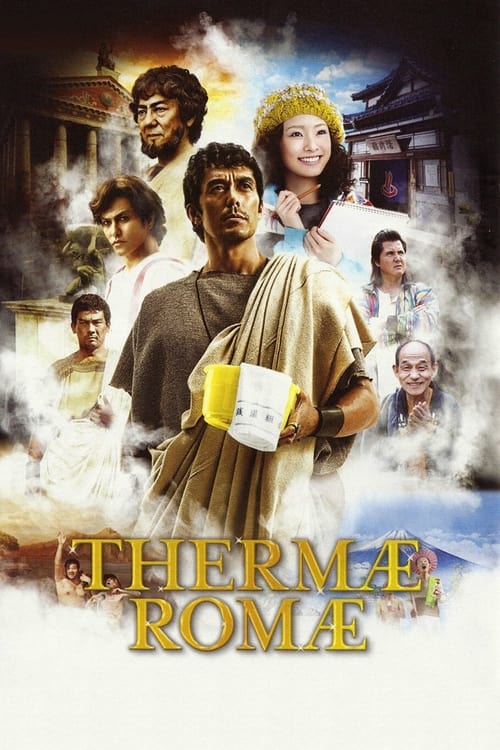
Thermae Romae
The story follows a Roman architect named Lucius, who is having trouble coming up with ideas. One day, he discovers a hidden tunnel underneath a spa that leads him to a modern Japanese bath house. Inspired by the innovations found there, he creates his own spa, Roma Thermae, bringing in the modern ideas to his time.
The film earned $75.4M at the global box office.
Plot Structure
Story beats plotted across runtime


Narrative Arc
Emotional journey through the story's key moments
Story Circle
Blueprint 15-beat structure
Arcplot Score Breakdown
Weighted: Precision (70%) + Arc (15%) + Theme (15%)
Thermae Romae (2012) exhibits deliberately positioned dramatic framework, characteristic of Hideki Takeuchi's storytelling approach. This structural analysis examines how the film's 15-point plot structure maps to proven narrative frameworks across 1 hour and 48 minutes. With an Arcplot score of 6.8, the film balances conventional beats with creative variation.
Characters
Cast & narrative archetypes

Lucius Modestus
Mami Yamakoshi
Emperor Hadrian
Ceionius
Antoninus
Main Cast & Characters
Lucius Modestus
Played by Hiroshi Abe
An ancient Roman bath architect who time-travels to modern Japan seeking inspiration for bath designs.
Mami Yamakoshi
Played by Aya Ueto
A modern Japanese manga artist who encounters Lucius during his time travels.
Emperor Hadrian
Played by Masachika Ichimura
The Roman Emperor who commissions Lucius to build innovative baths for the empire.
Ceionius
Played by Kazuki Kitamura
A rival architect and antagonist who competes with Lucius for imperial favor.
Antoninus
Played by Kai Shishido
A young Roman who becomes Lucius's friend and supporter.
Structural Analysis
The Status Quo at 1 minutes (1% through the runtime) establishes Ancient Rome, 128 AD. Lucius Modestus, a serious bath architect, works on traditional Roman thermae designs, frustrated by the lack of innovation in his field while his rival Antoninus gains favor with modern, flashy designs.. Notably, this early placement immediately immerses viewers in the story world.
The inciting incident occurs at 13 minutes when Lucius loses a major commission to his rival Antoninus. Humiliated and depressed, he visits a public bath to clear his mind. While underwater, he is suddenly sucked through a drain and transported through time.. At 12% through the film, this Disruption aligns precisely with traditional story structure. This beat shifts the emotional landscape, launching the protagonist into the central conflict.
The First Threshold at 27 minutes marks the transition into Act II, occurring at 25% of the runtime. This demonstrates the protagonist's commitment to Back in Rome, Lucius makes a conscious choice to implement the Japanese bath innovations he witnessed. He presents revolutionary designs to Emperor Hadrian, who is amazed. Lucius commits to this new path of cross-time innovation, accepting his role as a bridge between worlds., moving from reaction to action.
At 54 minutes, the Midpoint arrives at 50% of the runtime—precisely centered, creating perfect narrative symmetry. The analysis reveals that this crucial beat False victory: Lucius is commissioned to build the ultimate bathhouse for Emperor Hadrian's villa. He is at the peak of his fame and success. However, the stakes are raised—he must create something unprecedented, and his rival Antoninus grows suspicious and vengeful., fundamentally raising what's at risk. The emotional intensity shifts, dividing the narrative into clear before-and-after phases.
The Collapse moment at 81 minutes (75% through) represents the emotional nadir. Here, Antoninus exposes Lucius as a fraud who cannot explain the source of his ideas. Lucius is arrested and sentenced to death. His reputation is destroyed, and he loses access to his time-slipping ability when he needs it most. All seems lost., illustrates the protagonist at their lowest point. This beat's placement in the final quarter sets up the climactic reversal.
The Second Threshold at 86 minutes initiates the final act resolution at 80% of the runtime. Lucius time-slips one final time and gains the ultimate insight: the essence of bath culture is connection between people. He returns with a vision that synthesizes Roman grandeur with Japanese attention to human comfort. He demands an audience with Emperor Hadrian., demonstrating the transformation achieved throughout the journey.
Emotional Journey
Thermae Romae's emotional architecture traces a deliberate progression across 15 carefully calibrated beats.
Narrative Framework
This structural analysis employs structural analysis methodology used to understand storytelling architecture. By mapping Thermae Romae against these established plot points, we can identify how Hideki Takeuchi utilizes or subverts traditional narrative conventions. The plot point approach reveals not only adherence to structural principles but also creative choices that distinguish Thermae Romae within the drama genre.
Comparative Analysis
Additional drama films include After Thomas, South Pacific and Dirty Dancing: Havana Nights.
Plot Points by Act
Act I
SetupStatus Quo
Ancient Rome, 128 AD. Lucius Modestus, a serious bath architect, works on traditional Roman thermae designs, frustrated by the lack of innovation in his field while his rival Antoninus gains favor with modern, flashy designs.
Theme
A colleague tells Lucius: "True innovation comes from understanding what people really need, not just following tradition." This establishes the film's theme about bridging tradition and innovation, ancient and modern.
Worldbuilding
Establishment of ancient Rome's bath culture, Lucius's reputation as a traditional architect, his rivalry with Antoninus, and the political importance of public baths. Emperor Hadrian's expectations are introduced as the stakes.
Disruption
Lucius loses a major commission to his rival Antoninus. Humiliated and depressed, he visits a public bath to clear his mind. While underwater, he is suddenly sucked through a drain and transported through time.
Resistance
Lucius emerges in a modern Japanese bathhouse, bewildered by the "flat-faced slaves" (Japanese people) and their incredible bathing innovations: shower heads, toilets, instant hot water, and tile work. He studies these "advanced" techniques before being pulled back to Rome.
Act II
ConfrontationFirst Threshold
Back in Rome, Lucius makes a conscious choice to implement the Japanese bath innovations he witnessed. He presents revolutionary designs to Emperor Hadrian, who is amazed. Lucius commits to this new path of cross-time innovation, accepting his role as a bridge between worlds.
Mirror World
In modern Japan, Lucius meets Mami, a manga artist struggling with her own creative block. She becomes his guide and connection to the modern world. Their relationship represents the thematic bridge between respecting tradition and embracing innovation.
Premise
The fun of the premise: Lucius repeatedly time-slips between Rome and Japan, discovering modern bath innovations (heated toilet seats, fruit-milk baths, outdoor hot springs) and implementing them in ancient Rome. His fame grows as Rome's greatest bath innovator while he bonds with Mami in Japan.
Midpoint
False victory: Lucius is commissioned to build the ultimate bathhouse for Emperor Hadrian's villa. He is at the peak of his fame and success. However, the stakes are raised—he must create something unprecedented, and his rival Antoninus grows suspicious and vengeful.
Opposition
Antoninus investigates Lucius's secrets and plots against him. Lucius struggles to find the ultimate bath concept for Hadrian. His time-slips become more difficult to control. In Japan, Mami faces her own deadline. The pressure mounts on both sides of time.
Collapse
Antoninus exposes Lucius as a fraud who cannot explain the source of his ideas. Lucius is arrested and sentenced to death. His reputation is destroyed, and he loses access to his time-slipping ability when he needs it most. All seems lost.
Crisis
Lucius sits in prison, facing execution. He reflects on what he's learned from both worlds—that innovation means respecting the past while embracing the future. He realizes the true source of bath design is understanding human needs across all times.
Act III
ResolutionSecond Threshold
Lucius time-slips one final time and gains the ultimate insight: the essence of bath culture is connection between people. He returns with a vision that synthesizes Roman grandeur with Japanese attention to human comfort. He demands an audience with Emperor Hadrian.
Synthesis
Lucius presents his masterwork to Hadrian: a bathhouse that combines Roman architectural magnificence with innovations that serve human needs. He defeats Antoninus not through trickery but through genuine vision. The thermae is completed, celebrated across Rome.
Transformation
Final image mirrors the opening: Lucius in a bath, but now he is relaxed, fulfilled, and at peace. He has become a bridge between tradition and innovation. In modern Japan, Mami completes her manga about a time-traveling architect, suggesting their connection transcends time.