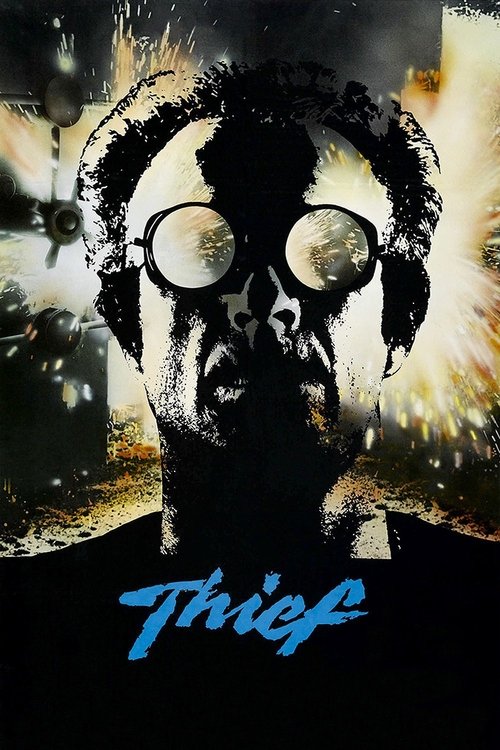
Thief
Frank is an expert professional safecracker, specialized in high-profile diamond heists. He plans to use his ill-gotten income to retire from crime and build a nice life for himself complete with a home, wife and kids. To accelerate the process, he signs on with a top gangster for a big score.
Despite its limited budget of $5.5M, Thief became a financial success, earning $11.5M worldwide—a 109% return.
2 wins & 6 nominations


Plot Structure
Story beats plotted across runtime


Narrative Arc
Emotional journey through the story's key moments
Story Circle
Blueprint 15-beat structure
Arcplot Score Breakdown
Weighted: Precision (70%) + Arc (15%) + Theme (15%)
Thief (1981) showcases meticulously timed narrative design, characteristic of Michael Mann's storytelling approach. This structural analysis examines how the film's 15-point plot structure maps to proven narrative frameworks across 2 hours and 3 minutes. With an Arcplot score of 6.9, the film balances conventional beats with creative variation.
Structural Analysis
The Status Quo at 1 minutes (1% through the runtime) establishes Frank executes a meticulous diamond heist with precision and professionalism. His controlled, solitary world as a master safecracker is established - he operates alone, follows his own code, and trusts no one.. Notably, this early placement immediately immerses viewers in the story world.
The inciting incident occurs at 15 minutes when Leo, a crime boss, approaches Frank with an offer for "one big score" that will set him up for life. Frank initially refuses, wanting to maintain his independence and control, but the offer plants a seed that disrupts his carefully maintained status quo.. At 13% through the film, this Disruption is delayed, allowing extended setup of the story world. This beat shifts the emotional landscape, launching the protagonist into the central conflict.
The First Threshold at 31 minutes marks the transition into Act II, occurring at 25% of the runtime. This indicates the protagonist's commitment to Frank makes the active choice to partner with Leo. He agrees to do the big job in exchange for Leo's help in expediting an adoption for him and Jessie. This irreversible decision means surrendering his independence and entering Leo's world., moving from reaction to action.
At 62 minutes, the Midpoint arrives at 50% of the runtime—precisely centered, creating perfect narrative symmetry. Notably, this crucial beat The heist succeeds brilliantly, and Frank appears to have it all - the money, the family, the dream life. But this is a false victory: Leo refuses to pay Frank his full share and insists Frank continue working for him. The partnership Frank thought he controlled actually controls him., fundamentally raising what's at risk. The emotional intensity shifts, dividing the narrative into clear before-and-after phases.
The Collapse moment at 92 minutes (75% through) represents the emotional nadir. Here, Okla dies in prison. Frank's mentor and the man who represented his moral compass is gone. When Frank demands out from Leo, Leo has Frank's friend and crew member Barry killed. The "whiff of death" is literal, and Frank hits his lowest point - everything he built is crumbling., reveals the protagonist at their lowest point. This beat's placement in the final quarter sets up the climactic reversal.
The Second Threshold at 98 minutes initiates the final act resolution at 80% of the runtime. Frank makes a brutal decision: he destroys his dream. In a devastating scene, he sends Jessie and their son away, burns down his businesses, and liquidates everything he owns. He returns to the state he was in when he left prison - nothing to lose. This liberation through destruction gives him the clarity and freedom to act., demonstrating the transformation achieved throughout the journey.
Emotional Journey
Thief's emotional architecture traces a deliberate progression across 15 carefully calibrated beats.
Narrative Framework
This structural analysis employs systematic plot point analysis that identifies crucial turning points. By mapping Thief against these established plot points, we can identify how Michael Mann utilizes or subverts traditional narrative conventions. The plot point approach reveals not only adherence to structural principles but also creative choices that distinguish Thief within the crime genre.
Michael Mann's Structural Approach
Among the 10 Michael Mann films analyzed on Arcplot, the average structural score is 6.5, demonstrating varied approaches to story architecture. Thief represents one of the director's most structurally precise works. For comparative analysis, explore the complete Michael Mann filmography.
Comparative Analysis
Additional crime films include The Bad Guys, Rustom and The Whole Ten Yards. For more Michael Mann analyses, see Collateral, Ferrari and The Insider.
Plot Points by Act
Act I
SetupStatus Quo
Frank executes a meticulous diamond heist with precision and professionalism. His controlled, solitary world as a master safecracker is established - he operates alone, follows his own code, and trusts no one.
Theme
Okla, Frank's mentor figure from prison, tells him during a visit: "You gotta get it and get out. All the rest is worthless." This establishes the film's central theme about freedom, control, and the cost of the life Frank has chosen.
Worldbuilding
Frank's legitimate businesses (car dealership, bar) are shown as fronts. His relationship with his fence is strained when he's not paid properly. We see his precision, his rules, and his ultimate goal: the collage he made in prison showing his dream life (home, wife, children). He meets Jessie, a woman he's attracted to.
Disruption
Leo, a crime boss, approaches Frank with an offer for "one big score" that will set him up for life. Frank initially refuses, wanting to maintain his independence and control, but the offer plants a seed that disrupts his carefully maintained status quo.
Resistance
Frank debates whether to accept Leo's offer. He pursues Jessie romantically, showing her his collage and revealing his dream of a normal life. He's torn between his desire for independence and his longing for the family life he's never had. Corrupt cops pressure him, reinforcing that he can't operate alone forever.
Act II
ConfrontationFirst Threshold
Frank makes the active choice to partner with Leo. He agrees to do the big job in exchange for Leo's help in expediting an adoption for him and Jessie. This irreversible decision means surrendering his independence and entering Leo's world.
Mirror World
Frank and Jessie marry and begin the adoption process with Leo's connections. Jessie represents everything Frank wants - normalcy, family, connection - and serves as the thematic counterpoint to his criminal life. She embodies the dream from his collage.
Premise
Frank and his crew plan and execute the elaborate diamond heist for Leo. This is "the promise of the premise" - watching a master thief do what he does best. Frank gets the family he always wanted; he and Jessie receive their adopted son. Everything seems to be working.
Midpoint
The heist succeeds brilliantly, and Frank appears to have it all - the money, the family, the dream life. But this is a false victory: Leo refuses to pay Frank his full share and insists Frank continue working for him. The partnership Frank thought he controlled actually controls him.
Opposition
Leo tightens his grip on Frank, treating him as an employee rather than a partner. Frank realizes he's trapped - Leo owns him. His attempts to break free are met with threats. Leo has infiltrated every aspect of Frank's life. The walls close in as Frank understands the cost of his choice.
Collapse
Okla dies in prison. Frank's mentor and the man who represented his moral compass is gone. When Frank demands out from Leo, Leo has Frank's friend and crew member Barry killed. The "whiff of death" is literal, and Frank hits his lowest point - everything he built is crumbling.
Crisis
Frank processes the loss of Okla and Barry. He realizes that his dream of having both the criminal life and the normal family life is impossible. He must choose, and the choice will cost him everything he thought he wanted.
Act III
ResolutionSecond Threshold
Frank makes a brutal decision: he destroys his dream. In a devastating scene, he sends Jessie and their son away, burns down his businesses, and liquidates everything he owns. He returns to the state he was in when he left prison - nothing to lose. This liberation through destruction gives him the clarity and freedom to act.
Synthesis
Frank systematically eliminates Leo's organization. He kills Leo's enforcer, confronts Leo directly, and executes him. Having stripped away everything that could be used against him, Frank operates with the cold precision of a man with nothing left to lose. He completes his vendetta.
Transformation
Frank walks away alone into the night, disappearing into the urban landscape. Unlike the opening where he was a professional with a dream, he's now a ghost with nothing - he achieved freedom through total annihilation of his life. The closing image mirrors the opening but shows he's transformed into something harder, emptier, and truly alone.