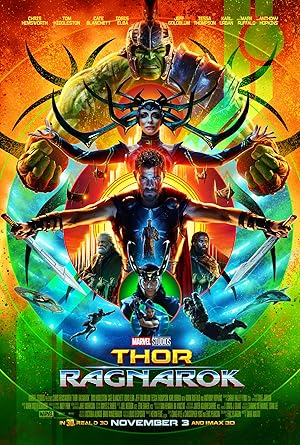
Thor: Ragnarok
Imprisoned on the other side of the universe, the mighty Thor (Chris Hemsworth) finds himself in a deadly gladiatorial contest that puts him against The Incredible Hulk (Mark Ruffalo), his former ally and fellow Avenger. Thor's quest for survival leads him in a race against time to prevent the all-powerful Hela (Cate Blanchett) from destroying his home world and the Asgardian civilization.
Despite a enormous budget of $180.0M, Thor: Ragnarok became a box office success, earning $855.3M worldwide—a 375% return. This commercial performance validated the ambitious narrative scope, illustrating how audiences embrace distinctive approach even at blockbuster scale.
6 wins & 50 nominations


Plot Structure
Story beats plotted across runtime


Narrative Arc
Emotional journey through the story's key moments
Story Circle
Blueprint 15-beat structure
Arcplot Score Breakdown
Weighted: Precision (70%) + Arc (15%) + Theme (15%)
Thor: Ragnarok (2017) exemplifies precise story structure, characteristic of Taika Waititi's storytelling approach. This structural analysis examines how the film's 15-point plot structure maps to proven narrative frameworks across 2 hours and 11 minutes. With an Arcplot score of 6.5, the film balances conventional beats with creative variation.
Characters
Cast & narrative archetypes

Thor
Hela
Loki
Hulk / Bruce Banner
Valkyrie
Grandmaster
Heimdall
Skurge
Main Cast & Characters
Thor
Played by Chris Hemsworth
The God of Thunder, stripped of his hammer and imprisoned, must race against time to prevent Ragnarök and save Asgard from Hela.
Hela
Played by Cate Blanchett
The Goddess of Death and Thor's older sister, who returns to claim Asgard's throne and unleash destruction.
Loki
Played by Tom Hiddleston
Thor's adoptive brother and the God of Mischief, who reluctantly allies with Thor to stop Hela and save Asgard.
Hulk / Bruce Banner
Played by Mark Ruffalo
The brilliant scientist and his alter-ego, trapped on Sakaar as a champion gladiator who has been in Hulk form for two years.
Valkyrie
Played by Tessa Thompson
A disillusioned Asgardian warrior turned bounty hunter and scrapper on Sakaar, haunted by her past and the fall of the Valkyries.
Grandmaster
Played by Jeff Goldblum
The eccentric and flamboyant ruler of Sakaar who hosts gladiatorial contests for entertainment.
Heimdall
Played by Idris Elba
The all-seeing guardian of the Bifrost who leads Asgardian refugees in resistance against Hela.
Skurge
Played by Karl Urban
An Asgardian warrior who becomes Hela's reluctant executioner after she seizes power.
Structural Analysis
The Status Quo at 1 minutes (1% through the runtime) establishes Thor is chained in Muspelheim, confidently bantering with Surtur about preventing Ragnarok. He's powerful, cocky, and believes he's protecting Asgard by stopping the prophecy.. The analysis reveals that this early placement immediately immerses viewers in the story world.
The inciting incident occurs at 16 minutes when Odin dies on the cliffside in Norway, warning Thor and Loki that his passing will free their sister Hela, Goddess of Death. "Asgard is not a place, it's a people." Hela immediately appears and destroys Mjolnir.. At 12% through the film, this Disruption aligns precisely with traditional story structure. This beat shifts the emotional landscape, launching the protagonist into the central conflict.
The First Threshold at 33 minutes marks the transition into Act II, occurring at 25% of the runtime. This indicates the protagonist's commitment to Thor enters the arena to face the Grandmaster's champion, expecting to escape through victory. Instead, he discovers his opponent is Hulk, his friend. This moment commits him to a new strategy: escape requires alliance, not solo strength., moving from reaction to action.
At 67 minutes, the Midpoint arrives at 51% of the runtime—precisely centered, creating perfect narrative symmetry. Of particular interest, this crucial beat False victory: Thor successfully convinces Valkyrie to help after she sees Hela's conquest via vision. The team assembles (Thor, Hulk, Valkyrie, Loki). They have a ship and a plan to escape Sakaar. But the stakes are raised - every moment lost means more Asgardians dead., fundamentally raising what's at risk. The emotional intensity shifts, dividing the narrative into clear before-and-after phases.
The Collapse moment at 98 minutes (75% through) represents the emotional nadir. Here, Hela defeats Thor in combat and gouges out his eye - literal mutilation symbolizing his destroyed identity. She crushes him: "What are you the god of?" Thor has lost his hammer, his father, his eye, his confidence. He's imprisoned while Hela prepares to conquer the universe., demonstrates the protagonist at their lowest point. This beat's placement in the final quarter sets up the climactic reversal.
The Second Threshold at 104 minutes initiates the final act resolution at 79% of the runtime. Thor awakens to his true power - lightning erupts from his body without the hammer. Eyes blazing with electricity, Immigrant Song blaring, he breaks free. The synthesis is complete: God of Thunder + accept Ragnarok = save the people. He now knows Asgard must be destroyed to stop Hela., demonstrating the transformation achieved throughout the journey.
Emotional Journey
Thor: Ragnarok's emotional architecture traces a deliberate progression across 15 carefully calibrated beats.
Narrative Framework
This structural analysis employs a 15-point narrative structure framework that maps key story moments. By mapping Thor: Ragnarok against these established plot points, we can identify how Taika Waititi utilizes or subverts traditional narrative conventions. The plot point approach reveals not only adherence to structural principles but also creative choices that distinguish Thor: Ragnarok within the action genre.
Taika Waititi's Structural Approach
Among the 6 Taika Waititi films analyzed on Arcplot, the average structural score is 7.0, demonstrating varied approaches to story architecture. Thor: Ragnarok takes a more unconventional approach compared to the director's typical style. For comparative analysis, explore the complete Taika Waititi filmography.
Comparative Analysis
Additional action films include The Bad Guys, Puss in Boots and Venom: The Last Dance. For more Taika Waititi analyses, see Jojo Rabbit, Next Goal Wins and Thor: Love and Thunder.
Plot Points by Act
Act I
SetupStatus Quo
Thor is chained in Muspelheim, confidently bantering with Surtur about preventing Ragnarok. He's powerful, cocky, and believes he's protecting Asgard by stopping the prophecy.
Theme
Heimdall tells Thor "I see everything" - establishing the theme of seeing the truth versus living in denial. Thor must learn to see Asgard's true nature and his own identity beyond the hammer.
Worldbuilding
Thor defeats Surtur and returns to Asgard. We see his world: Odin missing, Loki posing as Odin, Asgard in false peace. Thor seeks the real Odin with Loki, establishing their contentious brotherhood and Thor's role as protector.
Disruption
Odin dies on the cliffside in Norway, warning Thor and Loki that his passing will free their sister Hela, Goddess of Death. "Asgard is not a place, it's a people." Hela immediately appears and destroys Mjolnir.
Resistance
Thor is knocked off the Bifrost and crash-lands on Sakaar. He's captured, enslaved with an obedience disk, and forced into gladiatorial combat. He meets Valkyrie (in denial about her past) and learns Hela is conquering Asgard.
Act II
ConfrontationFirst Threshold
Thor enters the arena to face the Grandmaster's champion, expecting to escape through victory. Instead, he discovers his opponent is Hulk, his friend. This moment commits him to a new strategy: escape requires alliance, not solo strength.
Mirror World
Thor reconnects with Hulk/Banner in his quarters. This relationship becomes the heart of Act 2 - two heroes struggling with identity. Banner fears transforming back, Thor clings to being "Thor, son of Odin." They mirror each other's journey.
Premise
The "fun and games" on Sakaar: Thor trying to recruit Hulk and Valkyrie for his escape. Comedic gladiator sequences, heist planning, Jeff Goldblum's Grandmaster shenanigans. Thor explores life without his hammer, finding humor in powerlessness.
Midpoint
False victory: Thor successfully convinces Valkyrie to help after she sees Hela's conquest via vision. The team assembles (Thor, Hulk, Valkyrie, Loki). They have a ship and a plan to escape Sakaar. But the stakes are raised - every moment lost means more Asgardians dead.
Opposition
The escape from Sakaar goes chaotic. Banner jumps from ship (Hulk won't help) and transforms painfully. They crash-land on Asgard via the Devil's Anus. Hela has grown stronger, killing the Warriors Three. Thor faces her but is powerless without Mjolnir. His old tactics fail.
Collapse
Hela defeats Thor in combat and gouges out his eye - literal mutilation symbolizing his destroyed identity. She crushes him: "What are you the god of?" Thor has lost his hammer, his father, his eye, his confidence. He's imprisoned while Hela prepares to conquer the universe.
Crisis
Thor is imprisoned, spiritually broken. He has a vision of Odin who tells him "You're stronger than me... you're the god of thunder, not the god of hammers." Thor processes this revelation: his power was never external. Asgard is its people, not the place.
Act III
ResolutionSecond Threshold
Thor awakens to his true power - lightning erupts from his body without the hammer. Eyes blazing with electricity, Immigrant Song blaring, he breaks free. The synthesis is complete: God of Thunder + accept Ragnarok = save the people. He now knows Asgard must be destroyed to stop Hela.
Synthesis
The finale battle on the Bifrost. Thor unleashes his full lightning powers against Hela while Loki and the others evacuate Asgardians. Thor realizes he must trigger Ragnarok - sending Loki to place Surtur's crown in the Eternal Flame. Surtur destroys Hela and Asgard. Thor chooses his people over his home.
Transformation
Thor stands on the refugee ship bridge, eyepatch on, looking over his surviving people. Loki asks "What do we do now?" Thor, once cocky and certain, is now a humble king without a kingdom. "I'm not sure, but we're on the path. That's something." He's transformed from warrior-prince to true leader.