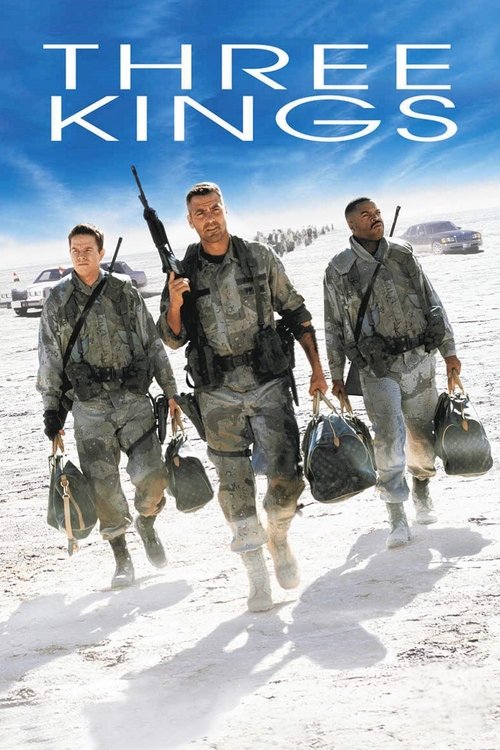
Three Kings
A group of American soldiers stationed in Iraq at the end of the Gulf War find a map they believe will take them to a huge cache of stolen Kuwaiti gold hidden near their base, and they embark on a secret mission that's destined to change everything.
Working with a substantial budget of $75.0M, the film achieved a respectable showing with $108.0M in global revenue (+44% profit margin).
8 wins & 19 nominations


Plot Structure
Story beats plotted across runtime


Narrative Arc
Emotional journey through the story's key moments
Story Circle
Blueprint 15-beat structure
Arcplot Score Breakdown
Weighted: Precision (70%) + Arc (15%) + Theme (15%)
Three Kings (1999) reveals meticulously timed narrative design, characteristic of David O. Russell's storytelling approach. This structural analysis examines how the film's 15-point plot structure maps to proven narrative frameworks across 1 hour and 54 minutes. With an Arcplot score of 7.4, the film balances conventional beats with creative variation.
Characters
Cast & narrative archetypes

Archie Gates
Troy Barlow
Chief Elgin
Conrad Vig
Adriana Cruz
Captain Said
Main Cast & Characters
Archie Gates
Played by George Clooney
A cynical Special Forces Major who leads three soldiers on a gold heist during the Gulf War cease-fire.
Troy Barlow
Played by Mark Wahlberg
A family man and reservist sergeant who seeks fortune but discovers moral purpose during the mission.
Chief Elgin
Played by Ice Cube
A religious and principled staff sergeant who struggles with the moral implications of their actions.
Conrad Vig
Played by Spike Jonze
A naive and impulsive private who follows orders without questioning the larger consequences.
Adriana Cruz
Played by Nora Dunn
An ambitious television reporter covering the Gulf War who prioritizes career advancement over ethics.
Captain Said
Played by Said Taghmaoui
An Iraqi Republican Guard officer who reveals the humanity behind enemy lines and shares a connection with Troy.
Structural Analysis
The Status Quo at 1 minutes (1% through the runtime) establishes Gulf War ceasefire day. Sergeant Troy Barlow shoots an Iraqi soldier who may be surrendering, capturing the moral confusion and aimlessness of soldiers with nothing left to fight for.. Significantly, this early placement immediately immerses viewers in the story world.
The inciting incident occurs at 13 minutes when Gates examines the map and realizes it shows Saddam's bunkers filled with stolen gold from Kuwait. The discovery of the treasure map disrupts their aimless post-war routine with the promise of wealth.. At 12% through the film, this Disruption aligns precisely with traditional story structure. This beat shifts the emotional landscape, launching the protagonist into the central conflict.
The First Threshold at 28 minutes marks the transition into Act II, occurring at 25% of the runtime. This reveals the protagonist's commitment to The four soldiers actively choose to leave base and cross into Iraqi territory to steal the gold. They pass through checkpoints and enter the new world of their self-directed treasure hunt., moving from reaction to action.
At 55 minutes, the Midpoint arrives at 49% of the runtime—precisely centered, creating perfect narrative symmetry. Notably, this crucial beat Troy is captured by Iraqi soldiers while trying to help civilians. He's interrogated and tortured. The "fun" heist becomes deadly serious. The other soldiers must choose between the gold and saving their friend, raising the stakes from greed to morality., fundamentally raising what's at risk. The emotional intensity shifts, dividing the narrative into clear before-and-after phases.
The Collapse moment at 84 minutes (73% through) represents the emotional nadir. Here, Chief is shot in the chest during an ambush. The soldiers desperately try to save him using a makeshift chest tube with a valve. Chief nearly dies - the literal "whiff of death" - as they realize their greed has led to this moment., reveals the protagonist at their lowest point. This beat's placement in the final quarter sets up the climactic reversal.
The Second Threshold at 91 minutes initiates the final act resolution at 80% of the runtime. Gates decides to use the remaining gold as leverage. He makes a deal: they'll surrender the gold in exchange for the Army evacuating the Iraqi refugees to safety. They choose people over profit, synthesizing their military skills with their newfound moral clarity., demonstrating the transformation achieved throughout the journey.
Emotional Journey
Three Kings's emotional architecture traces a deliberate progression across 15 carefully calibrated beats.
Narrative Framework
This structural analysis employs structural analysis methodology used to understand storytelling architecture. By mapping Three Kings against these established plot points, we can identify how David O. Russell utilizes or subverts traditional narrative conventions. The plot point approach reveals not only adherence to structural principles but also creative choices that distinguish Three Kings within the action genre.
David O. Russell's Structural Approach
Among the 8 David O. Russell films analyzed on Arcplot, the average structural score is 7.0, demonstrating varied approaches to story architecture. Three Kings represents one of the director's most structurally precise works. For comparative analysis, explore the complete David O. Russell filmography.
Comparative Analysis
Additional action films include The Bad Guys, Puss in Boots and Venom: The Last Dance. For more David O. Russell analyses, see Silver Linings Playbook, American Hustle and Amsterdam.
Plot Points by Act
Act I
SetupStatus Quo
Gulf War ceasefire day. Sergeant Troy Barlow shoots an Iraqi soldier who may be surrendering, capturing the moral confusion and aimlessness of soldiers with nothing left to fight for.
Theme
Chief Elgin asks: "What is the point of this war?" This question establishes the film's central theme about the meaning of American intervention, greed versus morality, and what these soldiers are really fighting for.
Worldbuilding
Post-ceasefire chaos. Soldiers celebrate, party, and deal with boredom. Troy finds a map hidden in an Iraqi prisoner's rectum showing location of stolen Kuwaiti gold. Archie Gates, a cynical Special Forces officer nearing retirement, hears about it.
Disruption
Gates examines the map and realizes it shows Saddam's bunkers filled with stolen gold from Kuwait. The discovery of the treasure map disrupts their aimless post-war routine with the promise of wealth.
Resistance
Gates debates whether to pursue the gold. He recruits Troy, Chief, and Conrad to join him. They rationalize the heist - it's stolen property, Saddam won't miss it, they deserve it. Gates plans the mission and they prepare to go rogue.
Act II
ConfrontationFirst Threshold
The four soldiers actively choose to leave base and cross into Iraqi territory to steal the gold. They pass through checkpoints and enter the new world of their self-directed treasure hunt.
Mirror World
At the first bunker village, the soldiers encounter Iraqi civilians - rebels rising up against Saddam per President Bush's encouragement. They witness Iraqi soldiers executing civilians and separating families, introducing the human cost of their greed.
Premise
The heist in action. They infiltrate bunkers, find massive amounts of gold, and begin loading it. The promise of the premise: a military heist film. But they increasingly encounter suffering Iraqi civilians whom they're ordered not to help.
Midpoint
Troy is captured by Iraqi soldiers while trying to help civilians. He's interrogated and tortured. The "fun" heist becomes deadly serious. The other soldiers must choose between the gold and saving their friend, raising the stakes from greed to morality.
Opposition
Gates, Chief, and Conrad attempt to rescue Troy while protecting Iraqi refugees who want to escape to Iran. They're attacked by Iraqi forces. Their greed has put them and innocents in danger. The gold becomes a burden as they face consequences of their choices.
Collapse
Chief is shot in the chest during an ambush. The soldiers desperately try to save him using a makeshift chest tube with a valve. Chief nearly dies - the literal "whiff of death" - as they realize their greed has led to this moment.
Crisis
The group processes Chief's near-death. They're surrounded by Iraqi forces and refugees they've promised to help. Gates sits in darkness questioning everything. They have to abandon most of the gold. They face their dark night realizing wealth means nothing.
Act III
ResolutionSecond Threshold
Gates decides to use the remaining gold as leverage. He makes a deal: they'll surrender the gold in exchange for the Army evacuating the Iraqi refugees to safety. They choose people over profit, synthesizing their military skills with their newfound moral clarity.
Synthesis
The finale. They coordinate with the military to extract the refugees across the border to Iran. Gates confronts Iraqi soldiers. They get the civilians to safety. The Army confiscates the gold but the soldiers have achieved something meaningful.
Transformation
Closing images show the soldiers back home, transformed. They smuggled out some gold in their belongings and use it to help each other and their families. Troy reunites with his wife and baby. They found meaning not in greed, but in doing the right thing.