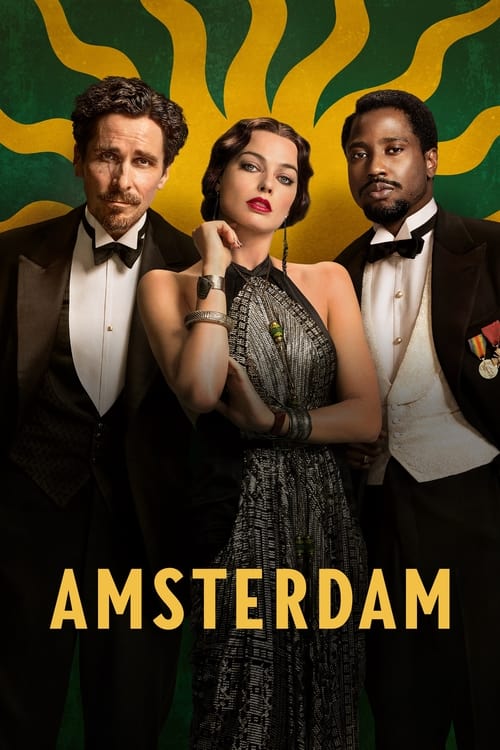
Amsterdam
In the 1930s, three friends—a doctor, a nurse, and an attorney—witness a murder, become suspects themselves and uncover one of the most outrageous plots in American history.
The film financial setback against its significant budget of $80.0M, earning $31.2M globally (-61% loss). While initial box office returns were modest, the film has gained appreciation for its unique voice within the mystery genre.
Nominated for 1 BAFTA Award2 wins & 12 nominations


Plot Structure
Story beats plotted across runtime


Narrative Arc
Emotional journey through the story's key moments
Story Circle
Blueprint 15-beat structure
Arcplot Score Breakdown
Weighted: Precision (70%) + Arc (15%) + Theme (15%)
Amsterdam (2022) demonstrates carefully calibrated narrative design, characteristic of David O. Russell's storytelling approach. This structural analysis examines how the film's 15-point plot structure maps to proven narrative frameworks across 2 hours and 14 minutes. With an Arcplot score of 6.7, the film balances conventional beats with creative variation.
Characters
Cast & narrative archetypes

Burt Berendsen
Harold Woodman
Valerie Voze
General Gil Dillenbeck
Tom Voze
Libby Voze
Paul Canterbury
Detective Hiltz
Main Cast & Characters
Burt Berendsen
Played by Christian Bale
A World War I veteran and doctor who forms a lifelong bond with friends after witnessing a murder and uncovering a fascist conspiracy.
Harold Woodman
Played by John David Washington
A lawyer and war veteran who becomes entangled in a conspiracy plot with his friends.
Valerie Voze
Played by Margot Robbie
A nurse and artist who completes the trio of friends bound by their shared traumatic past and investigation.
General Gil Dillenbeck
Played by Robert De Niro
A decorated war hero targeted by conspirators to be used as a figurehead for a fascist coup.
Tom Voze
Played by Rami Malek
Valerie's wealthy brother who becomes involved in the conspiracy and works to protect his family.
Libby Voze
Played by Anya Taylor-Joy
Tom's wife and Valerie's sister-in-law, who becomes a key player in the conspiracy.
Paul Canterbury
Played by Chris Rock
A wealthy industrialist and the primary antagonist orchestrating the fascist conspiracy.
Detective Hiltz
Played by Matthias Schoenaerts
A corrupt detective investigating the murder that entangles the main trio.
Structural Analysis
The Status Quo at 2 minutes (2% through the runtime) establishes Burt and Harold operate in their present-day reality as doctor and lawyer in 1933 New York, damaged but functioning veterans maintaining an unlikely partnership despite their different worlds.. Of particular interest, this early placement immediately immerses viewers in the story world.
The inciting incident occurs at 16 minutes when Senator Bill Meekins asks Burt and Harold to perform an autopsy on their former commanding officer General Meekins, then the General's daughter is murdered immediately after meeting them, and they are framed for her death.. At 12% through the film, this Disruption aligns precisely with traditional story structure. This beat shifts the emotional landscape, launching the protagonist into the central conflict.
The First Threshold at 34 minutes marks the transition into Act II, occurring at 25% of the runtime. This reveals the protagonist's commitment to Burt and Harold actively decide to investigate the conspiracy rather than simply hide, seeking out Valerie again after years of separation. They choose to reunite the trio and expose the truth., moving from reaction to action.
At 67 minutes, the Midpoint arrives at 50% of the runtime—precisely centered, creating perfect narrative symmetry. Structural examination shows that this crucial beat The conspiracy is revealed to be much larger than a single murder - it's a plot to overthrow the US government with fascist backing. The stakes escalate massively, and the trio realizes they're up against powerful, dangerous forces., fundamentally raising what's at risk. The emotional intensity shifts, dividing the narrative into clear before-and-after phases.
The Collapse moment at 101 minutes (75% through) represents the emotional nadir. Here, The trio is captured by the conspirators and face execution. Their mission appears to have failed, and they confront death together, mirroring their near-death experiences in WWI. All seems lost., reveals the protagonist at their lowest point. This beat's placement in the final quarter sets up the climactic reversal.
The Second Threshold at 107 minutes initiates the final act resolution at 80% of the runtime. General Smedley Butler arrives with evidence and authority, exposing the conspiracy publicly. The trio realizes they can use the truth and their testimony to stop the plot. They synthesize their investigation with Butler's credibility., demonstrating the transformation achieved throughout the journey.
Emotional Journey
Amsterdam's emotional architecture traces a deliberate progression across 15 carefully calibrated beats.
Narrative Framework
This structural analysis employs systematic plot point analysis that identifies crucial turning points. By mapping Amsterdam against these established plot points, we can identify how David O. Russell utilizes or subverts traditional narrative conventions. The plot point approach reveals not only adherence to structural principles but also creative choices that distinguish Amsterdam within the mystery genre.
David O. Russell's Structural Approach
Among the 8 David O. Russell films analyzed on Arcplot, the average structural score is 7.0, demonstrating varied approaches to story architecture. Amsterdam takes a more unconventional approach compared to the director's typical style. For comparative analysis, explore the complete David O. Russell filmography.
Comparative Analysis
Additional mystery films include Lone Star, The Wicker Man and A Soldier's Story. For more David O. Russell analyses, see Silver Linings Playbook, American Hustle and Three Kings.
Plot Points by Act
Act I
SetupStatus Quo
Burt and Harold operate in their present-day reality as doctor and lawyer in 1933 New York, damaged but functioning veterans maintaining an unlikely partnership despite their different worlds.
Theme
Discussion of loyalty and protecting one another - the pact that defines their bond - is established early as Harold and Burt reference their shared history and commitment to each other despite societal divisions.
Worldbuilding
Introduction to 1933 America, Burt's medical practice treating veterans, Harold's law work, their unusual friendship across racial lines, and the lingering trauma from WWI. Flashbacks begin establishing their Amsterdam past.
Disruption
Senator Bill Meekins asks Burt and Harold to perform an autopsy on their former commanding officer General Meekins, then the General's daughter is murdered immediately after meeting them, and they are framed for her death.
Resistance
Burt and Harold flee and debate their options while hiding from police. They realize they must solve the mystery to clear their names. Flashbacks deepen, showing how they met Valerie in WWI and their time together in Amsterdam.
Act II
ConfrontationFirst Threshold
Burt and Harold actively decide to investigate the conspiracy rather than simply hide, seeking out Valerie again after years of separation. They choose to reunite the trio and expose the truth.
Mirror World
Reunion with Valerie, who represents their idealistic past and the purity of their Amsterdam bond. Her presence reignites their connection and embodies the theme of loyalty transcending time and corruption.
Premise
The trio investigates together, following leads through New York's elite society. They navigate danger with wit and their renewed bond. Flashbacks show the full beauty of their Amsterdam time - the promise of the premise is their chemistry and the mystery.
Midpoint
The conspiracy is revealed to be much larger than a single murder - it's a plot to overthrow the US government with fascist backing. The stakes escalate massively, and the trio realizes they're up against powerful, dangerous forces.
Opposition
The conspirators close in. The trio faces increasing danger from wealthy fascist sympathizers. Their investigation leads them deeper into the plot while enemies work to silence them. Their bond is tested under pressure.
Collapse
The trio is captured by the conspirators and face execution. Their mission appears to have failed, and they confront death together, mirroring their near-death experiences in WWI. All seems lost.
Crisis
In their darkest moment facing death, the trio reaffirms their bond and what they mean to each other. They process that their friendship and ideals may die with them, but they have each other.
Act III
ResolutionSecond Threshold
General Smedley Butler arrives with evidence and authority, exposing the conspiracy publicly. The trio realizes they can use the truth and their testimony to stop the plot. They synthesize their investigation with Butler's credibility.
Synthesis
The Business Plot is exposed to Congress through Butler's testimony. The conspirators face consequences. The trio ensures the truth comes out, using everything they learned. They resolve their personal arcs and relationships.
Transformation
The trio stands together vindicated, their bond proven unbreakable. They've moved from damaged individuals haunted by the past to people who honored their Amsterdam pact, saved democracy, and found peace with their shared history.