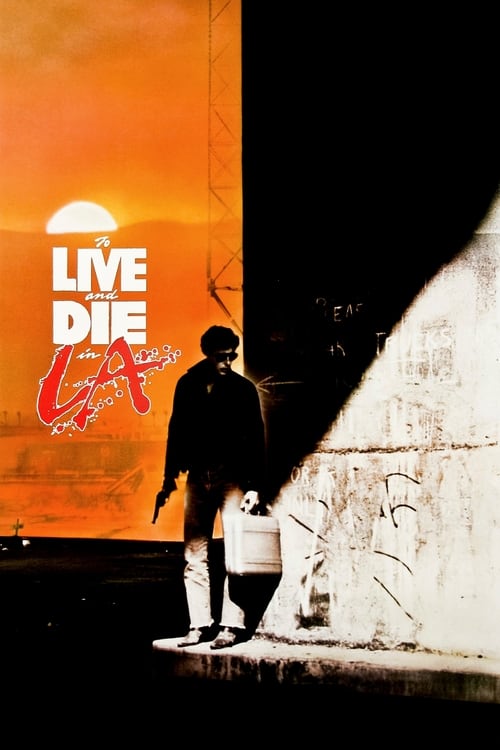
To Live and Die in L.A.
When his longtime partner on the force is killed, reckless U.S. Secret Service agent Richard Chance vows revenge, setting out to nab dangerous counterfeit artist Eric Masters.
Despite its tight budget of $6.0M, To Live and Die in L.A. became a financial success, earning $17.3M worldwide—a 188% return.
3 wins & 1 nomination


Plot Structure
Story beats plotted across runtime


Narrative Arc
Emotional journey through the story's key moments
Story Circle
Blueprint 15-beat structure
Arcplot Score Breakdown
Weighted: Precision (70%) + Arc (15%) + Theme (15%)
To Live and Die in L.A. (1985) showcases meticulously timed story structure, characteristic of William Friedkin's storytelling approach. This structural analysis examines how the film's 15-point plot structure maps to proven narrative frameworks across 1 hour and 56 minutes. With an Arcplot score of 7.0, the film balances conventional beats with creative variation.
Characters
Cast & narrative archetypes

Richard Chance
Rick Masters
John Vukovich
Ruth Lanier
Carl Cody
Main Cast & Characters
Richard Chance
Played by William Petersen
Obsessive Secret Service agent determined to avenge his partner's murder, willing to break rules and cross ethical lines in pursuit of counterfeiter Rick Masters.
Rick Masters
Played by Willem Dafoe
Sophisticated counterfeiter and artist who produces flawless fake bills, ruthless and calculating in eliminating threats to his operation.
John Vukovich
Played by John Pankow
By-the-book Secret Service agent partnered with Chance, initially reluctant to bend rules but gradually drawn into his partner's reckless methods.
Ruth Lanier
Played by Darlanne Fluegel
Informant and petty criminal who maintains a complicated relationship with Chance, providing intelligence while surviving in the criminal underworld.
Carl Cody
Played by John Turturro
Chance's veteran partner and father figure in the Secret Service, killed by Masters while attempting an arrest near retirement.
Structural Analysis
The Status Quo at 1 minutes (1% through the runtime) establishes Secret Service agent Jim Hart performs a routine security check, establishing the dangerous world of federal law enforcement and counterfeiting operations in Los Angeles.. Structural examination shows that this early placement immediately immerses viewers in the story world.
The inciting incident occurs at 13 minutes when Hart is killed by Rick Masters while trying to make a solo bust. Chance arrives at the crime scene to find his partner and mentor dead, igniting his obsessive need for revenge.. At 12% through the film, this Disruption aligns precisely with traditional story structure. This beat shifts the emotional landscape, launching the protagonist into the central conflict.
The First Threshold at 29 minutes marks the transition into Act II, occurring at 25% of the runtime. This shows the protagonist's commitment to Chance makes the active decision to pursue Masters at any cost, rejecting proper procedure. He commits to using illegal methods, dragging the reluctant Vukovich into his obsessive revenge quest., moving from reaction to action.
At 57 minutes, the Midpoint arrives at 50% of the runtime—precisely centered, creating perfect narrative symmetry. The analysis reveals that this crucial beat False defeat: Chance and Vukovich need $50,000 in cash to make a buy from Masters, but have no legal way to obtain it. The stakes raise dramatically as Chance proposes an illegal solution., fundamentally raising what's at risk. The emotional intensity shifts, dividing the narrative into clear before-and-after phases.
The Collapse moment at 85 minutes (73% through) represents the emotional nadir. Here, During the climactic meet with Masters, Chance is suddenly shot and killed. The protagonist dies - the ultimate "whiff of death." Masters escapes, and Chance's reckless approach leads to his own destruction., indicates the protagonist at their lowest point. This beat's placement in the final quarter sets up the climactic reversal.
The Second Threshold at 92 minutes initiates the final act resolution at 80% of the runtime. Vukovich makes the disturbing choice to complete Chance's mission, but now he understands both the cost of recklessness and the necessity of bending rules. He's been corrupted by the same obsession., demonstrating the transformation achieved throughout the journey.
Emotional Journey
To Live and Die in L.A.'s emotional architecture traces a deliberate progression across 15 carefully calibrated beats.
Narrative Framework
This structural analysis employs systematic plot point analysis that identifies crucial turning points. By mapping To Live and Die in L.A. against these established plot points, we can identify how William Friedkin utilizes or subverts traditional narrative conventions. The plot point approach reveals not only adherence to structural principles but also creative choices that distinguish To Live and Die in L.A. within the crime genre.
William Friedkin's Structural Approach
Among the 10 William Friedkin films analyzed on Arcplot, the average structural score is 7.2, reflecting strong command of classical structure. To Live and Die in L.A. takes a more unconventional approach compared to the director's typical style. For comparative analysis, explore the complete William Friedkin filmography.
Comparative Analysis
Additional crime films include The Bad Guys, Rustom and The Whole Ten Yards. For more William Friedkin analyses, see Cruising, Sorcerer and Jade.
Plot Points by Act
Act I
SetupStatus Quo
Secret Service agent Jim Hart performs a routine security check, establishing the dangerous world of federal law enforcement and counterfeiting operations in Los Angeles.
Theme
Hart tells his partner Richard Chance about retirement and playing it safe versus taking risks. "You know what? You gotta take chances." The theme of reckless risk-taking versus prudent judgment is established.
Worldbuilding
Introduction to the Secret Service counterfeiting division, Chance and Hart's partnership, the criminal world of master counterfeiter Rick Masters, and Chance's adrenaline-junkie personality. Three days before Hart's retirement.
Disruption
Hart is killed by Rick Masters while trying to make a solo bust. Chance arrives at the crime scene to find his partner and mentor dead, igniting his obsessive need for revenge.
Resistance
Chance gets a new partner, John Vukovich, a by-the-book agent. Chance debates whether to pursue Masters through legal channels or take dangerous shortcuts. He begins surveillance and pressures informant Ruth Lanier.
Act II
ConfrontationFirst Threshold
Chance makes the active decision to pursue Masters at any cost, rejecting proper procedure. He commits to using illegal methods, dragging the reluctant Vukovich into his obsessive revenge quest.
Mirror World
Vukovich serves as the moral counterpoint to Chance, representing rule-following and ethical law enforcement. Their contrasting approaches embody the theme of recklessness versus restraint.
Premise
The cat-and-mouse game between Chance and Masters intensifies. Chance uses increasingly questionable tactics, including exploiting Ruth. The partnership between Chance and Vukovich is tested as they work undercover trying to get close to Masters.
Midpoint
False defeat: Chance and Vukovich need $50,000 in cash to make a buy from Masters, but have no legal way to obtain it. The stakes raise dramatically as Chance proposes an illegal solution.
Opposition
Chance convinces Vukovich to rob a money courier to get the cash. The robbery goes catastrophically wrong, resulting in the death of an FBI agent. Now hunted by both criminals and fellow law enforcement, everything spirals out of control.
Collapse
During the climactic meet with Masters, Chance is suddenly shot and killed. The protagonist dies - the ultimate "whiff of death." Masters escapes, and Chance's reckless approach leads to his own destruction.
Crisis
Vukovich processes the shock of Chance's death and the collapse of everything they were working toward. He must decide whether to continue Chance's obsessive quest or return to doing things by the book.
Act III
ResolutionSecond Threshold
Vukovich makes the disturbing choice to complete Chance's mission, but now he understands both the cost of recklessness and the necessity of bending rules. He's been corrupted by the same obsession.
Synthesis
Vukovich tracks down and confronts Masters. Using Chance's methods but with more calculation, he finally captures the counterfeiter. Justice is achieved, but at tremendous moral cost.
Transformation
Vukovich, now with a new young partner, has become Chance - the same reckless, rule-breaking agent. He pressures Ruth Lanier exactly as Chance did. The cycle of corruption continues, showing a negative character arc.