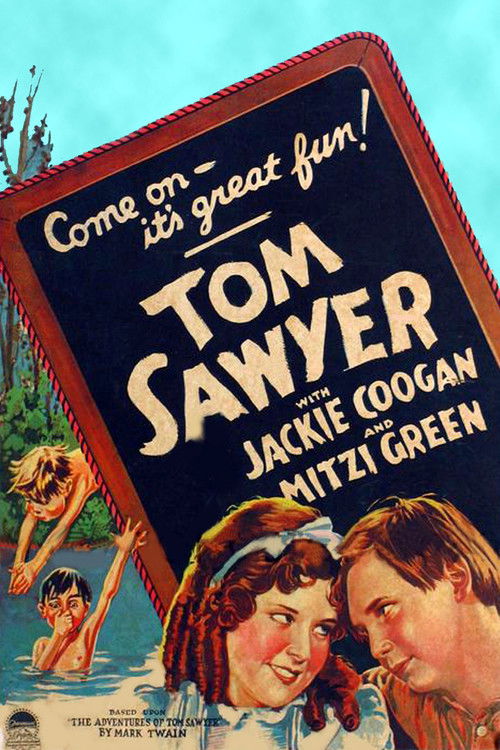
Tom Sawyer
The classic Mark Twain tale of a young boy and his friends on the Mississippi River. Tom and his pals Huckleberry Finn and Joe Harper have numerous adventures, including running away to be pirates and, being believed drowned, attending their own funeral. The boys also witness a murder and Tom and his friend Becky Thatcher are pursued by the vengeful murderer.
The film earned $11.0M at the global box office.
Plot Structure
Story beats plotted across runtime


Narrative Arc
Emotional journey through the story's key moments
Story Circle
Blueprint 15-beat structure
Arcplot Score Breakdown
Weighted: Precision (70%) + Arc (15%) + Theme (15%)
Tom Sawyer (1930) exhibits deliberately positioned narrative design, characteristic of John Cromwell's storytelling approach. This structural analysis examines how the film's 15-point plot structure maps to proven narrative frameworks across 1 hour and 26 minutes. With an Arcplot score of 7.0, the film balances conventional beats with creative variation.
Characters
Cast & narrative archetypes

Tom Sawyer
Huckleberry Finn
Becky Thatcher
Aunt Polly
Injun Joe
Muff Potter
Sid Sawyer
Main Cast & Characters
Tom Sawyer
Played by Jackie Coogan
A mischievous, imaginative boy who seeks adventure and freedom while navigating the expectations of small-town society in St. Petersburg, Missouri.
Huckleberry Finn
Played by Junior Durkin
Tom's best friend, a free-spirited vagrant boy who lives outside societal norms and serves as Tom's partner in adventure.
Becky Thatcher
Played by Mitzi Green
Tom's love interest, a pretty and well-mannered girl who represents both romantic desire and social respectability.
Aunt Polly
Played by Clara Blandick
Tom's strict but loving guardian who attempts to civilize him while struggling between discipline and affection.
Injun Joe
Played by Charles Stevens
The menacing antagonist, a vengeful half-Native American outlaw who becomes the source of danger and fear in the story.
Muff Potter
Played by Tully Marshall
A kind-hearted town drunk who is falsely accused of murder and becomes the focus of Tom's moral crisis.
Sid Sawyer
Played by Jackie Searl
Tom's goody-two-shoes half-brother who delights in getting Tom into trouble and represents conformist behavior.
Structural Analysis
The Status Quo at 1 minutes (1% through the runtime) establishes Tom Sawyer is introduced as a mischievous boy in the small Mississippi River town of St. Petersburg, living with his strict Aunt Polly and half-brother Sid, constantly getting into trouble and avoiding chores.. Structural examination shows that this early placement immediately immerses viewers in the story world.
The inciting incident occurs at 10 minutes when Tom and Huck sneak to the graveyard at midnight and witness Injun Joe murder Dr. Robinson, with Muff Potter falsely blamed for the crime. The boys' innocent world is shattered by this encounter with genuine evil.. At 12% through the film, this Disruption aligns precisely with traditional story structure. This beat shifts the emotional landscape, launching the protagonist into the central conflict.
The First Threshold at 22 minutes marks the transition into Act II, occurring at 25% of the runtime. This indicates the protagonist's commitment to Tom makes the fateful decision to run away with Huck and Joe Harper to Jackson's Island to become pirates, choosing adventure and escape over facing his troubled conscience about the murder., moving from reaction to action.
At 43 minutes, the Midpoint arrives at 50% of the runtime—precisely centered, creating perfect narrative symmetry. The analysis reveals that this crucial beat Tom, Huck, and Joe dramatically appear at their own funeral service, shocking the congregation. This false victory brings momentary glory and celebration, but Tom's guilt over Muff Potter remains unresolved., fundamentally raising what's at risk. The emotional intensity shifts, dividing the narrative into clear before-and-after phases.
The Collapse moment at 65 minutes (75% through) represents the emotional nadir. Here, At the trial, as Muff Potter is about to be condemned to death, Tom reaches his darkest moment of conscience. The weight of allowing an innocent man to die for his silence becomes unbearable—a death of his childish irresponsibility., illustrates the protagonist at their lowest point. This beat's placement in the final quarter sets up the climactic reversal.
The Second Threshold at 69 minutes initiates the final act resolution at 80% of the runtime. Tom courageously takes the witness stand and reveals the truth about the murder, identifying Injun Joe as the real killer. Injun Joe escapes through the courtroom window, but Muff Potter is freed., demonstrating the transformation achieved throughout the journey.
Emotional Journey
Tom Sawyer's emotional architecture traces a deliberate progression across 15 carefully calibrated beats.
Narrative Framework
This structural analysis employs proven narrative structure principles that track dramatic progression. By mapping Tom Sawyer against these established plot points, we can identify how John Cromwell utilizes or subverts traditional narrative conventions. The plot point approach reveals not only adherence to structural principles but also creative choices that distinguish Tom Sawyer within the drama genre.
Comparative Analysis
Additional drama films include After Thomas, South Pacific and Dirty Dancing: Havana Nights.
Plot Points by Act
Act I
SetupStatus Quo
Tom Sawyer is introduced as a mischievous boy in the small Mississippi River town of St. Petersburg, living with his strict Aunt Polly and half-brother Sid, constantly getting into trouble and avoiding chores.
Theme
Aunt Polly laments that Tom needs to learn responsibility and the difference between childish mischief and real consequences, foreshadowing the film's exploration of boyhood innocence confronting adult moral dilemmas.
Worldbuilding
The idyllic yet restrictive world of 1840s small-town Missouri is established: Tom's schoolyard antics, his friendship with the outcast Huck Finn, his infatuation with Becky Thatcher, and the famous fence-whitewashing scheme that showcases his cunning nature.
Disruption
Tom and Huck sneak to the graveyard at midnight and witness Injun Joe murder Dr. Robinson, with Muff Potter falsely blamed for the crime. The boys' innocent world is shattered by this encounter with genuine evil.
Resistance
Terrified of Injun Joe's retribution, Tom and Huck swear a blood oath to keep silent. Tom wrestles with guilt as Muff Potter sits in jail. He debates whether to come forward, torn between self-preservation and moral duty.
Act II
ConfrontationFirst Threshold
Tom makes the fateful decision to run away with Huck and Joe Harper to Jackson's Island to become pirates, choosing adventure and escape over facing his troubled conscience about the murder.
Mirror World
On Jackson's Island, Tom's relationship with Huck deepens as they live freely without adult supervision. Huck's outsider perspective and natural morality begin to influence Tom's understanding of true friendship and integrity.
Premise
The boys enjoy their pirate adventure on the island: swimming, fishing, smoking corncob pipes, and reveling in their freedom. Meanwhile, the town mourns their presumed drowning, and Tom sneaks home to witness his own funeral preparations.
Midpoint
Tom, Huck, and Joe dramatically appear at their own funeral service, shocking the congregation. This false victory brings momentary glory and celebration, but Tom's guilt over Muff Potter remains unresolved.
Opposition
Muff Potter's trial begins, and Tom watches as an innocent man faces hanging. Injun Joe's threatening presence looms. Tom's romance with Becky is complicated by her jealousy and his inability to confess his secret burden.
Collapse
At the trial, as Muff Potter is about to be condemned to death, Tom reaches his darkest moment of conscience. The weight of allowing an innocent man to die for his silence becomes unbearable—a death of his childish irresponsibility.
Crisis
Tom struggles with the moral weight of his decision, knowing that testifying means Injun Joe will seek revenge. He must choose between his own safety and doing what is right to save an innocent life.
Act III
ResolutionSecond Threshold
Tom courageously takes the witness stand and reveals the truth about the murder, identifying Injun Joe as the real killer. Injun Joe escapes through the courtroom window, but Muff Potter is freed.
Synthesis
Tom becomes a local hero but lives in fear of Injun Joe's return. During a picnic, Tom and Becky become lost in McDougal's Cave, where Tom encounters Injun Joe hiding. Tom finds an escape route and leads Becky to safety while Injun Joe is trapped inside.
Transformation
Tom and Huck discover Injun Joe's treasure in the cave. Tom is celebrated not just as a mischief-maker but as a genuine hero. He has transformed from a boy running from responsibility to one who faces danger with moral courage.