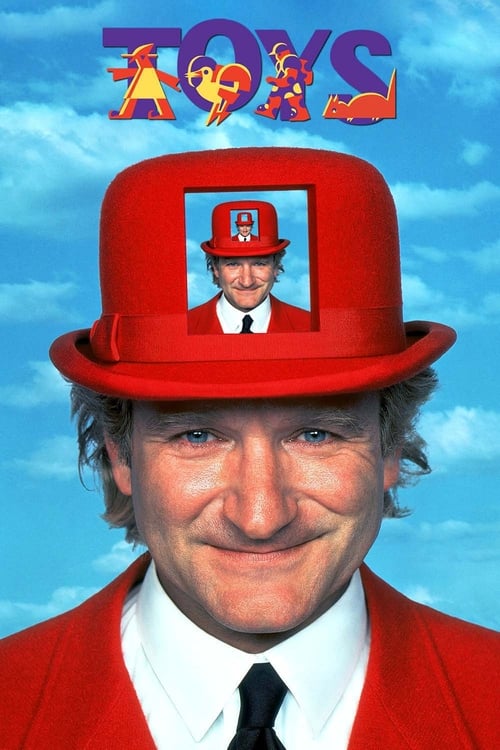
Toys
Leslie Zevo is a fun-loving inventor who must save his late father's toy factory from his evil uncle, Leland, a war-mongering general who rules the operation with an iron fist and builds weapons disguised as toys.
The film financial setback against its moderate budget of $50.0M, earning $23.3M globally (-53% loss). While initial box office returns were modest, the film has gained appreciation for its distinctive approach within the family genre.
Nominated for 2 Oscars. 12 nominations

Plot Structure
Story beats plotted across runtime


Narrative Arc
Emotional journey through the story's key moments
Story Circle
Blueprint 15-beat structure
Arcplot Score Breakdown
Weighted: Precision (70%) + Arc (15%) + Theme (15%)
Toys (1992) exhibits precise plot construction, characteristic of Barry Levinson's storytelling approach. This structural analysis examines how the film's 15-point plot structure maps to proven narrative frameworks across 2 hours and 2 minutes. With an Arcplot score of 7.5, the film showcases strong structural fundamentals.
Characters
Cast & narrative archetypes

Leslie Zevo
Lt. General Leland Zevo
Alsatia Zevo
Gwen Tyler
Patrick Zevo
Kenneth Zevo
Main Cast & Characters
Leslie Zevo
Played by Robin Williams
Whimsical heir to a toy company who must defend his father's legacy of joy against militarization.
Lt. General Leland Zevo
Played by Michael Gambon
Leslie's militaristic uncle who takes over the toy factory and converts it to produce war toys.
Alsatia Zevo
Played by Joan Cusack
Leslie's eccentric sister who lives in a fantasy world and eventually joins the fight to save the factory.
Gwen Tyler
Played by Robin Wright
A smart and capable toy designer who becomes Leslie's ally and love interest in the factory conflict.
Patrick Zevo
Played by LL Cool J
Leland's son, raised in military schools, who struggles between loyalty to his father and what is right.
Kenneth Zevo
Played by Donald O'Connor
Leslie and Alsatia's gentle, idealistic father who founded the toy company based on imagination and joy.
Structural Analysis
The Status Quo at 2 minutes (2% through the runtime) establishes Whimsical aerial view of the Zevo Toy Factory, a fantastical wonderland where Leslie Zevo lives and works creating joyful toys in his father's magical empire.. Notably, this early placement immediately immerses viewers in the story world.
The inciting incident occurs at 14 minutes when Kenneth Zevo dies and shockingly leaves the toy factory not to Leslie, but to his brother, the militaristic General Leland Zevo, disrupting the creative paradise Leslie has always known.. At 12% through the film, this Disruption aligns precisely with traditional story structure. This beat shifts the emotional landscape, launching the protagonist into the central conflict.
The First Threshold at 30 minutes marks the transition into Act II, occurring at 25% of the runtime. This reveals the protagonist's commitment to Leslie discovers the General is secretly developing a war toys division and decides to actively investigate rather than passively accept the changes, entering a world of corporate espionage within his own factory., moving from reaction to action.
At 61 minutes, the Midpoint arrives at 50% of the runtime—precisely centered, creating perfect narrative symmetry. Of particular interest, this crucial beat Leslie discovers the full extent of the General's plan: using the factory to manufacture actual military weapons disguised as toys, including video war games controlled by children. The stakes are raised from corporate to moral crisis., fundamentally raising what's at risk. The emotional intensity shifts, dividing the narrative into clear before-and-after phases.
The Collapse moment at 91 minutes (74% through) represents the emotional nadir. Here, Leslie is completely shut out of the factory and the General activates his war toys operation. The death of childhood innocence is complete as children are recruited to unknowingly control real weapons., shows the protagonist at their lowest point. This beat's placement in the final quarter sets up the climactic reversal.
The Second Threshold at 97 minutes initiates the final act resolution at 80% of the runtime. Leslie realizes he must fight the General using toys themselves - that imagination and playfulness are not weaknesses but weapons. He gathers allies to stage a toy-based rebellion against the military operation., demonstrating the transformation achieved throughout the journey.
Emotional Journey
Toys's emotional architecture traces a deliberate progression across 15 carefully calibrated beats.
Narrative Framework
This structural analysis employs structural analysis methodology used to understand storytelling architecture. By mapping Toys against these established plot points, we can identify how Barry Levinson utilizes or subverts traditional narrative conventions. The plot point approach reveals not only adherence to structural principles but also creative choices that distinguish Toys within the family genre.
Barry Levinson's Structural Approach
Among the 14 Barry Levinson films analyzed on Arcplot, the average structural score is 7.0, reflecting strong command of classical structure. Toys represents one of the director's most structurally precise works. For comparative analysis, explore the complete Barry Levinson filmography.
Comparative Analysis
Additional family films include The Black Stallion, The Bad Guys and Ella Enchanted. For more Barry Levinson analyses, see Envy, Wag the Dog and Diner.
Plot Points by Act
Act I
SetupStatus Quo
Whimsical aerial view of the Zevo Toy Factory, a fantastical wonderland where Leslie Zevo lives and works creating joyful toys in his father's magical empire.
Theme
Kenneth Zevo tells Leslie about the importance of wonder and imagination, stating "Toys are the tools of childhood" - establishing the film's theme about preserving innocence versus militarization.
Worldbuilding
Introduction to the eccentric Zevo family, the toy factory's whimsical operations, Leslie's creative process, his sister Alsatia, and their elderly father Kenneth who built this empire on joy and imagination.
Disruption
Kenneth Zevo dies and shockingly leaves the toy factory not to Leslie, but to his brother, the militaristic General Leland Zevo, disrupting the creative paradise Leslie has always known.
Resistance
Leslie reluctantly accepts General Zevo's arrival, hoping to maintain the factory's spirit. He debates whether to fight for control or trust his uncle, while the General begins imposing military discipline on the whimsical factory.
Act II
ConfrontationFirst Threshold
Leslie discovers the General is secretly developing a war toys division and decides to actively investigate rather than passively accept the changes, entering a world of corporate espionage within his own factory.
Mirror World
Leslie meets Gwen Tyler, a talented toy creator who represents the pure creative spirit he's fighting for. Their relationship becomes the emotional counterpoint to the military takeover.
Premise
Leslie and Gwen explore the factory's secrets, create increasingly elaborate toys, and engage in playful resistance against the General's changes while trying to expose his war toys operation.
Midpoint
Leslie discovers the full extent of the General's plan: using the factory to manufacture actual military weapons disguised as toys, including video war games controlled by children. The stakes are raised from corporate to moral crisis.
Opposition
The General consolidates power, sidelines Leslie from operations, and accelerates weapon production. Leslie's attempts to stop him fail as the General has legal control and military resources.
Collapse
Leslie is completely shut out of the factory and the General activates his war toys operation. The death of childhood innocence is complete as children are recruited to unknowingly control real weapons.
Crisis
Leslie processes his defeat and confronts whether imagination and play can truly stand against military force and corporate power. He must find a way to fight that honors his father's legacy.
Act III
ResolutionSecond Threshold
Leslie realizes he must fight the General using toys themselves - that imagination and playfulness are not weaknesses but weapons. He gathers allies to stage a toy-based rebellion against the military operation.
Synthesis
Leslie leads an elaborate assault on the war toys facility using the factory's whimsical creations as weapons. The finale stages imagination versus militarism in a spectacular toy-based battle, ultimately defeating the General.
Transformation
Leslie stands in the restored factory, now its rightful leader, having proven that imagination and joy are more powerful than weapons. The factory returns to making toys that inspire wonder, not war.