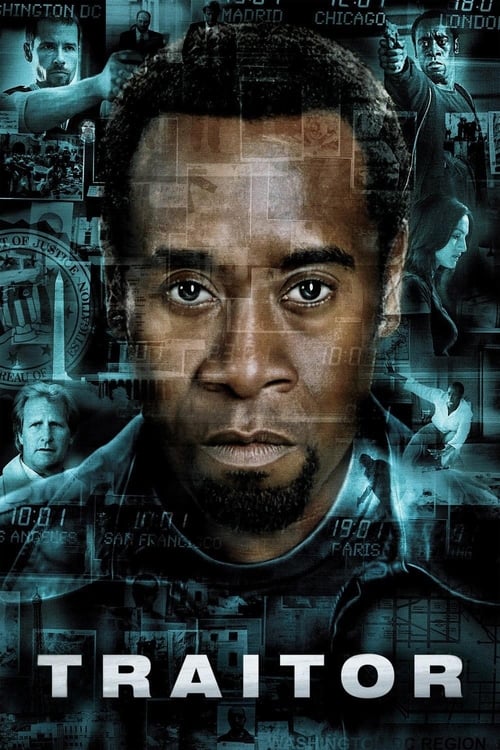
Traitor
When straight arrow FBI agent Roy Clayton heads up the investigation into a dangerous international conspiracy, all clues seem to lead back to former U.S. Special Operations officer Samir Horn.
Working with a moderate budget of $22.0M, the film achieved a steady performer with $23.5M in global revenue (+7% profit margin).
Plot Structure
Story beats plotted across runtime


Narrative Arc
Emotional journey through the story's key moments
Story Circle
Blueprint 15-beat structure
Arcplot Score Breakdown
Weighted: Precision (70%) + Arc (15%) + Theme (15%)
Traitor (2008) reveals precise story structure, characteristic of Jeffrey Nachmanoff's storytelling approach. This structural analysis examines how the film's 13-point plot structure maps to proven narrative frameworks across 1 hour and 54 minutes. With an Arcplot score of 7.3, the film balances conventional beats with creative variation.
Structural Analysis
The Status Quo at 1 minutes (1% through the runtime) establishes Samir Horn sells detonators to Sudanese jihadists, establishing him as an arms dealer operating in the world of Islamic extremism. Flashback to young Samir with his devout father.. Of particular interest, this early placement immediately immerses viewers in the story world.
The inciting incident occurs at 14 minutes when A terrorist bombing kills Samir's associate Nathir, and Samir is arrested by Yemeni authorities. He's thrown into a dangerous prison where his life is threatened.. At 13% through the film, this Disruption is delayed, allowing extended setup of the story world. This beat shifts the emotional landscape, launching the protagonist into the central conflict.
The First Threshold at 29 minutes marks the transition into Act II, occurring at 25% of the runtime. This demonstrates the protagonist's commitment to Samir escapes from prison with Omar and the jihadists during a coordinated breakout. He actively chooses to go deeper into the terrorist network, crossing into a world where his life depends on maintaining his cover., moving from reaction to action.
At 57 minutes, the Midpoint arrives at 50% of the runtime—precisely centered, creating perfect narrative symmetry. Structural examination shows that this crucial beat Samir is forced to facilitate a bombing of the U.S. Consulate in France, resulting in deaths. This false defeat raises the stakes - his cover requires him to enable terror, and innocent people die. The moral cost becomes devastatingly real., fundamentally raising what's at risk. The emotional intensity shifts, dividing the narrative into clear before-and-after phases.
The Collapse moment at 86 minutes (75% through) represents the emotional nadir. Here, Omar is killed by FBI agents during a confrontation. Samir loses his closest connection within the terrorist network and the one man who trusted him completely. The "whiff of death" moment that isolates Samir completely., shows the protagonist at their lowest point. This beat's placement in the final quarter sets up the climactic reversal.
The Synthesis at 91 minutes initiates the final act resolution at 80% of the runtime. Samir and Clayton work together to identify and stop the suicide bombers on thirty buses across the U.S. Samir uses his insider knowledge to locate the bombers while Clayton coordinates the FBI response. They race against time to prevent mass casualties., demonstrating the transformation achieved throughout the journey.
Emotional Journey
Traitor's emotional architecture traces a deliberate progression across 13 carefully calibrated beats.
Narrative Framework
This structural analysis employs systematic plot point analysis that identifies crucial turning points. By mapping Traitor against these established plot points, we can identify how Jeffrey Nachmanoff utilizes or subverts traditional narrative conventions. The plot point approach reveals not only adherence to structural principles but also creative choices that distinguish Traitor within the drama genre.
Jeffrey Nachmanoff's Structural Approach
Among the 2 Jeffrey Nachmanoff films analyzed on Arcplot, the average structural score is 7.4, reflecting strong command of classical structure. Traitor takes a more unconventional approach compared to the director's typical style. For comparative analysis, explore the complete Jeffrey Nachmanoff filmography.
Comparative Analysis
Additional drama films include Eye for an Eye, South Pacific and Kiss of the Spider Woman. For more Jeffrey Nachmanoff analyses, see Replicas.
Plot Points by Act
Act I
SetupStatus Quo
Samir Horn sells detonators to Sudanese jihadists, establishing him as an arms dealer operating in the world of Islamic extremism. Flashback to young Samir with his devout father.
Theme
Omar tells Samir, "The greater the sin, the greater the reward for those who struggle in God's cause." This establishes the film's central question: what does it mean to struggle for what you believe in, and at what cost?
Worldbuilding
Samir operates in Yemen selling explosives. FBI agents Roy Clayton and Max Archer investigate him. A bombing occurs, killing Samir's associate. Samir is arrested and imprisoned, where he befriends Omar, a devout Islamic extremist.
Disruption
A terrorist bombing kills Samir's associate Nathir, and Samir is arrested by Yemeni authorities. He's thrown into a dangerous prison where his life is threatened.
Resistance
In prison, Samir must decide whether to fully commit to the extremist cause. He bonds with Omar and other jihadists, protecting them during a prison riot. He earns their trust while maintaining his cover.
Act II
ConfrontationFirst Threshold
Samir escapes from prison with Omar and the jihadists during a coordinated breakout. He actively chooses to go deeper into the terrorist network, crossing into a world where his life depends on maintaining his cover.
Mirror World
FBI Agent Roy Clayton represents the mirror to Samir - a man of faith and principle working within the law. Clayton's investigation parallels Samir's journey, both men seeking justice through different means.
Premise
Samir travels with the terrorist cell to France and Spain, helping them plan operations while secretly working to prevent attacks. He uses his bomb-making expertise to gain their trust while walking the razor's edge of his deep cover mission.
Midpoint
Samir is forced to facilitate a bombing of the U.S. consulate in France, resulting in deaths. This false defeat raises the stakes - his cover requires him to enable terror, and innocent people die. The moral cost becomes devastatingly real.
Opposition
Clayton closes in on Samir while the terrorist cell plans a major attack on American soil using multiple bus bombs. Samir's handler Carter doubts the mission. Omar grows suspicious of Samir, and the walls close in from both sides.
Collapse
Omar is killed by FBI agents during a confrontation. Samir loses his closest connection within the terrorist network and the one man who trusted him completely. The "whiff of death" moment that isolates Samir completely.
Crisis
Samir mourns Omar while the terrorist plot moves forward. He's alone, suspected by the terrorists, hunted by the FBI, and the bus bombings are imminent. He must find a way to stop the attacks without blowing his cover or getting killed.
Act III
ResolutionSynthesis
Samir and Clayton work together to identify and stop the suicide bombers on thirty buses across the U.S. Samir uses his insider knowledge to locate the bombers while Clayton coordinates the FBI response. They race against time to prevent mass casualties.


