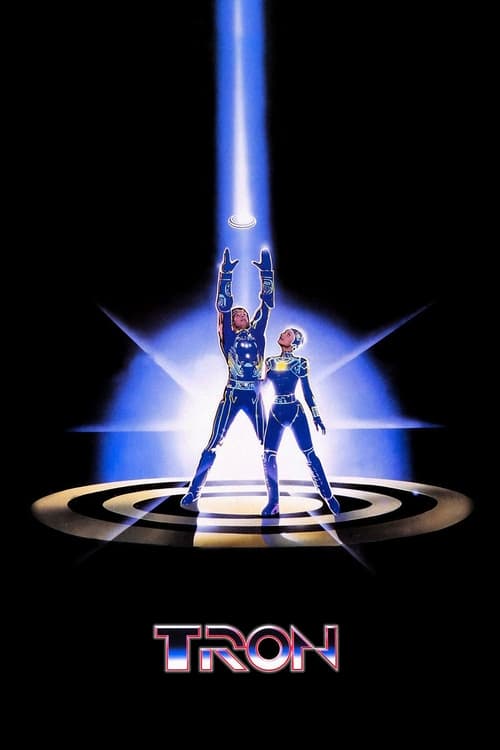
Tron
When brilliant video game maker Flynn hacks the mainframe of his ex-employer, he is beamed inside an astonishing digital world...And becomes part of the very game he is designing. In his mission through cyberspace, Flynn matches wits with a maniacal Master Control Program and teams up with Tron, a security measure created to bring balance to the digital environment.
Working with a moderate budget of $17.0M, the film achieved a respectable showing with $33.0M in global revenue (+94% profit margin).
Nominated for 2 Oscars. 2 wins & 8 nominations


Plot Structure
Story beats plotted across runtime


Narrative Arc
Emotional journey through the story's key moments
Story Circle
Blueprint 15-beat structure
Arcplot Score Breakdown
Weighted: Precision (70%) + Arc (15%) + Theme (15%)
Tron (1982) exhibits meticulously timed narrative design, characteristic of Steven Lisberger's storytelling approach. This structural analysis examines how the film's 15-point plot structure maps to proven narrative frameworks across 1 hour and 35 minutes. With an Arcplot score of 7.3, the film balances conventional beats with creative variation.
Characters
Cast & narrative archetypes

Kevin Flynn / Clu
Tron
Alan Bradley
Yori
Lora Baines
Ed Dillinger
Master Control Program
Sark
Dr. Walter Gibbs
Dumont
Main Cast & Characters
Kevin Flynn / Clu
Played by Jeff Bridges
A brilliant computer programmer digitized into the Grid, fighting to expose corporate theft and escape the digital world.
Tron
Played by Bruce Boxleitner
A security program who becomes Flynn's ally in the fight against the MCP, representing integrity and resistance.
Alan Bradley
Played by Bruce Boxleitner
A computer engineer at ENCOM who created Tron and works to uncover Dillinger's corruption.
Yori
Played by Cindy Morgan
A sympathetic program who assists Flynn and Tron, representing hope and compassion within the system.
Lora Baines
Played by Cindy Morgan
A scientist at ENCOM who developed the digitizing laser and is romantically involved with Alan.
Ed Dillinger
Played by David Warner
The corrupt executive at ENCOM who stole Flynn's work and uses the MCP to maintain control.
Master Control Program
Played by David Warner
The tyrannical AI antagonist seeking absolute control over the digital world and beyond.
Sark
Played by David Warner
The MCP's ruthless enforcer program who commands the game grid and hunts down rogue programs.
Dr. Walter Gibbs
Played by Barnard Hughes
The founder of ENCOM and creator of the MCP, now sidelined as his creation has become corrupt.
Dumont
Played by Barnard Hughes
An input/output program who guards access to the MCP and aids the heroes despite great personal risk.
Structural Analysis
The Status Quo at 1 minutes (1% through the runtime) establishes Flynn's arcade bustles with gamers as he defeats kids at his own games, establishing him as a brilliant but wayward programmer living in the shadow of his stolen creations.. Significantly, this early placement immediately immerses viewers in the story world.
The inciting incident occurs at 11 minutes when Flynn's hacking attempt into ENCOM is blocked by the MCP, which threatens Dillinger and reveals it has grown beyond control, making Flynn's quest to recover evidence of his stolen games vastly more dangerous.. At 12% through the film, this Disruption aligns precisely with traditional story structure. This beat shifts the emotional landscape, launching the protagonist into the central conflict.
The First Threshold at 23 minutes marks the transition into Act II, occurring at 24% of the runtime. This reveals the protagonist's commitment to The MCP activates the digitizing laser, zapping Flynn into the computer world against his will. Though not his choice, Flynn's commitment to infiltrating ENCOM leads directly to this irreversible crossing into a new reality., moving from reaction to action.
At 47 minutes, the Midpoint arrives at 49% of the runtime—precisely centered, creating perfect narrative symmetry. Significantly, this crucial beat Flynn discovers he has extraordinary powers as a User—he can manipulate the digital world directly, healing a damaged Recognizer and realizing he's not just a prisoner but potentially the key to defeating the MCP., fundamentally raising what's at risk. The emotional intensity shifts, dividing the narrative into clear before-and-after phases.
The Collapse moment at 71 minutes (75% through) represents the emotional nadir. Here, Sark's carrier is destroyed in the assault on the MCP's stronghold. Tron appears defeated, the pathway to the MCP seems blocked, and Flynn faces the reality that their mission may have failed completely., shows the protagonist at their lowest point. This beat's placement in the final quarter sets up the climactic reversal.
The Second Threshold at 75 minutes initiates the final act resolution at 79% of the runtime. Flynn chooses to leap into the MCP beam himself, using his User power to distract and weaken it. This selfless decision synthesizes his hacker skills with the faith Tron placed in Users, enabling the final victory., demonstrating the transformation achieved throughout the journey.
Emotional Journey
Tron's emotional architecture traces a deliberate progression across 15 carefully calibrated beats.
Narrative Framework
This structural analysis employs systematic plot point analysis that identifies crucial turning points. By mapping Tron against these established plot points, we can identify how Steven Lisberger utilizes or subverts traditional narrative conventions. The plot point approach reveals not only adherence to structural principles but also creative choices that distinguish Tron within the science fiction genre.
Comparative Analysis
Additional science fiction films include The Postman, Mad Max 2 and AVP: Alien vs. Predator.
Plot Points by Act
Act I
SetupStatus Quo
Flynn's arcade bustles with gamers as he defeats kids at his own games, establishing him as a brilliant but wayward programmer living in the shadow of his stolen creations.
Theme
Alan Bradley argues with Dillinger that "information should be free" and that the MCP's security lockdown is overreach, stating the thematic conflict between freedom and totalitarian control.
Worldbuilding
The world of ENCOM is established: Dillinger's corrupt rise to power, the MCP's growing dominance, Alan's Tron security program, Flynn's past as a developer, and his romantic history with Lora.
Disruption
Flynn's hacking attempt into ENCOM is blocked by the MCP, which threatens Dillinger and reveals it has grown beyond control, making Flynn's quest to recover evidence of his stolen games vastly more dangerous.
Resistance
Flynn convinces Alan and Lora to help him infiltrate ENCOM. They debate the risks while Lora shows Flynn the digitizing laser. Alan agrees to get Tron running if Flynn can break in physically.
Act II
ConfrontationFirst Threshold
The MCP activates the digitizing laser, zapping Flynn into the computer world against his will. Though not his choice, Flynn's commitment to infiltrating ENCOM leads directly to this irreversible crossing into a new reality.
Mirror World
Flynn meets Tron and Ram as fellow prisoners in the game grid. Tron embodies the theme of fighting for the Users and freedom, becoming Flynn's guide to understanding his purpose and powers in this world.
Premise
Flynn experiences the digital world: deadly light cycle battles, disc combat in the arena, escape through the game grid, and discovering that programs view Users as gods. The visual promise of the premise unfolds.
Midpoint
Flynn discovers he has extraordinary powers as a User—he can manipulate the digital world directly, healing a damaged Recognizer and realizing he's not just a prisoner but potentially the key to defeating the MCP.
Opposition
The MCP sends Sark's forces in relentless pursuit. Ram is derezzed, devastating Flynn. Tron reunites with Yori but Sark captures them. The MCP grows stronger, absorbing more programs and threatening the real world.
Collapse
Sark's carrier is destroyed in the assault on the MCP's stronghold. Tron appears defeated, the pathway to the MCP seems blocked, and Flynn faces the reality that their mission may have failed completely.
Crisis
Flynn grapples with despair as the MCP's shields remain impenetrable. He realizes that only a User can directly challenge the MCP, understanding that victory will require the ultimate sacrifice.
Act III
ResolutionSecond Threshold
Flynn chooses to leap into the MCP beam himself, using his User power to distract and weaken it. This selfless decision synthesizes his hacker skills with the faith Tron placed in Users, enabling the final victory.
Synthesis
Flynn's sacrifice creates an opening. Tron throws his disc into the MCP, destroying it and Sark. The system reboots, programs are freed, and Flynn is reconstituted in the real world with the evidence he sought.
Transformation
Flynn emerges as the new CEO of ENCOM, vindicated and transformed. The arcade loner who sought personal justice has become a leader who understands the responsibility of power and the value of freedom.