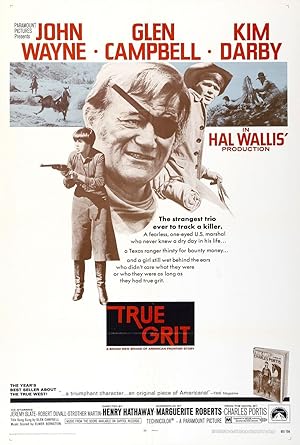
True Grit
1880 Yell County, Arkansas. With revenge etched on her mind after the murder of her father by a once-trusted, cowardly jackal, plucky Mattie Ross rides to Fort Smith. Now, nothing else matters, and while aching to bring his killer to justice, Mattie enlists the help of the ageing U.S. Marshal Reuben "Rooster" J. Cogburn: a rugged, one-eyed lawman. And, before long, La Boeuf, a young Texas Ranger thirsty for bounty money, joins in. However, as the unlikely trio embarks on a dangerous journey into the heart of Indian Territory, the odds are against them. But, only rabid vengeance keeps determined Mattie going. Is true grit enough to see justice served?
The film earned $37.7M at the global box office.
1 Oscar. 6 wins & 7 nominations


Plot Structure
Story beats plotted across runtime


Narrative Arc
Emotional journey through the story's key moments
Story Circle
Blueprint 15-beat structure
Arcplot Score Breakdown
Weighted: Precision (70%) + Arc (15%) + Theme (15%)
True Grit (1969) reveals precise story structure, characteristic of Henry Hathaway's storytelling approach. This structural analysis examines how the film's 15-point plot structure maps to proven narrative frameworks across 2 hours and 8 minutes. With an Arcplot score of 6.8, the film balances conventional beats with creative variation.
Characters
Cast & narrative archetypes

Mattie Ross
Rooster Cogburn
La Boeuf
Tom Chaney
Ned Pepper
Main Cast & Characters
Mattie Ross
Played by Kim Darby
A determined 14-year-old girl who hires a U.S. Marshal to track down her father's killer and avenge his murder.
Rooster Cogburn
Played by John Wayne
A hard-drinking, one-eyed U.S. Marshal known for his ruthlessness and "true grit" who reluctantly takes on Mattie's case.
La Boeuf
Played by Glen Campbell
A Texas Ranger pursuing the same killer for a different crime, who joins forces with Mattie and Cogburn despite initial friction.
Tom Chaney
Played by Jeff Corey
The cowardly outlaw who murdered Mattie's father and fled into Indian Territory, now riding with a criminal gang.
Ned Pepper
Played by Robert Duvall
The cunning leader of the outlaw gang sheltering Tom Chaney, a dangerous adversary to Cogburn.
Structural Analysis
The Status Quo at 2 minutes (1% through the runtime) establishes Mattie Ross narrates the death of her father, establishing her as a determined 14-year-old seeking justice in a harsh frontier world where she has lost her protector.. Notably, this early placement immediately immerses viewers in the story world.
The inciting incident occurs at 15 minutes when Mattie watches Rooster testify in court, seeing his ruthless effectiveness as a lawman. She decides he has the "true grit" needed to hunt down her father's killer, setting her quest in motion.. At 12% through the film, this Disruption aligns precisely with traditional story structure. This beat shifts the emotional landscape, launching the protagonist into the central conflict.
The First Threshold at 32 minutes marks the transition into Act II, occurring at 25% of the runtime. This shows the protagonist's commitment to Mattie forces her way across the river on her horse, proving she will not be left behind. Rooster accepts her presence, and the unlikely trio officially enters Indian Territory together to hunt Chaney., moving from reaction to action.
At 64 minutes, the Midpoint arrives at 50% of the runtime—precisely centered, creating perfect narrative symmetry. Of particular interest, this crucial beat LaBoeuf leaves after a bitter argument and physical confrontation with Rooster. The partnership fractures at the halfway point, appearing to doom the mission just as they're getting close to Chaney., fundamentally raising what's at risk. The emotional intensity shifts, dividing the narrative into clear before-and-after phases.
The Collapse moment at 96 minutes (75% through) represents the emotional nadir. Here, Mattie falls into a pit with rattlesnakes after shooting Chaney and is bitten. Her literal descent into a dark hole filled with death represents the cost of vengeance - she may die achieving her goal., demonstrates the protagonist at their lowest point. This beat's placement in the final quarter sets up the climactic reversal.
The Second Threshold at 102 minutes initiates the final act resolution at 80% of the runtime. Rooster finds help at a remote station. The realization that preserving life matters more than vengeance - Rooster has transformed from caring only about the bounty to sacrificing everything to save Mattie., demonstrating the transformation achieved throughout the journey.
Emotional Journey
True Grit's emotional architecture traces a deliberate progression across 15 carefully calibrated beats.
Narrative Framework
This structural analysis employs structural analysis methodology used to understand storytelling architecture. By mapping True Grit against these established plot points, we can identify how Henry Hathaway utilizes or subverts traditional narrative conventions. The plot point approach reveals not only adherence to structural principles but also creative choices that distinguish True Grit within the adventure genre.
Henry Hathaway's Structural Approach
Among the 3 Henry Hathaway films analyzed on Arcplot, the average structural score is 7.0, demonstrating varied approaches to story architecture. True Grit takes a more unconventional approach compared to the director's typical style. For comparative analysis, explore the complete Henry Hathaway filmography.
Comparative Analysis
Additional adventure films include The Black Stallion, The Bad Guys and Puss in Boots. For more Henry Hathaway analyses, see The Sons of Katie Elder, Niagara.
Plot Points by Act
Act I
SetupStatus Quo
Mattie Ross narrates the death of her father, establishing her as a determined 14-year-old seeking justice in a harsh frontier world where she has lost her protector.
Theme
The undertaker tells Mattie that her father's killer Tom Chaney "had no true grit" - establishing the film's central theme about what constitutes real courage and moral fortitude.
Worldbuilding
Mattie arrives in Fort Smith, arranges her father's burial, shrewdly negotiates with Col. Stonehill to recover money, and learns about Marshal Rooster Cogburn - demonstrating her intelligence, determination, and the lawless frontier setting.
Disruption
Mattie watches Rooster testify in court, seeing his ruthless effectiveness as a lawman. She decides he has the "true grit" needed to hunt down her father's killer, setting her quest in motion.
Resistance
Mattie negotiates with the reluctant Rooster to hire him, meets Texas Ranger LaBoeuf who also seeks Chaney, and debates whether to partner with them. The men resist taking a child into Indian Territory.
Act II
ConfrontationFirst Threshold
Mattie forces her way across the river on her horse, proving she will not be left behind. Rooster accepts her presence, and the unlikely trio officially enters Indian Territory together to hunt Chaney.
Mirror World
Around the campfire, Rooster shares stories of his past life and failed marriage, revealing his humanity beneath the gruff exterior. This relationship subplot will teach Mattie about the cost of obsessive pursuit.
Premise
The adventure promised by the premise: tracking outlaws through dangerous territory. The group encounters bandits, questions suspects, navigates the tension between Rooster and LaBoeuf, and closes in on Ned Pepper's gang.
Midpoint
LaBoeuf leaves after a bitter argument and physical confrontation with Rooster. The partnership fractures at the halfway point, appearing to doom the mission just as they're getting close to Chaney.
Opposition
Mattie and Rooster continue alone. They encounter Ned Pepper's gang, Rooster faces down four outlaws in an iconic charge, Mattie finds Chaney by accident but is captured, and the situation grows increasingly desperate.
Collapse
Mattie falls into a pit with rattlesnakes after shooting Chaney and is bitten. Her literal descent into a dark hole filled with death represents the cost of vengeance - she may die achieving her goal.
Crisis
Rooster pulls Mattie from the pit and desperately races against time to save her from the snake venom. The dark night where Mattie hovers near death and Rooster exhausts his horse trying to save her.
Act III
ResolutionSecond Threshold
Rooster finds help at a remote station. The realization that preserving life matters more than vengeance - Rooster has transformed from caring only about the bounty to sacrificing everything to save Mattie.
Synthesis
Mattie survives but loses her arm. Time jumps forward showing the aftermath. Rooster has disappeared, but Mattie seeks him out years later, wanting to reconnect with the man who saved her life.
Transformation
Adult Mattie learns Rooster has died, but sees him perform in a Wild West show beforehand. She remains unmarried and hardened - her quest was completed but at great cost, embodying the film's meditation on justice and its price.