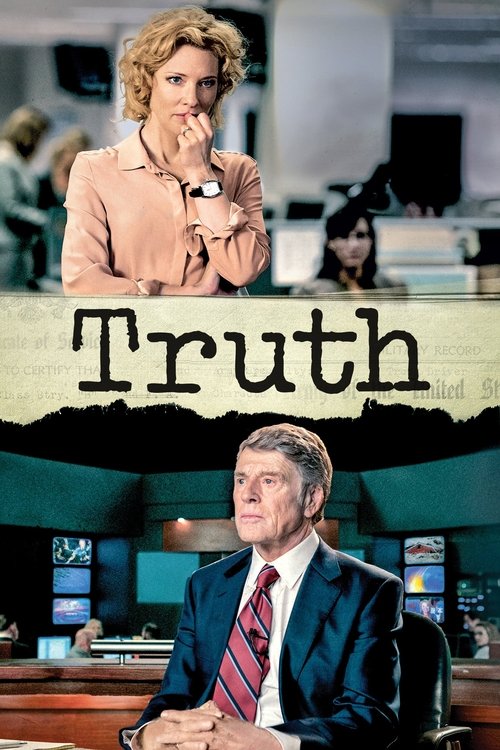
Truth
As a renowned producer and close associate of Dan Rather, Mary Mapes believes she’s broken the biggest story of the 2004 election: revelations of a sitting U.S. President’s military service. But when allegations come pouring in, sources change their stories, document authenticity is questioned, and the casualties begin to mount.
The film underperformed commercially against its tight budget of $9.6M, earning $5.4M globally (-44% loss). While initial box office returns were modest, the film has gained appreciation for its fresh perspective within the drama genre.
1 win & 6 nominations


Plot Structure
Story beats plotted across runtime


Narrative Arc
Emotional journey through the story's key moments
Story Circle
Blueprint 15-beat structure
Arcplot Score Breakdown
Weighted: Precision (70%) + Arc (15%) + Theme (15%)
Truth (2015) demonstrates strategically placed narrative design, characteristic of James Vanderbilt's storytelling approach. This structural analysis examines how the film's 15-point plot structure maps to proven narrative frameworks across 2 hours and 5 minutes. With an Arcplot score of 7.1, the film balances conventional beats with creative variation.
Characters
Cast & narrative archetypes

Mary Mapes
Dan Rather
Mike Smith
Lucy Scott
Colonel Roger Charles
Josh Howard
Main Cast & Characters
Mary Mapes
Played by Cate Blanchett
60 Minutes producer who investigates George W. Bush's military service and faces career-ending consequences when the story's authenticity is questioned.
Dan Rather
Played by Robert Redford
Legendary CBS news anchor who supports Mapes' investigation but becomes collateral damage in the scandal.
Mike Smith
Played by Topher Grace
Retired Lieutenant Colonel and document expert who helps authenticate the Bush documents.
Lucy Scott
Played by Elisabeth Moss
Associate producer on Mapes' team who assists with the investigation.
Colonel Roger Charles
Played by Dennis Quaid
Military analyst and investigative journalist who contributes to the story research.
Josh Howard
Played by David Lyons
CBS executive and 60 Minutes Wednesday executive producer who oversees the investigation.
Structural Analysis
The Status Quo at 2 minutes (1% through the runtime) establishes Mary Mapes working as a successful CBS 60 Minutes producer, respected in her field, established in her career. She is shown as competent, driven, and at the top of her profession.. Notably, this early placement immediately immerses viewers in the story world.
The inciting incident occurs at 14 minutes when Mary receives a tip about documents related to President George W. Bush's National Guard service that could prove he received preferential treatment and failed to fulfill his duty. This story could be explosive.. At 12% through the film, this Disruption aligns precisely with traditional story structure. This beat shifts the emotional landscape, launching the protagonist into the central conflict.
The First Threshold at 31 minutes marks the transition into Act II, occurring at 25% of the runtime. This indicates the protagonist's commitment to Mary and Dan Rather make the active decision to move forward with the investigation and commit to the story. They decide to pursue it for broadcast despite potential political ramifications., moving from reaction to action.
At 62 minutes, the Midpoint arrives at 50% of the runtime—precisely centered, creating perfect narrative symmetry. Significantly, this crucial beat The story airs on 60 Minutes. False victory - it seems like a triumph, a major scoop. Mary and Dan believe they've done important journalism. Initial reception appears positive., fundamentally raising what's at risk. The emotional intensity shifts, dividing the narrative into clear before-and-after phases.
The Collapse moment at 93 minutes (74% through) represents the emotional nadir. Here, CBS announces an independent investigation and distances itself from the story. Mary realizes her career is over. Dan Rather's legacy is tarnished. The death of their reputations and the ideal of truth-seeking journalism., illustrates the protagonist at their lowest point. This beat's placement in the final quarter sets up the climactic reversal.
The Second Threshold at 100 minutes initiates the final act resolution at 80% of the runtime. Mary realizes that regardless of the document controversy, the core truth of the story was never disproven. She chooses to stand by her journalism and her principles rather than capitulate., demonstrating the transformation achieved throughout the journey.
Emotional Journey
Truth's emotional architecture traces a deliberate progression across 15 carefully calibrated beats.
Narrative Framework
This structural analysis employs a 15-point narrative structure framework that maps key story moments. By mapping Truth against these established plot points, we can identify how James Vanderbilt utilizes or subverts traditional narrative conventions. The plot point approach reveals not only adherence to structural principles but also creative choices that distinguish Truth within the drama genre.
Comparative Analysis
Additional drama films include After Thomas, South Pacific and Dirty Dancing: Havana Nights.
Plot Points by Act
Act I
SetupStatus Quo
Mary Mapes working as a successful CBS 60 Minutes producer, respected in her field, established in her career. She is shown as competent, driven, and at the top of her profession.
Theme
Discussion about journalistic integrity and the responsibility to pursue truth regardless of consequences. A colleague or Dan Rather states something about the duty of journalism to hold power accountable.
Worldbuilding
Establishment of the CBS News environment, Mary's relationship with Dan Rather, the 60 Minutes team dynamics, and the context of the 2004 election. Shows Mary's professional reputation and her investigative methods.
Disruption
Mary receives a tip about documents related to President George W. Bush's National Guard service that could prove he received preferential treatment and failed to fulfill his duty. This story could be explosive.
Resistance
Mary debates whether to pursue the story, assembles her team, begins initial investigation. She discusses the risks with Dan Rather and colleagues. The team vets sources and begins authentication process of documents.
Act II
ConfrontationFirst Threshold
Mary and Dan Rather make the active decision to move forward with the investigation and commit to the story. They decide to pursue it for broadcast despite potential political ramifications.
Mirror World
Deepening relationship with source Bill Burkett, who represents the thematic ideal of truth-telling at personal cost. His character embodies the price of standing up to power.
Premise
The investigative journalism in action - the promise of the premise. Mary and team track down sources, authenticate documents, conduct interviews, piece together the story. The thrill of investigative reporting.
Midpoint
The story airs on 60 Minutes. False victory - it seems like a triumph, a major scoop. Mary and Dan believe they've done important journalism. Initial reception appears positive.
Opposition
Bloggers and critics begin questioning the authenticity of the documents. Pressure mounts from CBS corporate, political forces, and media critics. The team's credibility is attacked. Opposition intensifies from multiple fronts.
Collapse
CBS announces an independent investigation and distances itself from the story. Mary realizes her career is over. Dan Rather's legacy is tarnished. The death of their reputations and the ideal of truth-seeking journalism.
Crisis
Mary faces the panel investigation, personal attacks, and the dissolution of everything she worked for. Dark night of processing the loss - of her career, reputation, and faith in the institution she served.
Act III
ResolutionSecond Threshold
Mary realizes that regardless of the document controversy, the core truth of the story was never disproven. She chooses to stand by her journalism and her principles rather than capitulate.
Synthesis
Mary faces the consequences with dignity, defends her work, confronts CBS leadership. Dan Rather eventually leaves CBS. Mary refuses to apologize for pursuing truth, even as she loses everything professionally.
Transformation
Mary, no longer at CBS but unbowed, having chosen integrity over institutional approval. She has lost her career but maintained her principles. The transformation is internal - from institutional journalist to independent truth-teller.