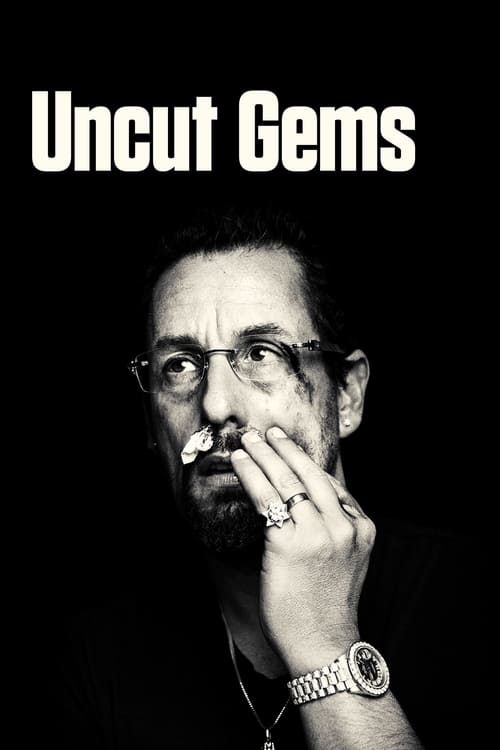
Uncut Gems
A charismatic New York City jeweler always on the lookout for the next big score makes a series of high-stakes bets that could lead to the windfall of a lifetime. Howard must perform a precarious high-wire act, balancing business, family, and encroaching adversaries on all sides in his relentless pursuit of the ultimate win.
Despite a moderate budget of $19.0M, Uncut Gems became a box office success, earning $50.0M worldwide—a 163% return.
27 wins & 91 nominations


Plot Structure
Story beats plotted across runtime


Narrative Arc
Emotional journey through the story's key moments
Story Circle
Blueprint 15-beat structure
Arcplot Score Breakdown
Weighted: Precision (70%) + Arc (15%) + Theme (15%)
Uncut Gems (2019) exhibits deliberately positioned story structure, characteristic of Benny Safdie's storytelling approach. This structural analysis examines how the film's 15-point plot structure maps to proven narrative frameworks across 2 hours and 16 minutes. With an Arcplot score of 6.5, the film balances conventional beats with creative variation.
Characters
Cast & narrative archetypes

Howard Ratner
Julia
Dinah Ratner
Arno
Demany
Kevin Garnett
Main Cast & Characters
Howard Ratner
Played by Adam Sandler
A charismatic jewelry store owner and compulsive gambler whose high-stakes bets threaten to destroy his business and family.
Julia
Played by Julia Fox
Howard's young mistress and employee who becomes entangled in his gambling schemes while pursuing her own interests.
Dinah Ratner
Played by Idina Menzel
Howard's estranged wife who struggles to maintain stability for their children while planning to divorce him.
Arno
Played by Eric Bogosian
Howard's loan shark brother-in-law who relentlessly pursues payment of debts through intimidation and violence.
Demany
Played by LaKeith Stanfield
A street hustler and middleman who connects Howard with wealthy clients, particularly NBA players.
Kevin Garnett
Played by Kevin Garnett
NBA superstar who becomes obsessed with Howard's Ethiopian opal and gets drawn into his schemes.
Structural Analysis
The Status Quo at 1 minutes (1% through the runtime) establishes Howard Ratner operates his Manhattan jewelry store in a state of controlled chaos, hustling multiple deals while dodging creditors and juggling his fractured personal life. The opening image establishes him as a man perpetually in motion, seeking the next big score.. Structural examination shows that this early placement immediately immerses viewers in the story world.
The inciting incident occurs at 16 minutes when NBA star Kevin Garnett visits the shop and becomes mesmerized by the uncut Ethiopian opal, insisting on having it for luck before his game. Against all business sense, Howard loans him the priceless gem in exchange for Garnett's championship ring as collateral.. At 12% through the film, this Disruption aligns precisely with traditional story structure. This beat shifts the emotional landscape, launching the protagonist into the central conflict.
The First Threshold at 33 minutes marks the transition into Act II, occurring at 25% of the runtime. This indicates the protagonist's commitment to Howard's bet wins big, but Arno's goons intercept him before he can collect, strip him naked, lock him in his car trunk, and terrorize him. This brutal assault should be his wake-up call, but instead Howard doubles down, determined to pursue both the opal auction and his relationship with Julia., moving from reaction to action.
At 67 minutes, the Midpoint arrives at 49% of the runtime—precisely centered, creating perfect narrative symmetry. The analysis reveals that this crucial beat The opal auction appears to be a triumph, selling for $1.2 million—enough to clear Howard's debts and vindicate his risk. This false victory raises the stakes as Howard believes he's finally won, but his compulsion immediately reasserts itself when he plans another massive bet instead of paying what he owes., fundamentally raising what's at risk. The emotional intensity shifts, dividing the narrative into clear before-and-after phases.
The Collapse moment at 100 minutes (74% through) represents the emotional nadir. Here, Howard discovers Julia has gambled away his money at the casino and is possibly cheating on him. He attacks her in the parking garage in a fit of rage and desperation. This is his emotional bottom—betrayed, broke, and completely out of control, having lost everything including his fantasy escape., demonstrates the protagonist at their lowest point. This beat's placement in the final quarter sets up the climactic reversal.
The Second Threshold at 106 minutes initiates the final act resolution at 78% of the runtime. Howard gets Garnett to agree to buy back the opal and formulates his endgame: he will place one final massive parlay bet on Garnett's playoff game. This synthesis combines everything he's learned—his relationship with Garnett, his knowledge of the opal's power, and his unshakeable belief in his own luck., demonstrating the transformation achieved throughout the journey.
Emotional Journey
Uncut Gems's emotional architecture traces a deliberate progression across 15 carefully calibrated beats.
Narrative Framework
This structural analysis employs proven narrative structure principles that track dramatic progression. By mapping Uncut Gems against these established plot points, we can identify how Benny Safdie utilizes or subverts traditional narrative conventions. The plot point approach reveals not only adherence to structural principles but also creative choices that distinguish Uncut Gems within the drama genre.
Benny Safdie's Structural Approach
Among the 2 Benny Safdie films analyzed on Arcplot, the average structural score is 6.9, demonstrating varied approaches to story architecture. Uncut Gems takes a more unconventional approach compared to the director's typical style. For comparative analysis, explore the complete Benny Safdie filmography.
Comparative Analysis
Additional drama films include After Thomas, South Pacific and Dirty Dancing: Havana Nights. For more Benny Safdie analyses, see Good Time.
Plot Points by Act
Act I
SetupStatus Quo
Howard Ratner operates his Manhattan jewelry store in a state of controlled chaos, hustling multiple deals while dodging creditors and juggling his fractured personal life. The opening image establishes him as a man perpetually in motion, seeking the next big score.
Theme
Howard's father-in-law Gooey confronts him about his debts and reckless behavior, stating "You never change, you never learn." This encapsulates the film's central theme about addiction to risk and the inability to escape self-destructive patterns.
Worldbuilding
We see Howard's ecosystem: his jewelry business, his employee Demany who brings celebrity clients, his mistress Julia who works at the store, his estranged wife Dinah and their children, and the menacing loan sharks Arno and his enforcers. Howard owes $100,000 and is desperately awaiting a rare Ethiopian opal to auction.
Disruption
NBA star Kevin Garnett visits the shop and becomes mesmerized by the uncut Ethiopian opal, insisting on having it for luck before his game. Against all business sense, Howard loans him the priceless gem in exchange for Garnett's championship ring as collateral.
Resistance
Howard debates his reckless decision, pawning Garnett's ring to place a massive sports bet while scrambling to prepare the opal for auction. He navigates mounting pressure from loan sharks, family obligations, and his own compulsions. His business partner and others question his increasingly dangerous choices.
Act II
ConfrontationFirst Threshold
Howard's bet wins big, but Arno's goons intercept him before he can collect, strip him naked, lock him in his car trunk, and terrorize him. This brutal assault should be his wake-up call, but instead Howard doubles down, determined to pursue both the opal auction and his relationship with Julia.
Mirror World
Howard takes Julia to a Weeknd concert and to see The Fury (a school play his daughter performs in), positioning her as a potential new life separate from his failures. She represents the fantasy of escape and reinvention, embodying the thematic question of whether Howard can ever truly change.
Premise
Howard juggles his crumbling marriage, Julia's affections, the upcoming opal auction, attempts to get Garnett to return the stone, and escalating threats from creditors. This is the "fun and games" of watching a degenerate gambler spin plates—the chaotic hustle the audience came to see, with Howard always one step ahead or behind disaster.
Midpoint
The opal auction appears to be a triumph, selling for $1.2 million—enough to clear Howard's debts and vindicate his risk. This false victory raises the stakes as Howard believes he's finally won, but his compulsion immediately reasserts itself when he plans another massive bet instead of paying what he owes.
Opposition
Everything collapses: Garnett's associate outbids and buys the opal, refusing to pay Howard immediately; Julia takes Howard's money and goes to a casino with her friends; Dinah demands a divorce at Passover dinner; and Arno's pressure intensifies. Howard's carefully constructed schemes unravel as his lies catch up with him.
Collapse
Howard discovers Julia has gambled away his money at the casino and is possibly cheating on him. He attacks her in the parking garage in a fit of rage and desperation. This is his emotional bottom—betrayed, broke, and completely out of control, having lost everything including his fantasy escape.
Crisis
Howard spirals in the dark night of his soul, confronting the reality that his addiction has cost him his family, his money, and his dignity. He retrieves his money from Julia and faces the choice of paying his debts or making one final, ultimate bet.
Act III
ResolutionSecond Threshold
Howard gets Garnett to agree to buy back the opal and formulates his endgame: he will place one final massive parlay bet on Garnett's playoff game. This synthesis combines everything he's learned—his relationship with Garnett, his knowledge of the opal's power, and his unshakeable belief in his own luck.
Synthesis
Howard executes his final plan: he locks Arno and his goons in the store's security vestibule, completes the opal sale to Garnett for $175,000, and places a $165,000 parlay bet on Garnett's performance. As the game plays out, Howard watches from his store, euphoric as his bet hits every mark and approaches a $1.2 million payout.
Transformation
Howard wins his bet in a moment of pure ecstasy, but when he releases Arno, he is immediately shot in the face and killed. The closing image shows his body on the floor as the goons rob the store. Howard hasn't changed—his addiction to risk has led to his literal death, the ultimate price for never learning.