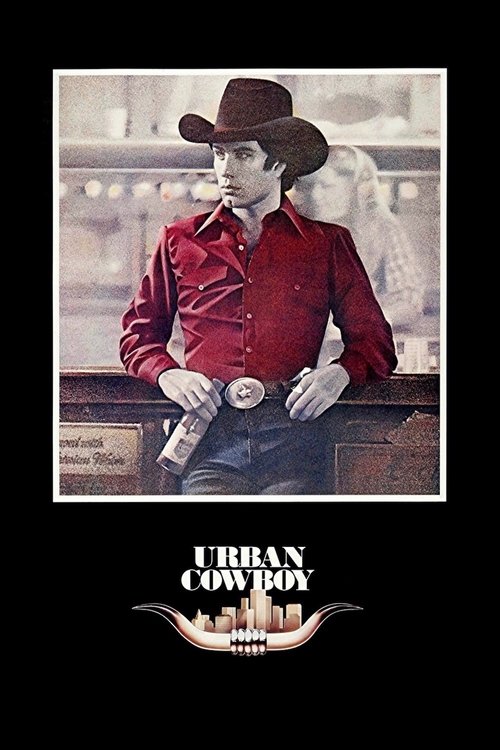
Urban Cowboy
After moving to Pasadena, Texas, country boy Bud Davis starts hanging around a bar called Gilley's, where he falls in love with Sissy, a cowgirl who believes the sexes are equal. They eventually marry, but their relationship is turbulent due to Bud's traditional view of gender roles. Jealousy over his rival leads to their separation, but Bud attempts to win Sissy back by triumphing at Gilley's mechanical bull-riding competition.
Despite its tight budget of $10.0M, Urban Cowboy became a commercial success, earning $53.3M worldwide—a 433% return. The film's unconventional structure engaged audiences, demonstrating that strong storytelling can transcend budget limitations.
Nominated for 1 BAFTA Award7 nominations


Plot Structure
Story beats plotted across runtime


Narrative Arc
Emotional journey through the story's key moments
Story Circle
Blueprint 15-beat structure
Arcplot Score Breakdown
Weighted: Precision (70%) + Arc (15%) + Theme (15%)
Urban Cowboy (1980) exhibits deliberately positioned dramatic framework, characteristic of James Bridges's storytelling approach. This structural analysis examines how the film's 15-point plot structure maps to proven narrative frameworks across 2 hours and 12 minutes. With an Arcplot score of 7.7, the film showcases strong structural fundamentals.
Structural Analysis
The Status Quo at 1 minutes (1% through the runtime) establishes Bud Davis arrives in Houston from rural Texas, eager to start his new life working at the oil refinery. He's a country boy with dreams of becoming an urban cowboy.. Of particular interest, this early placement immediately immerses viewers in the story world.
The inciting incident occurs at 15 minutes when Bud sees Sissy on the dance floor at Gilley's and is immediately smitten. She represents everything exciting about his new urban cowboy world. Their attraction is instant and powerful.. At 11% through the film, this Disruption aligns precisely with traditional story structure. This beat shifts the emotional landscape, launching the protagonist into the central conflict.
The First Threshold at 31 minutes marks the transition into Act II, occurring at 23% of the runtime. This demonstrates the protagonist's commitment to Bud and Sissy get married in a quick ceremony. Bud chooses to commit to this relationship and his new life in Houston, leaving his old life behind completely., moving from reaction to action.
At 64 minutes, the Midpoint arrives at 49% of the runtime—precisely centered, creating perfect narrative symmetry. Notably, this crucial beat Bud and Sissy have a major fight after she rides the mechanical bull against his wishes. His pride wounded, Bud slaps Sissy. She leaves him and moves out. False defeat - the marriage appears to be over., fundamentally raising what's at risk. The emotional intensity shifts, dividing the narrative into clear before-and-after phases.
The Collapse moment at 98 minutes (74% through) represents the emotional nadir. Here, Wes robs Gilley's and beats Sissy when she refuses to leave town with him. Bud discovers what happened and realizes he's failed to protect Sissy. His masculine pride has led to her being hurt. Wes escapes, and Bud hits rock bottom emotionally., reveals the protagonist at their lowest point. This beat's placement in the final quarter sets up the climactic reversal.
The Second Threshold at 103 minutes initiates the final act resolution at 78% of the runtime. Bud learns Wes has returned and is at Gilley's. He realizes he must face Wes - not for his pride, but to protect Sissy and prove he's changed. He combines his toughness with a new understanding of what true strength means., demonstrating the transformation achieved throughout the journey.
Emotional Journey
Urban Cowboy's emotional architecture traces a deliberate progression across 15 carefully calibrated beats.
Narrative Framework
This structural analysis employs structural analysis methodology used to understand storytelling architecture. By mapping Urban Cowboy against these established plot points, we can identify how James Bridges utilizes or subverts traditional narrative conventions. The plot point approach reveals not only adherence to structural principles but also creative choices that distinguish Urban Cowboy within the drama genre.
James Bridges's Structural Approach
Among the 3 James Bridges films analyzed on Arcplot, the average structural score is 7.3, reflecting strong command of classical structure. Urban Cowboy represents one of the director's most structurally precise works. For comparative analysis, explore the complete James Bridges filmography.
Comparative Analysis
Additional drama films include After Thomas, South Pacific and Dirty Dancing: Havana Nights. For more James Bridges analyses, see Perfect, The China Syndrome.
Plot Points by Act
Act I
SetupStatus Quo
Bud Davis arrives in Houston from rural Texas, eager to start his new life working at the oil refinery. He's a country boy with dreams of becoming an urban cowboy.
Theme
Uncle Bob tells Bud about life in Houston and Gilley's: "It ain't about where you're from, it's about proving what you're made of." Theme of pride, masculinity, and earning respect.
Worldbuilding
Bud settles into Houston, starts work at the refinery, and discovers Gilley's honky-tonk bar. Introduction to the mechanical bull, the urban cowboy culture, and the roughneck lifestyle. He meets Sissy at Gilley's.
Disruption
Bud sees Sissy on the dance floor at Gilley's and is immediately smitten. She represents everything exciting about his new urban cowboy world. Their attraction is instant and powerful.
Resistance
Bud and Sissy's whirlwind romance develops. They dance, ride the mechanical bull, and fall in love. Bud navigates the culture of Gilley's, learning the rules and earning respect. Sissy pushes for commitment.
Act II
ConfrontationFirst Threshold
Bud and Sissy get married in a quick ceremony. Bud chooses to commit to this relationship and his new life in Houston, leaving his old life behind completely.
Mirror World
Sissy and Bud set up their trailer home together. Sissy represents the theme - she wants partnership and equality, but Bud wants traditional masculine dominance. Their relationship will test what kind of man Bud really is.
Premise
Married life at Gilley's - the promise of the premise. Bud and Sissy enjoy the honky-tonk lifestyle, but tensions emerge. Bud becomes obsessed with riding the mechanical bull and proving his masculinity. Sissy wants to ride the bull too, but Bud forbids it, asserting dominance. Cracks form in the relationship.
Midpoint
Bud and Sissy have a major fight after she rides the mechanical bull against his wishes. His pride wounded, Bud slaps Sissy. She leaves him and moves out. False defeat - the marriage appears to be over.
Opposition
Bud and Sissy are separated. Bud has an affair with Pam, a wealthy girl, while Sissy gets involved with Wes, an ex-con and rodeo rider. Both try to make each other jealous at Gilley's. Bud's pride keeps him from reconciling. Wes becomes controlling and dangerous. The situation deteriorates for both of them.
Collapse
Wes robs Gilley's and beats Sissy when she refuses to leave town with him. Bud discovers what happened and realizes he's failed to protect Sissy. His masculine pride has led to her being hurt. Wes escapes, and Bud hits rock bottom emotionally.
Crisis
Bud processes his failure and what really matters. He realizes his obsession with proving his manhood through dominance and pride nearly cost him everything. He begins to understand what Sissy needed from him - partnership, not dominance.
Act III
ResolutionSecond Threshold
Bud learns Wes has returned and is at Gilley's. He realizes he must face Wes - not for his pride, but to protect Sissy and prove he's changed. He combines his toughness with a new understanding of what true strength means.
Synthesis
Bud confronts Wes at Gilley's in a brutal fight. He defeats Wes, proving his physical courage, but more importantly, he checks on Sissy first, showing his priorities have changed. They reconcile tentatively. Bud rides the mechanical bull one final time, but this time it's not about proving himself - it's about reclaiming joy.
Transformation
Bud and Sissy embrace on the dance floor at Gilley's. The final image mirrors the opening - they're back where they started - but Bud is transformed. He's learned that true manhood isn't about dominance and pride, but about partnership and protecting those you love.