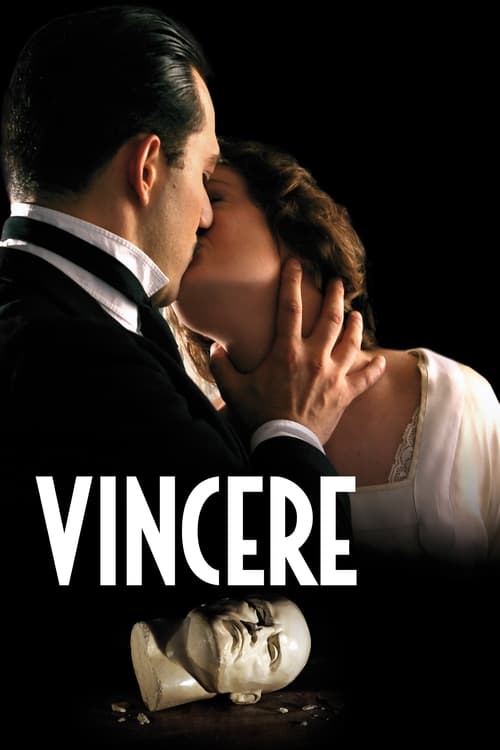
Vincere
The story of the descent into madness of Mussolini's secret first wife, Ida Dasler, who was seduced by his passion and vigor but blind to the fascist dictator's many flaws.
The film box office disappointment against its small-scale budget of $13.0M, earning $5.7M globally (-56% loss). While initial box office returns were modest, the film has gained appreciation for its unconventional structure within the drama genre.
47 wins & 40 nominations


Plot Structure
Story beats plotted across runtime


Narrative Arc
Emotional journey through the story's key moments
Story Circle
Blueprint 15-beat structure
Arcplot Score Breakdown
Weighted: Precision (70%) + Arc (15%) + Theme (15%)
Vincere (2009) showcases strategically placed plot construction, characteristic of Marco Bellocchio's storytelling approach. This structural analysis examines how the film's 15-point plot structure maps to proven narrative frameworks across 2 hours and 8 minutes. With an Arcplot score of 7.2, the film balances conventional beats with creative variation.
Structural Analysis
The Status Quo at 1 minutes (1% through the runtime) establishes Ida Dalser in her salon, successful and independent, passionately listening to Mussolini speak about socialism and revolution. Establishes her as a strong, self-possessed woman before her fateful devotion.. The analysis reveals that this early placement immediately immerses viewers in the story world.
The inciting incident occurs at 15 minutes when Ida and Mussolini marry in a civil ceremony. She believes she has secured her place in his life, unaware this will become the source of her destruction.. At 11% through the film, this Disruption aligns precisely with traditional story structure. This beat shifts the emotional landscape, launching the protagonist into the central conflict.
The First Threshold at 31 minutes marks the transition into Act II, occurring at 25% of the runtime. This demonstrates the protagonist's commitment to Ida discovers Mussolini has married Rachele Guidi and denies his marriage to Ida and their son. She actively chooses to fight for recognition rather than disappear quietly., moving from reaction to action.
At 63 minutes, the Midpoint arrives at 49% of the runtime—precisely centered, creating perfect narrative symmetry. Significantly, this crucial beat Ida is forcibly committed to an asylum. False defeat that is actually real defeat. The state has weaponized psychiatry against her. Her "madness" is simply insisting on the truth., fundamentally raising what's at risk. The emotional intensity shifts, dividing the narrative into clear before-and-after phases.
The Collapse moment at 94 minutes (74% through) represents the emotional nadir. Here, Benito Albino (now a young man) dies in the asylum under mysterious circumstances. The literal death - the "whiff of death" - Ida's son, the last evidence of her truth, is erased., shows the protagonist at their lowest point. This beat's placement in the final quarter sets up the climactic reversal.
The Second Threshold at 105 minutes initiates the final act resolution at 82% of the runtime. Ida refuses food, beginning her final act of defiance. She will not cooperate with her erasure. Her only remaining power is to choose her exit from a world that denies her existence., demonstrating the transformation achieved throughout the journey.
Emotional Journey
Vincere's emotional architecture traces a deliberate progression across 15 carefully calibrated beats.
Narrative Framework
This structural analysis employs systematic plot point analysis that identifies crucial turning points. By mapping Vincere against these established plot points, we can identify how Marco Bellocchio utilizes or subverts traditional narrative conventions. The plot point approach reveals not only adherence to structural principles but also creative choices that distinguish Vincere within the drama genre.
Comparative Analysis
Additional drama films include After Thomas, South Pacific and Dirty Dancing: Havana Nights.
Plot Points by Act
Act I
SetupStatus Quo
Ida Dalser in her salon, successful and independent, passionately listening to Mussolini speak about socialism and revolution. Establishes her as a strong, self-possessed woman before her fateful devotion.
Theme
Mussolini declares "God does not exist!" challenging the church to strike him dead. Theme of power versus truth, and how those who challenge authority can become the authority that erases others.
Worldbuilding
Pre-WWI Milan. Ida's passionate courtship with Mussolini. She sells her salon to fund his newspaper Il Popolo d'Italia. Their sexual relationship begins. Establishes Ida's total devotion and sacrifice.
Disruption
Ida and Mussolini marry in a civil ceremony. She believes she has secured her place in his life, unaware this will become the source of her destruction.
Resistance
Ida gives birth to their son Benito Albino. Mussolini goes to war. Ida waits, hopeful. Archival war footage intercuts with Ida's domestic life. Growing sense of unease as Mussolini becomes distant.
Act II
ConfrontationFirst Threshold
Ida discovers Mussolini has married Rachele Guidi and denies his marriage to Ida and their son. She actively chooses to fight for recognition rather than disappear quietly.
Mirror World
Ida confronts officials and begins her campaign for recognition. Her son Benito Albino becomes the mirror - an innocent who embodies the theme of erasure and denied identity.
Premise
Ida's obsessive campaign for recognition as Mussolini rises to power. She writes letters, confronts officials, demands her rights. Mussolini's March on Rome (archival footage). The premise: one woman's truth against fascist power.
Midpoint
Ida is forcibly committed to an asylum. False defeat that is actually real defeat. The state has weaponized psychiatry against her. Her "madness" is simply insisting on the truth.
Opposition
Ida in the asylum, where the film becomes increasingly expressionistic. Mussolini newsreels play for patients. Her son Benito Albino grows up, also eventually institutionalized. The fascist state closes in completely.
Collapse
Benito Albino (now a young man) dies in the asylum under mysterious circumstances. The literal death - the "whiff of death" - Ida's son, the last evidence of her truth, is erased.
Crisis
Ida, broken and ghostly, continues in the asylum. Newsreels of Mussolini's triumph play endlessly. She is a living ghost, already erased from history, processing her total annihilation.
Act III
ResolutionSecond Threshold
Ida refuses food, beginning her final act of defiance. She will not cooperate with her erasure. Her only remaining power is to choose her exit from a world that denies her existence.
Synthesis
Ida's final days. Mussolini newsreels continue. The film synthesizes her personal tragedy with Italy's national tragedy. Her death by starvation in 1937 mirrors Italy's spiritual death under fascism.
Transformation
Final image: archival footage of Mussolini or the empty asylum. Ida has been erased, but the film itself is her monument. Negative transformation - truth defeated by power, but witnessed.