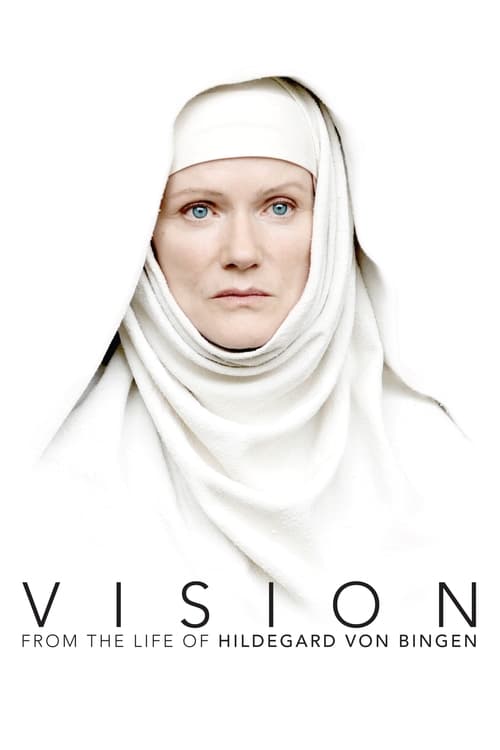
Vision – From the Life of Hildegard von Bingen
Hildegard von Bingen was truly a woman ahead of her time. A visionary in every sense of the word, this famed 12th-century Benedictine nun was a Christian mystic, composer, philosopher, playwright, poet, naturalist, scientist, physician, herbalist and ecological activist.
The film earned $5.1M at the global box office.
1 win & 4 nominations

Plot Structure
Story beats plotted across runtime


Narrative Arc
Emotional journey through the story's key moments
Story Circle
Blueprint 15-beat structure
Arcplot Score Breakdown
Weighted: Precision (70%) + Arc (15%) + Theme (15%)
Vision – From the Life of Hildegard von Bingen (2009) exhibits carefully calibrated narrative architecture, characteristic of Margarethe von Trotta's storytelling approach. This structural analysis examines how the film's 15-point plot structure maps to proven narrative frameworks across 1 hour and 50 minutes. With an Arcplot score of 7.3, the film balances conventional beats with creative variation.
Structural Analysis
The Status Quo at 1 minutes (1% through the runtime) establishes Young Hildegard experiences her first divine vision as a child in 1106, seeing "the reflection of the living light." She is given to the church as a tithe, establishing her cloistered life as her ordinary world.. Of particular interest, this early placement immediately immerses viewers in the story world.
The inciting incident occurs at 12 minutes when Jutta von Sponheim dies, leaving Hildegard without her protector and magistra. This removes the buffer between Hildegard and the male church authorities, and forces her into a position of leadership as the nuns elect her as their new magistra.. At 11% through the film, this Disruption aligns precisely with traditional story structure. This beat shifts the emotional landscape, launching the protagonist into the central conflict.
The First Threshold at 27 minutes marks the transition into Act II, occurring at 24% of the runtime. This demonstrates the protagonist's commitment to Hildegard makes the active choice to begin dictating her visions to Volmar as her scribe. She says "God commands me to write" and commits to the dangerous path of public prophecy, risking accusations of heresy and the wrath of church authorities., moving from reaction to action.
At 54 minutes, the Midpoint arrives at 50% of the runtime—precisely centered, creating perfect narrative symmetry. Significantly, this crucial beat Hildegard receives a vision commanding her to found an independent women's monastery at Rupertsberg. She announces this to Abbot Kuno, who is outraged and refuses. This is a false victory - she has divine mandate but faces institutional opposition. The stakes raise dramatically as she must now fight the church hierarchy itself., fundamentally raising what's at risk. The emotional intensity shifts, dividing the narrative into clear before-and-after phases.
The Collapse moment at 82 minutes (75% through) represents the emotional nadir. Here, Richardis is forced by her noble family to leave Hildegard and become abbess of her own monastery. Despite Hildegard's desperate letters and pleas, Richardis departs. Shortly after, news arrives that Richardis has died. Hildegard loses her beloved spiritual daughter - a literal death and her darkest emotional moment., demonstrates the protagonist at their lowest point. This beat's placement in the final quarter sets up the climactic reversal.
The Second Threshold at 87 minutes initiates the final act resolution at 79% of the runtime. Hildegard synthesizes her personal loss with her larger spiritual mission. She realizes that her work transcends individual relationships - she must continue teaching, healing, and speaking truth for all women and for future generations. She chooses to persist despite grief, empowered by a higher purpose., demonstrating the transformation achieved throughout the journey.
Emotional Journey
Vision – From the Life of Hildegard von Bingen's emotional architecture traces a deliberate progression across 15 carefully calibrated beats.
Narrative Framework
This structural analysis employs structural analysis methodology used to understand storytelling architecture. By mapping Vision – From the Life of Hildegard von Bingen against these established plot points, we can identify how Margarethe von Trotta utilizes or subverts traditional narrative conventions. The plot point approach reveals not only adherence to structural principles but also creative choices that distinguish Vision – From the Life of Hildegard von Bingen within the drama genre.
Comparative Analysis
Additional drama films include After Thomas, South Pacific and Dirty Dancing: Havana Nights.
Plot Points by Act
Act I
SetupStatus Quo
Young Hildegard experiences her first divine vision as a child in 1106, seeing "the reflection of the living light." She is given to the church as a tithe, establishing her cloistered life as her ordinary world.
Theme
Jutta von Sponheim, Hildegard's magistra, tells her: "God speaks through those who listen." This establishes the film's central theme about divine calling versus institutional authority, and the courage required to voice divine truth.
Worldbuilding
Adult Hildegard (age 42) lives in the women's enclosure at Disibodenberg monastery. We see her visions, her relationship with Jutta, the power dynamics with Abbot Kuno, her medicinal work, and her secret keeping of the visions that torment her. The monastery hierarchy and gender restrictions are established.
Disruption
Jutta von Sponheim dies, leaving Hildegard without her protector and magistra. This removes the buffer between Hildegard and the male church authorities, and forces her into a position of leadership as the nuns elect her as their new magistra.
Resistance
Hildegard resists her calling to write her visions. She becomes increasingly ill with mysterious ailments as she suppresses God's command. Monk Volmar encourages her to speak. She debates whether to obey the divine voice or remain silent within institutional expectations. Her physical suffering intensifies her internal struggle.
Act II
ConfrontationFirst Threshold
Hildegard makes the active choice to begin dictating her visions to Volmar as her scribe. She says "God commands me to write" and commits to the dangerous path of public prophecy, risking accusations of heresy and the wrath of church authorities.
Mirror World
Richardis von Stade, a young noblewoman, arrives at the monastery and becomes Hildegard's devoted companion and spiritual daughter. This relationship represents love, loyalty, and the theme of women supporting each other against patriarchal control. Richardis believes in Hildegard's visions unconditionally.
Premise
Hildegard writes "Scivias" (Know the Ways), her visionary theological work. Her fame grows as a mystic and prophet. She corresponds with Bernard of Clairvaux, receives papal approval from Pope Eugenius III, preaches publicly, composes sacred music, and gains authority. This is "the promise of the premise" - a medieval woman wielding spiritual power.
Midpoint
Hildegard receives a vision commanding her to found an independent women's monastery at Rupertsberg. She announces this to Abbot Kuno, who is outraged and refuses. This is a false victory - she has divine mandate but faces institutional opposition. The stakes raise dramatically as she must now fight the church hierarchy itself.
Opposition
Abbot Kuno and the monks resist Hildegard's independence, wanting to keep control of the nuns and their dowries. Hildegard uses strategic illness and political pressure. The Archbishop intervenes. The struggle intensifies over resources, land, and autonomy. Meanwhile, Richardis's mother, the Marchioness, plots to remove her daughter from Hildegard's influence.
Collapse
Richardis is forced by her noble family to leave Hildegard and become abbess of her own monastery. Despite Hildegard's desperate letters and pleas, Richardis departs. Shortly after, news arrives that Richardis has died. Hildegard loses her beloved spiritual daughter - a literal death and her darkest emotional moment.
Crisis
Hildegard grieves Richardis profoundly, questioning her own choices and path. She processes the loss in solitude, confronting her loneliness and the cost of her divine calling. The weight of her mission and the sacrifices required become clear. She must find meaning in her suffering.
Act III
ResolutionSecond Threshold
Hildegard synthesizes her personal loss with her larger spiritual mission. She realizes that her work transcends individual relationships - she must continue teaching, healing, and speaking truth for all women and for future generations. She chooses to persist despite grief, empowered by a higher purpose.
Synthesis
Hildegard continues her prophetic preaching tours, confronting corrupt clergy and calling for church reform. She completes her theological and scientific works. At Rupertsberg, her community of women thrives in learning, music, and scholarship. She embodies the synthesis of divine vision and earthly action, mysticism and pragmatism.
Transformation
The final image shows elderly Hildegard surrounded by her thriving community of nuns at Rupertsberg, teaching and creating. Where she once hid her visions in fear, she now embodies confident spiritual authority. The closing narration notes her legacy as prophet, composer, scientist, and reformer - transformed from silent, suffering visionary to powerful public voice.