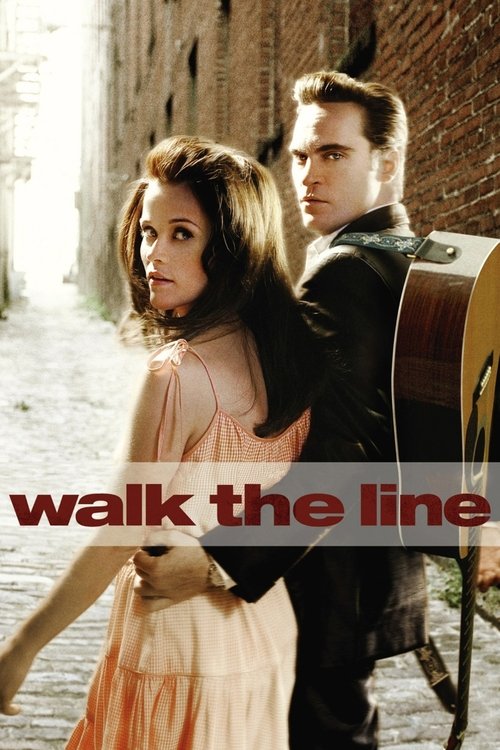
Walk the Line
A chronicle of country music legend Johnny Cash's life, from his early days on an Arkansas cotton farm to his rise to fame with Sun Records in Memphis, where he recorded alongside Elvis Presley, Jerry Lee Lewis, and Carl Perkins.
Despite a respectable budget of $28.0M, Walk the Line became a box office phenomenon, earning $186.8M worldwide—a remarkable 567% return.
1 Oscar. 45 wins & 48 nominations


Plot Structure
Story beats plotted across runtime


Narrative Arc
Emotional journey through the story's key moments
Story Circle
Blueprint 15-beat structure
Structural Analysis
The Status Quo at 1 minutes (1% through the runtime) establishes 1955 backstage at Folsom Prison. Johnny Cash, strung out and damaged, prepares for the legendary concert. This "present day" frame establishes the broken state he'll arrive at, before flashing back to show how he got here.. Structural examination shows that this early placement immediately immerses viewers in the story world.
The inciting incident occurs at 16 minutes when Jack dies from his injuries. Ray Cash tells Johnny: "The devil took the wrong son." This devastating moment plants the seed of unworthiness that will drive Johnny to seek validation through music, women, and drugs.. At 12% through the film, this Disruption aligns precisely with traditional story structure. This beat shifts the emotional landscape, launching the protagonist into the central conflict.
The First Threshold at 34 minutes marks the transition into Act II, occurring at 25% of the runtime. This shows the protagonist's commitment to Sam Phillips at Sun Records agrees to record Johnny and his band after their audition. Johnny makes the active choice to pursue his music career, performing "Folsom Prison Blues" with raw authenticity instead of a safe gospel song. This launches him into the world of professional music., moving from reaction to action.
At 69 minutes, the Midpoint arrives at 50% of the runtime—precisely centered, creating perfect narrative symmetry. Notably, this crucial beat Johnny professes his love to June and tries to kiss her. She rejects him: "I've heard you're wild and you're married with children." This false defeat raises the stakes - he can't have June by being the person he's pretending to be. The fun is over; the internal work begins., fundamentally raising what's at risk. The emotional intensity shifts, dividing the narrative into clear before-and-after phases.
The Collapse moment at 102 minutes (75% through) represents the emotional nadir. Here, Johnny, completely strung out, collapses on stage during a disastrous show. He nearly dies from an overdose in his trashed house, surrounded by pills and wreckage. This is his literal and metaphorical death - the bottom he must hit before he can rise., shows the protagonist at their lowest point. This beat's placement in the final quarter sets up the climactic reversal.
The Second Threshold at 108 minutes initiates the final act resolution at 80% of the runtime. Johnny completes withdrawal and commits to sobriety. He synthesizes June's authenticity with his musical gifts. He realizes he must prove himself through sustained action, not just promises. The Carter family gives him a chance to show he's changed., demonstrating the transformation achieved throughout the journey.
Emotional Journey
Walk the Line's emotional architecture traces a deliberate progression across 15 carefully calibrated beats.
Narrative Framework
This structural analysis employs structural analysis methodology used to understand storytelling architecture. By mapping Walk the Line against these established plot points, we can identify how James Mangold utilizes or subverts traditional narrative conventions. The plot point approach reveals not only adherence to structural principles but also creative choices that distinguish Walk the Line within the biography genre.
James Mangold's Structural Approach
Among the 11 James Mangold films analyzed on Arcplot, the average structural score is 6.5, demonstrating varied approaches to story architecture. Walk the Line exemplifies the director's characteristic narrative technique. For comparative analysis, explore the complete James Mangold filmography.
Comparative Analysis
Additional biography films include After Thomas, Taking Woodstock and The Fire Inside. For more James Mangold analyses, see 3:10 to Yuma, Knight and Day and Logan.
Plot Points by Act
Act I
SetupStatus Quo
1955 backstage at Folsom Prison. Johnny Cash, strung out and damaged, prepares for the legendary concert. This "present day" frame establishes the broken state he'll arrive at, before flashing back to show how he got here.
Theme
Young Jack Cash tells Johnny: "You can't help nobody if you can't tell them the right story." This early scene with Johnny's brother establishes the film's theme about authenticity, finding your true voice, and the cost of pretending to be someone you're not.
Worldbuilding
The Cash family's hardscrabble life in Depression-era Arkansas. Johnny's stern, emotionally distant father Ray. The deep bond between Johnny and his beloved brother Jack. Jack's death in a sawmill accident and Ray's cruel blame of Johnny. This trauma becomes the wound Johnny will carry his entire life.
Disruption
Jack dies from his injuries. Ray Cash tells Johnny: "The devil took the wrong son." This devastating moment plants the seed of unworthiness that will drive Johnny to seek validation through music, women, and drugs.
Resistance
Johnny grows up, joins the Air Force, marries Vivian, works as a door-to-door salesman. He forms a band and dreams of music stardom. His marriage is dutiful but passionless. He debates whether to pursue music professionally, resisting the pull to leave his safe life.
Act II
ConfrontationFirst Threshold
Sam Phillips at Sun Records agrees to record Johnny and his band after their audition. Johnny makes the active choice to pursue his music career, performing "Folsom Prison Blues" with raw authenticity instead of a safe gospel song. This launches him into the world of professional music.
Mirror World
Johnny meets June Carter on tour. She represents everything he's not: authentic, grounded, emotionally honest, comfortable in her own skin. Their chemistry is immediate. She will become the thematic mirror showing him what it means to live truthfully.
Premise
The promise of the premise: life on the road as a rising country music star. Johnny tours with June, Elvis, Jerry Lee Lewis. Success grows. But so does his attraction to June, his distance from Vivian, and his reliance on pills to keep performing. The fun of stardom mixed with the first cracks in his facade.
Midpoint
Johnny professes his love to June and tries to kiss her. She rejects him: "I've heard you're wild and you're married with children." This false defeat raises the stakes - he can't have June by being the person he's pretending to be. The fun is over; the internal work begins.
Opposition
Johnny's addiction intensifies. His marriage crumbles. He becomes unreliable and volatile. June tries to help but keeps her distance. He fires his bassist for confronting him about drugs. Vivian divorces him. His father still rejects him. Everything tightens around him as his demons close in.
Collapse
Johnny, completely strung out, collapses on stage during a disastrous show. He nearly dies from an overdose in his trashed house, surrounded by pills and wreckage. This is his literal and metaphorical death - the bottom he must hit before he can rise.
Crisis
June finds Johnny nearly dead and takes him to her parents' home to recover. In the dark night of withdrawal and shame, Johnny must face what he's become and decide if he wants to truly change. The crisis is not just physical but spiritual.
Act III
ResolutionSecond Threshold
Johnny completes withdrawal and commits to sobriety. He synthesizes June's authenticity with his musical gifts. He realizes he must prove himself through sustained action, not just promises. The Carter family gives him a chance to show he's changed.
Synthesis
Johnny rebuilds his career alongside June. He proposes to her repeatedly on stage until she finally says yes. He defies prison officials to perform at Folsom Prison, the concert that will define his legacy. He reconciles with his past and claims his authentic voice.
Transformation
The Folsom Prison concert. Johnny performs with June by his side, sober, authentic, and whole. The broken man from the opening has found redemption. Final text reveals their enduring marriage, mirroring the opening image but transformed - he finally became the man worthy of her love.