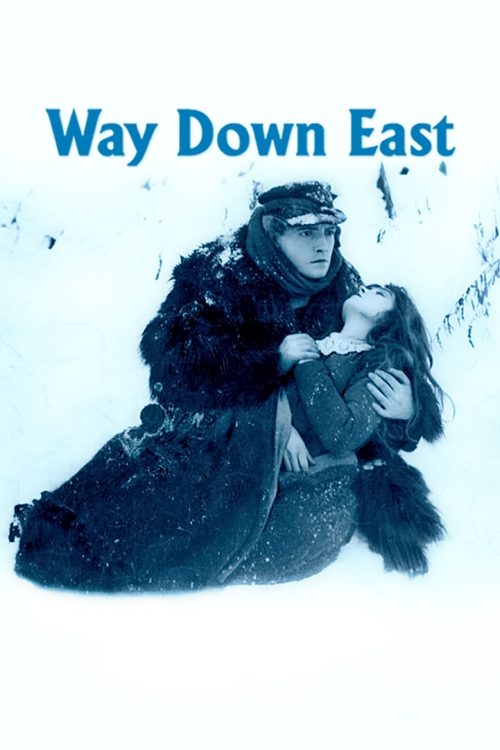
Way Down East
A naive country girl is tricked into a sham marriage by a wealthy womanizer, then must rebuild her life despite the taint of having borne a child out of wedlock.
The film earned $4.5M at the global box office.


Plot Structure
Story beats plotted across runtime


Narrative Arc
Emotional journey through the story's key moments
Story Circle
Blueprint 15-beat structure
Arcplot Score Breakdown
Weighted: Precision (70%) + Arc (15%) + Theme (15%)
Way Down East (1920) demonstrates strategically placed story structure, characteristic of D.W. Griffith's storytelling approach. This structural analysis examines how the film's 15-point plot structure maps to proven narrative frameworks across 2 hours and 30 minutes. With an Arcplot score of 7.4, the film balances conventional beats with creative variation.
Structural Analysis
The Status Quo at 2 minutes (1% through the runtime) establishes Anna Moore lives in poverty with her mother, an innocent and naive young woman unaware of the dangers of high society. Her mother hopes wealthy relatives can provide financial assistance.. The analysis reveals that this early placement immediately immerses viewers in the story world.
The inciting incident occurs at 19 minutes when Sanderson conducts a mock marriage ceremony to seduce Anna. She believes she is truly married, but he has deceived her completely. This false marriage destroys her innocence and sets the tragedy in motion.. At 12% through the film, this Disruption aligns precisely with traditional story structure. This beat shifts the emotional landscape, launching the protagonist into the central conflict.
The First Threshold at 37 minutes marks the transition into Act II, occurring at 25% of the runtime. This illustrates the protagonist's commitment to Anna fully accepts that she has been deceived and abandoned. Pregnant and alone, she makes the active choice to leave Boston and face her fate independently, entering a world of shame and wandering., moving from reaction to action.
At 77 minutes, the Midpoint arrives at 51% of the runtime—precisely centered, creating perfect narrative symmetry. Significantly, this crucial beat Anna and David's romance reaches its peak. She appears to have successfully escaped her past and found true love. This is a false victory - she is happy but her secret remains, and the audience knows discovery is inevitable. Stakes are raised., fundamentally raising what's at risk. The emotional intensity shifts, dividing the narrative into clear before-and-after phases.
The Collapse moment at 114 minutes (76% through) represents the emotional nadir. Here, At a social gathering, Anna's past is publicly exposed. She is humiliated before the entire community. The puritanical Squire Bartlett condemns her and orders her from his house. Her dream of redemption and love dies, containing the "whiff of death" of her social existence., shows the protagonist at their lowest point. This beat's placement in the final quarter sets up the climactic reversal.
The Second Threshold at 119 minutes initiates the final act resolution at 79% of the runtime. David breaks from his father's authority and chooses love over social convention. He rushes into the storm to find Anna. This represents the synthesis of the film's themes: true Christian compassion over hypocritical morality., demonstrating the transformation achieved throughout the journey.
Emotional Journey
Way Down East's emotional architecture traces a deliberate progression across 15 carefully calibrated beats.
Narrative Framework
This structural analysis employs systematic plot point analysis that identifies crucial turning points. By mapping Way Down East against these established plot points, we can identify how D.W. Griffith utilizes or subverts traditional narrative conventions. The plot point approach reveals not only adherence to structural principles but also creative choices that distinguish Way Down East within the drama genre.
D.W. Griffith's Structural Approach
Among the 2 D.W. Griffith films analyzed on Arcplot, the average structural score is 7.4, reflecting strong command of classical structure. Way Down East exemplifies the director's characteristic narrative technique. For comparative analysis, explore the complete D.W. Griffith filmography.
Comparative Analysis
Additional drama films include After Thomas, South Pacific and Dirty Dancing: Havana Nights. For more D.W. Griffith analyses, see The Birth of a Nation.
Plot Points by Act
Act I
SetupStatus Quo
Anna Moore lives in poverty with her mother, an innocent and naive young woman unaware of the dangers of high society. Her mother hopes wealthy relatives can provide financial assistance.
Theme
Anna's mother or a family member speaks about the importance of virtue and reputation, foreshadowing the film's exploration of society's cruel double standards regarding women's moral purity.
Worldbuilding
Anna travels to Boston to visit wealthy relatives. The world of high society is established, showing the contrast between Anna's innocent rural background and the sophisticated, morally corrupt urban elite. Lennox Sanderson is introduced as a wealthy playboy.
Disruption
Sanderson conducts a mock marriage ceremony to seduce Anna. She believes she is truly married, but he has deceived her completely. This false marriage destroys her innocence and sets the tragedy in motion.
Resistance
Anna lives as Sanderson's "wife" but gradually discovers the truth of his deception. She becomes pregnant and confronts him, only to be cruelly abandoned. She struggles with what to do, caught between her belief in her marriage and the dawning realization of betrayal.
Act II
ConfrontationFirst Threshold
Anna fully accepts that she has been deceived and abandoned. Pregnant and alone, she makes the active choice to leave Boston and face her fate independently, entering a world of shame and wandering.
Mirror World
Anna's baby is born but dies shortly after. In the powerful baptism scene, Anna baptizes her dying child herself, representing the thematic mirror: true compassion and maternal love versus society's harsh judgment.
Premise
Anna wanders from town to town, hiding her past, until she finds refuge at the Bartlett farm. She experiences the "promise of the premise" - the possibility of redemption and new love. She falls for David Bartlett, and pastoral romance blooms. These are the tender courtship scenes the audience came for.
Midpoint
Anna and David's romance reaches its peak. She appears to have successfully escaped her past and found true love. This is a false victory - she is happy but her secret remains, and the audience knows discovery is inevitable. Stakes are raised.
Opposition
Lennox Sanderson arrives to court the Squire's niece Kate. He recognizes Anna and the tension mounts. Maria Poole, the town gossip, begins investigating Anna's past. The pressure intensifies as Anna tries to maintain her secret while Sanderson's presence threatens exposure.
Collapse
At a social gathering, Anna's past is publicly exposed. She is humiliated before the entire community. The puritanical Squire Bartlett condemns her and orders her from his house. Her dream of redemption and love dies, containing the "whiff of death" of her social existence.
Crisis
David protests but cannot defy his father. Anna is cast out into a raging blizzard, the darkest night of her soul. She wanders into the storm, defeated and hopeless, having lost everything for a second time.
Act III
ResolutionSecond Threshold
David breaks from his father's authority and chooses love over social convention. He rushes into the storm to find Anna. This represents the synthesis of the film's themes: true Christian compassion over hypocritical morality.
Synthesis
The famous ice floe rescue sequence. Anna collapses on breaking ice floes, drifting toward a waterfall. David heroically rescues her at the last moment. Sanderson's villainy is fully exposed to the Squire, who realizes his harsh judgment was wrong. Truth and justice prevail.
Transformation
Anna and David are united with the Squire's blessing. The closing image shows Anna transformed from a shamed outcast to a bride, redeemed through true love and forgiveness. Society's cruel judgment has been overturned by compassion.