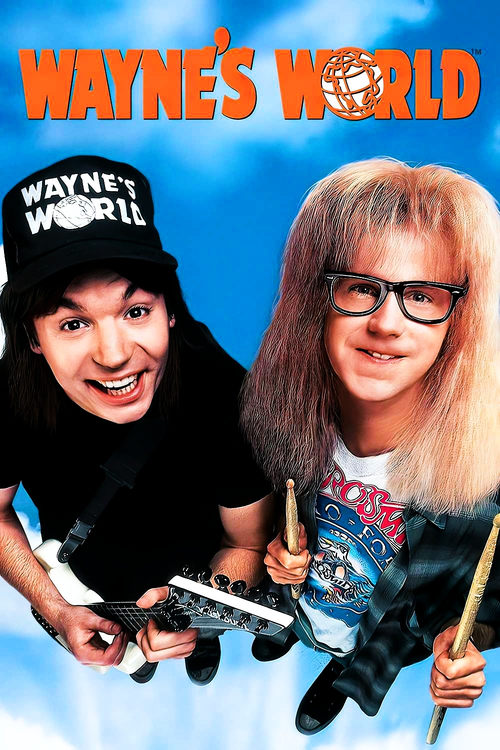
Wayne's World
Two slacker friends try to promote their public-access cable show.
Despite a mid-range budget of $20.0M, Wayne's World became a commercial juggernaut, earning $183.1M worldwide—a remarkable 815% return.
4 wins & 5 nominations


Plot Structure
Story beats plotted across runtime


Narrative Arc
Emotional journey through the story's key moments
Story Circle
Blueprint 15-beat structure
Structural Analysis
The Status Quo at 1 minutes (1% through the runtime) establishes Wayne and Garth introduce themselves directly to camera, establishing their world: two metalhead friends hosting a public access TV show from Wayne's basement in Aurora, Illinois. They're happy, authentic, and living their passion.. Notably, this early placement immediately immerses viewers in the story world.
The inciting incident occurs at 11 minutes when TV producer Benjamin Oliver sees Wayne's World and approaches Wayne and Garth about buying the show and putting it on network television. This disrupts their carefree, authentic world with the promise of fame and money.. At 12% through the film, this Disruption aligns precisely with traditional story structure. This beat shifts the emotional landscape, launching the protagonist into the central conflict.
The First Threshold at 24 minutes marks the transition into Act II, occurring at 26% of the runtime. This illustrates the protagonist's commitment to Wayne and Garth actively choose to sign the contract with Benjamin, selling Wayne's World to the network. They enter the world of corporate television, leaving behind their basement freedom. This is their conscious decision to "level up."., moving from reaction to action.
At 47 minutes, the Midpoint arrives at 50% of the runtime—precisely centered, creating perfect narrative symmetry. Notably, this crucial beat False defeat: Benjamin's control over the show intensifies with corporate sponsorships and script changes. Simultaneously, Benjamin begins pursuing Cassandra romantically, offering her a record deal. The consequences of Wayne's deal become clear - he's losing control of both his show and his girl., fundamentally raising what's at risk. The emotional intensity shifts, dividing the narrative into clear before-and-after phases.
The Collapse moment at 69 minutes (73% through) represents the emotional nadir. Here, Wayne's jealousy explodes in a confrontation with Cassandra. She breaks up with him, choosing to pursue her music career independently. Wayne has lost both his artistic integrity (the show is now Benjamin's) and his love. His dream has died, replaced by a hollow commercial product., shows the protagonist at their lowest point. This beat's placement in the final quarter sets up the climactic reversal.
The Second Threshold at 75 minutes initiates the final act resolution at 80% of the runtime. Garth provides the catalyst: "If you love her, you've got to do something." Wayne synthesizes the lesson - he must fight for both his authentic creative vision AND Cassandra, but this time with maturity and genuine support for her dreams, not possessiveness. He formulates a plan., demonstrating the transformation achieved throughout the journey.
Emotional Journey
Wayne's World's emotional architecture traces a deliberate progression across 15 carefully calibrated beats.
Narrative Framework
This structural analysis employs structural analysis methodology used to understand storytelling architecture. By mapping Wayne's World against these established plot points, we can identify how Penelope Spheeris utilizes or subverts traditional narrative conventions. The plot point approach reveals not only adherence to structural principles but also creative choices that distinguish Wayne's World within the comedy genre.
Penelope Spheeris's Structural Approach
Among the 5 Penelope Spheeris films analyzed on Arcplot, the average structural score is 7.2, reflecting strong command of classical structure. Wayne's World exemplifies the director's characteristic narrative technique. For comparative analysis, explore the complete Penelope Spheeris filmography.
Comparative Analysis
Additional comedy films include The Bad Guys, Ella Enchanted and The Evening Star. For more Penelope Spheeris analyses, see Black Sheep, The Little Rascals and The Beverly Hillbillies.
Plot Points by Act
Act I
SetupStatus Quo
Wayne and Garth introduce themselves directly to camera, establishing their world: two metalhead friends hosting a public access TV show from Wayne's basement in Aurora, Illinois. They're happy, authentic, and living their passion.
Theme
At the Gasworks club, various characters demonstrate the tension between authenticity and selling out. The theme of staying true to yourself vs. compromising for success is established through the rock scene culture.
Worldbuilding
Introduction to Wayne and Garth's lives: their show, their friendships, their hangouts (Stan Mikita's Donuts), their love of rock music, and their unpretentious basement operation. Wayne meets Cassandra Wong performing at the Gasworks and is instantly smitten.
Disruption
TV producer Benjamin Oliver sees Wayne's World and approaches Wayne and Garth about buying the show and putting it on network television. This disrupts their carefree, authentic world with the promise of fame and money.
Resistance
Wayne debates whether to sell the show. He's torn between staying authentic and the opportunity for success. He pursues Cassandra while Benjamin woos him with promises of big-time production. Wayne is naive about the business world and what selling out means.
Act II
ConfrontationFirst Threshold
Wayne and Garth actively choose to sign the contract with Benjamin, selling Wayne's World to the network. They enter the world of corporate television, leaving behind their basement freedom. This is their conscious decision to "level up."
Mirror World
Wayne's relationship with Cassandra deepens. She represents the authentic path - an artist pursuing her music on her own terms. She becomes the thematic mirror showing Wayne what it means to maintain integrity while pursuing your dreams.
Premise
The "promise of the premise" - Wayne's World goes big time. Wayne and Garth navigate the corporate TV world with their signature humor. They enjoy the perks while Benjamin increasingly interferes. Meanwhile, Wayne pursues Cassandra, and she becomes part of the show's world.
Midpoint
False defeat: Benjamin's control over the show intensifies with corporate sponsorships and script changes. Simultaneously, Benjamin begins pursuing Cassandra romantically, offering her a record deal. The consequences of Wayne's deal become clear - he's losing control of both his show and his girl.
Opposition
Benjamin tightens his grip, turning Wayne's World into a corporate commercial vehicle. Wayne's jealousy and insecurity drive a wedge between him and Cassandra. Benjamin manipulates the situation, positioning himself as the sophisticated alternative to Wayne. Wayne's flaws - immaturity and possessiveness - sabotage his relationship.
Collapse
Wayne's jealousy explodes in a confrontation with Cassandra. She breaks up with him, choosing to pursue her music career independently. Wayne has lost both his artistic integrity (the show is now Benjamin's) and his love. His dream has died, replaced by a hollow commercial product.
Crisis
Wayne spirals in depression, lying on his bed, wallowing in self-pity. He and Garth have a heart-to-heart about what they've lost. Wayne processes that he sold out his show and pushed away Cassandra through his own insecurity. Dark night of self-reflection.
Act III
ResolutionSecond Threshold
Garth provides the catalyst: "If you love her, you've got to do something." Wayne synthesizes the lesson - he must fight for both his authentic creative vision AND Cassandra, but this time with maturity and genuine support for her dreams, not possessiveness. He formulates a plan.
Synthesis
Wayne executes his plan to sabotage Benjamin's show and win back Cassandra. He orchestrates exposing Benjamin as a fraud during a live broadcast. Wayne helps Cassandra get a legitimate record deal with a real producer, supporting her dreams selflessly. He reclaims creative control and authenticity. Multiple endings are playfully presented.
Transformation
The "Mega-Happy Ending": Wayne and Cassandra are together, Wayne's World is back in their control on their terms, and they're all successful while staying true to themselves. Wayne has grown from an insecure kid into someone who can maintain authenticity while achieving his dreams, supporting others rather than controlling them.