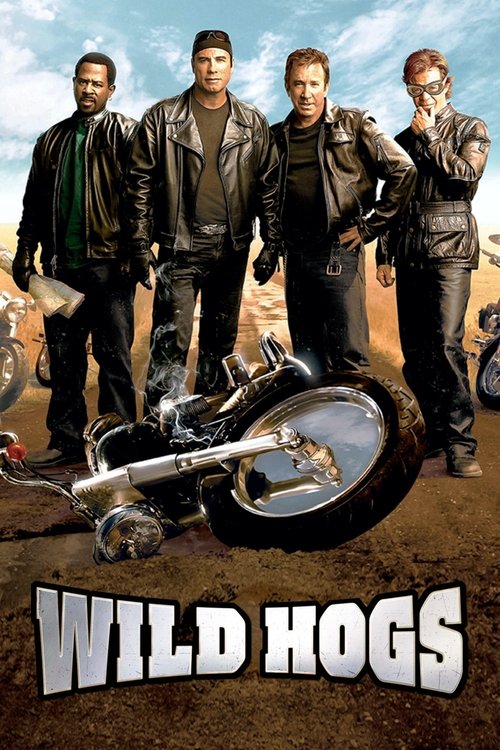
Wild Hogs
Restless and ready for an adventure, four suburban bikers leave the safety of their subdivision and head out on the open road. But complications ensue when they cross paths with an intimidating band of New Mexico bikers known as the Del Fuegos.
Despite a moderate budget of $60.0M, Wild Hogs became a commercial success, earning $253.6M worldwide—a 323% return.
1 win & 4 nominations


Plot Structure
Story beats plotted across runtime


Narrative Arc
Emotional journey through the story's key moments
Story Circle
Blueprint 15-beat structure
Arcplot Score Breakdown
Weighted: Precision (70%) + Arc (15%) + Theme (15%)
Wild Hogs (2007) exemplifies carefully calibrated dramatic framework, characteristic of Walt Becker's storytelling approach. This structural analysis examines how the film's 15-point plot structure maps to proven narrative frameworks across 1 hour and 40 minutes. With an Arcplot score of 7.3, the film balances conventional beats with creative variation.
Structural Analysis
The Status Quo at 1 minutes (1% through the runtime) establishes Opening montage establishes four suburban men living safe, emasculated lives: Doug henpecked by wife and son, Woody in loveless marriage, Bobby writing but never published, Dudley unable to talk to women. They pretend to be tough bikers on weekends.. Structural examination shows that this early placement immediately immerses viewers in the story world.
The inciting incident occurs at 12 minutes when Woody proposes a real road trip to California - no schedules, no checking in, just riding. His marriage is ending and he needs escape. This disrupts their safe weekend pattern.. At 12% through the film, this Disruption aligns precisely with traditional story structure. This beat shifts the emotional landscape, launching the protagonist into the central conflict.
The First Threshold at 23 minutes marks the transition into Act II, occurring at 23% of the runtime. This reveals the protagonist's commitment to The four men ride out of Cincinnati together, actively choosing adventure over safety. They leave their suburban world behind and commit to the open road. Act 2 begins., moving from reaction to action.
At 48 minutes, the Midpoint arrives at 48% of the runtime—precisely centered, creating perfect narrative symmetry. The analysis reveals that this crucial beat False defeat: The Del Fuegos discover their bar is destroyed and vow revenge. Jack begins hunting the Wild Hogs. The fun and games are over - they're in real danger now. Stakes raised from pretend adventure to actual threat., fundamentally raising what's at risk. The emotional intensity shifts, dividing the narrative into clear before-and-after phases.
The Collapse moment at 73 minutes (73% through) represents the emotional nadir. Here, The Del Fuegos arrive in Madrid. Woody's lies are exposed to his friends and the townspeople. The four are humiliated, beaten, and rejected. Their friendship fractures. Their pretense of being tough dies completely., indicates the protagonist at their lowest point. This beat's placement in the final quarter sets up the climactic reversal.
The Second Threshold at 79 minutes initiates the final act resolution at 79% of the runtime. The men realize that real courage isn't about pretending to be tough - it's about standing up for what matters despite fear. They choose to return to Madrid to face the Del Fuegos and protect the town, accepting they'll probably lose but doing it anyway., demonstrating the transformation achieved throughout the journey.
Emotional Journey
Wild Hogs's emotional architecture traces a deliberate progression across 15 carefully calibrated beats.
Narrative Framework
This structural analysis employs systematic plot point analysis that identifies crucial turning points. By mapping Wild Hogs against these established plot points, we can identify how Walt Becker utilizes or subverts traditional narrative conventions. The plot point approach reveals not only adherence to structural principles but also creative choices that distinguish Wild Hogs within the action genre.
Walt Becker's Structural Approach
Among the 5 Walt Becker films analyzed on Arcplot, the average structural score is 7.3, reflecting strong command of classical structure. Wild Hogs represents one of the director's most structurally precise works. For comparative analysis, explore the complete Walt Becker filmography.
Comparative Analysis
Additional action films include The Bad Guys, Puss in Boots and Venom: The Last Dance. For more Walt Becker analyses, see Clifford the Big Red Dog, National Lampoon's Van Wilder and Old Dogs.
Plot Points by Act
Act I
SetupStatus Quo
Opening montage establishes four suburban men living safe, emasculated lives: Doug henpecked by wife and son, Woody in loveless marriage, Bobby writing but never published, Dudley unable to talk to women. They pretend to be tough bikers on weekends.
Theme
Dudley or Bobby mentions "We used to be something" or similar dialogue about reclaiming their edge/freedom. The theme: real courage vs. pretending to be tough.
Worldbuilding
Establish the four friends and their weekend warrior routine. Doug's family issues, Woody's financial problems (wife leaving him), Bobby's failed writing career, Dudley's loneliness. They meet at the diner, ride their bikes, but return to mundane lives.
Disruption
Woody proposes a real road trip to California - no schedules, no checking in, just riding. His marriage is ending and he needs escape. This disrupts their safe weekend pattern.
Resistance
The guys debate whether to actually do this. Concerns about families, responsibilities, safety. Woody pushes them. They prepare, make excuses to families, and overcome initial resistance. Building courage to leave suburban safety.
Act II
ConfrontationFirst Threshold
The four men ride out of Cincinnati together, actively choosing adventure over safety. They leave their suburban world behind and commit to the open road. Act 2 begins.
Mirror World
The guys arrive in a small town and meet Maggie, the diner owner who represents authentic small-town life. Dudley is attracted to her. She embodies the genuine connection and courage they're seeking.
Premise
The fun of the open road: camping, bonding, swimming naked, minor adventures. First encounter with the Del Fuegos biker gang where they try to act tough but are clearly poseurs. Woody accidentally blows up the Del Fuegos' bar, creating real danger.
Midpoint
False defeat: The Del Fuegos discover their bar is destroyed and vow revenge. Jack begins hunting the Wild Hogs. The fun and games are over - they're in real danger now. Stakes raised from pretend adventure to actual threat.
Opposition
The Wild Hogs hide out in the small town of Madrid, New Mexico. They try to maintain their tough guy facade but live in fear of the Del Fuegos finding them. Woody's lie about the bar creates internal conflict. The gang gets closer. Relationships with townspeople deepen but are built on deception.
Collapse
The Del Fuegos arrive in Madrid. Woody's lies are exposed to his friends and the townspeople. The four are humiliated, beaten, and rejected. Their friendship fractures. Their pretense of being tough dies completely.
Crisis
The four men at their lowest point, facing the truth about themselves. Dark night of the soul as they contemplate giving up and going home as failures. Processing shame and fear.
Act III
ResolutionSecond Threshold
The men realize that real courage isn't about pretending to be tough - it's about standing up for what matters despite fear. They choose to return to Madrid to face the Del Fuegos and protect the town, accepting they'll probably lose but doing it anyway.
Synthesis
The Wild Hogs return and stand up to the Del Fuegos. The townspeople join them. Real bikers (including a cameo) arrive and put Jack in his place. The four men fight not with false bravado but genuine courage born from friendship and principle. Victory.
Transformation
Final image mirrors the opening but transformed: The four men ride together, but now with genuine confidence and brotherhood. Dudley with Maggie, the others having found real courage. They're no longer pretending to be bikers - they've become the men they wanted to be.