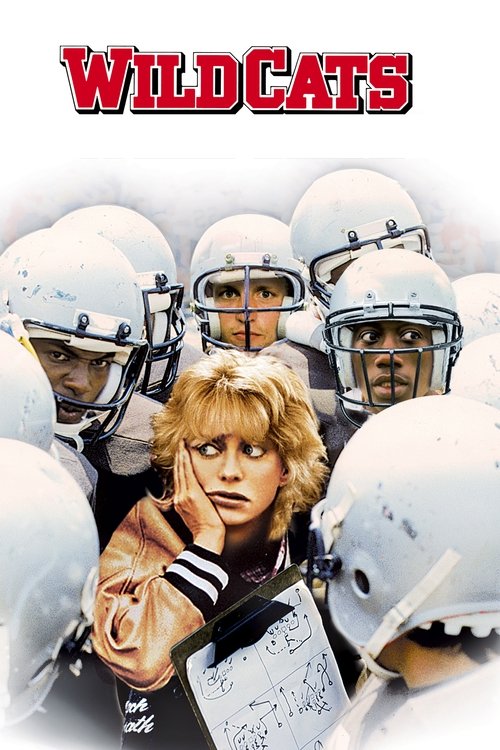
Wildcats
High school track coach Molly McGrath knows just as much about football as anyone else on the planet. When a football coach's position becomes vacant, she applies for the job, despite snickers from fellow staff members and her former husband.
The film earned $26.3M at the global box office.


Plot Structure
Story beats plotted across runtime


Narrative Arc
Emotional journey through the story's key moments
Story Circle
Blueprint 15-beat structure
Arcplot Score Breakdown
Weighted: Precision (70%) + Arc (15%) + Theme (15%)
Wildcats (1986) showcases meticulously timed story structure, characteristic of Michael Ritchie's storytelling approach. This structural analysis examines how the film's 15-point plot structure maps to proven narrative frameworks across 1 hour and 46 minutes. With an Arcplot score of 7.4, the film balances conventional beats with creative variation.
Structural Analysis
The Status Quo at 1 minutes (1% through the runtime) establishes Molly McGrath coaching girls' track at her suburban high school, passionate but relegated to a "lesser" sport. She watches the boys' football team practice with longing, establishing her external want (to coach football) and her world where she's not taken seriously.. Structural examination shows that this early placement immediately immerses viewers in the story world.
The inciting incident occurs at 13 minutes when Molly learns of a head football coaching position opening up at Central High, an inner-city school. This is her chance to finally coach football, the opportunity she's been waiting for. The disruption is positive - a door opens that could change everything.. At 12% through the film, this Disruption aligns precisely with traditional story structure. This beat shifts the emotional landscape, launching the protagonist into the central conflict.
The First Threshold at 27 minutes marks the transition into Act II, occurring at 25% of the runtime. This indicates the protagonist's commitment to Molly accepts the head coaching position at Central High and enters the inner-city school world. This is her active choice to leave her comfortable suburban environment and take on the challenge. She crosses into Act 2, the "upside-down world" where she's a white suburban woman coaching tough inner-city players., moving from reaction to action.
At 54 minutes, the Midpoint arrives at 51% of the runtime—precisely centered, creating perfect narrative symmetry. Notably, this crucial beat False victory: The team wins their first game or has a breakthrough moment where everything seems to click. Molly feels like she's proven herself and the team is coming together. Stakes raise as success brings new pressure and visibility. The fun and games are over - now it gets real., fundamentally raising what's at risk. The emotional intensity shifts, dividing the narrative into clear before-and-after phases.
The Collapse moment at 79 minutes (75% through) represents the emotional nadir. Here, All is lost: The team suffers a crushing defeat, or Molly is fired/suspended, or a key player quits, or she loses a custody battle. A "whiff of death" - perhaps the death of her dream, her marriage officially ending, or the symbolic death of the team's spirit. Her lowest point where everything she's fought for seems to have failed., shows the protagonist at their lowest point. This beat's placement in the final quarter sets up the climactic reversal.
The Second Threshold at 84 minutes initiates the final act resolution at 79% of the runtime. Synthesis/breakthrough: Molly realizes that winning isn't just about football strategy (her A Story skill) but about believing in her players and them believing in her (her B Story lesson). She combines her football knowledge with the respect and connection she's built. Perhaps the team comes to her and tells her they're ready to fight. New information or resolve emerges that enables the final push., demonstrating the transformation achieved throughout the journey.
Emotional Journey
Wildcats's emotional architecture traces a deliberate progression across 15 carefully calibrated beats.
Narrative Framework
This structural analysis employs structural analysis methodology used to understand storytelling architecture. By mapping Wildcats against these established plot points, we can identify how Michael Ritchie utilizes or subverts traditional narrative conventions. The plot point approach reveals not only adherence to structural principles but also creative choices that distinguish Wildcats within the comedy genre.
Michael Ritchie's Structural Approach
Among the 9 Michael Ritchie films analyzed on Arcplot, the average structural score is 7.4, reflecting strong command of classical structure. Wildcats represents one of the director's most structurally precise works. For comparative analysis, explore the complete Michael Ritchie filmography.
Comparative Analysis
Additional comedy films include The Bad Guys, Ella Enchanted and The Evening Star. For more Michael Ritchie analyses, see The Bad News Bears, A Simple Wish and Diggstown.
Plot Points by Act
Act I
SetupStatus Quo
Molly McGrath coaching girls' track at her suburban high school, passionate but relegated to a "lesser" sport. She watches the boys' football team practice with longing, establishing her external want (to coach football) and her world where she's not taken seriously.
Theme
A character tells Molly that respect isn't given, it's earned - or a similar statement about proving yourself when the world doesn't believe in you. This captures the film's theme about breaking barriers and earning respect through competence and perseverance.
Worldbuilding
Establishing Molly's world: her strained marriage, her love for football (knowing plays better than the male coaches), her daughters, her second-class status as a women's track coach, and the institutional sexism she faces. We see her competence and passion contrasted with the dismissive attitude of the male athletic establishment.
Disruption
Molly learns of a head football coaching position opening up at Central High, an inner-city school. This is her chance to finally coach football, the opportunity she's been waiting for. The disruption is positive - a door opens that could change everything.
Resistance
Molly debates whether to pursue the job. She faces resistance from her husband, doubt from colleagues, and her own fears about coaching at a tough inner-city school. She prepares for the interview, gets advice (possibly from a mentor figure), and wrestles with whether she can really do this. Her marriage tensions escalate.
Act II
ConfrontationFirst Threshold
Molly accepts the head coaching position at Central High and enters the inner-city school world. This is her active choice to leave her comfortable suburban environment and take on the challenge. She crosses into Act 2, the "upside-down world" where she's a white suburban woman coaching tough inner-city players.
Mirror World
Molly meets her team - the ragtag group of inner-city players who will become her "B Story." These relationships (and possibly a specific player or assistant coach) will teach her what she needs to learn: that respect is mutual, that she needs to understand their world as much as they need to understand football, and that real leadership means connection, not just control.
Premise
The "fun and games" of a woman coaching football in the inner city. Comedy ensues as Molly tries to assert authority, the players test her and refuse to take her seriously, she proves her football knowledge, awkward early practices, culture clashes, small victories, bonding moments, and the team slowly coming together. This is the promise of the premise - what we came to see.
Midpoint
False victory: The team wins their first game or has a breakthrough moment where everything seems to click. Molly feels like she's proven herself and the team is coming together. Stakes raise as success brings new pressure and visibility. The fun and games are over - now it gets real.
Opposition
Pressure intensifies from all sides: the school board questions her methods, her ex-husband may fight for custody of her daughters, rival coaches mock her, players face personal crises, internal team conflicts emerge, and forces conspire to push her out. The antagonists (institutional sexism, doubters, possibly a specific rival) close in. Her personal and professional lives both deteriorate.
Collapse
All is lost: The team suffers a crushing defeat, or Molly is fired/suspended, or a key player quits, or she loses a custody battle. A "whiff of death" - perhaps the death of her dream, her marriage officially ending, or the symbolic death of the team's spirit. Her lowest point where everything she's fought for seems to have failed.
Crisis
Molly's dark night of the soul. She contemplates quitting, questions whether she was foolish to try, processes her losses. Perhaps she has a moment with her daughters or a heart-to-heart with one of the players that helps her see what really matters. The emotional processing before the breakthrough.
Act III
ResolutionSecond Threshold
Synthesis/breakthrough: Molly realizes that winning isn't just about football strategy (her A Story skill) but about believing in her players and them believing in her (her B Story lesson). She combines her football knowledge with the respect and connection she's built. Perhaps the team comes to her and tells her they're ready to fight. New information or resolve emerges that enables the final push.
Synthesis
The finale: The big championship game (or series of games) where Molly and her team face their ultimate challenge. She uses everything she's learned, the team executes with newfound unity and skill, they overcome seemingly impossible odds, and Molly proves that she belongs on that sideline. Resolution of personal threads (custody, respect from peers, team's future).
Transformation
Closing image mirrors the opening: Molly on a football field, but now she's respected, her team surrounds her with genuine affection, and she's no longer watching from the sidelines - she's exactly where she belongs. The transformation from overlooked track coach to proven football coach, from seeking respect to having earned it.