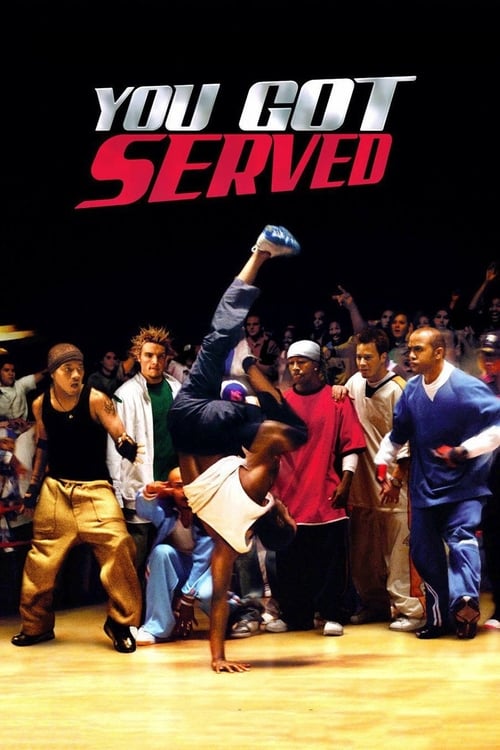
You Got Served
At Mr. Rad's Warehouse, the best hip-hop crews in Los Angeles compete for money and respect. But when a suburban crew crashes the party, stealing their dancers — and their moves — two warring friends have to pull together to represent the street.
Despite its modest budget of $8.0M, You Got Served became a commercial juggernaut, earning $50.6M worldwide—a remarkable 532% return. The film's unique voice resonated with audiences, demonstrating that strong storytelling can transcend budget limitations.


Plot Structure
Story beats plotted across runtime


Narrative Arc
Emotional journey through the story's key moments
Story Circle
Blueprint 15-beat structure
Arcplot Score Breakdown
Weighted: Precision (70%) + Arc (15%) + Theme (15%)
You Got Served (2004) demonstrates meticulously timed plot construction, characteristic of Chris Stokes's storytelling approach. This structural analysis examines how the film's 15-point plot structure maps to proven narrative frameworks across 1 hour and 35 minutes. With an Arcplot score of 7.1, the film balances conventional beats with creative variation.
Structural Analysis
The Status Quo at 1 minutes (1% through the runtime) establishes David and Elgin's crew dominates the underground street dance scene in Los Angeles, winning battles and earning respect with their synchronized moves and brotherhood.. Significantly, this early placement immediately immerses viewers in the story world.
The inciting incident occurs at 11 minutes when Wade challenges David and Elgin to a high-stakes battle for $5,000, raising the competitive stakes and creating financial pressure on the crew.. At 11% through the film, this Disruption aligns precisely with traditional story structure. This beat shifts the emotional landscape, launching the protagonist into the central conflict.
The First Threshold at 24 minutes marks the transition into Act II, occurring at 26% of the runtime. This reveals the protagonist's commitment to David and Elgin commit fully to the battle against Wade, securing the money and dedicating themselves to an intense training regimen for the showdown., moving from reaction to action.
At 46 minutes, the Midpoint arrives at 49% of the runtime—precisely centered, creating perfect narrative symmetry. The analysis reveals that this crucial beat The crew loses the battle to Wade in a devastating defeat. Their reputation is destroyed, the money is gone, and the brotherhood begins to fracture under the weight of blame and disappointment., fundamentally raising what's at risk. The emotional intensity shifts, dividing the narrative into clear before-and-after phases.
The Collapse moment at 70 minutes (73% through) represents the emotional nadir. Here, Lil Saint is killed in a shooting related to the street life that has entangled the crew. The death of their youngest member represents the ultimate loss and consequence of their choices., demonstrates the protagonist at their lowest point. This beat's placement in the final quarter sets up the climactic reversal.
The Second Threshold at 75 minutes initiates the final act resolution at 79% of the runtime. David and Elgin realize they must honor Lil Saint's memory by reuniting the crew and competing in the Big Bounce competition - dancing not for ego or money, but for their fallen brother and their love of the art., demonstrating the transformation achieved throughout the journey.
Emotional Journey
You Got Served's emotional architecture traces a deliberate progression across 15 carefully calibrated beats.
Narrative Framework
This structural analysis employs proven narrative structure principles that track dramatic progression. By mapping You Got Served against these established plot points, we can identify how Chris Stokes utilizes or subverts traditional narrative conventions. The plot point approach reveals not only adherence to structural principles but also creative choices that distinguish You Got Served within the music genre.
Comparative Analysis
Additional music films include South Pacific, Dirty Dancing: Havana Nights and Yesterday.
Plot Points by Act
Act I
SetupStatus Quo
David and Elgin's crew dominates the underground street dance scene in Los Angeles, winning battles and earning respect with their synchronized moves and brotherhood.
Theme
Mr. Rad tells the crew that dance is about more than winning - it's about loyalty, trust, and what you're willing to sacrifice for your art and your team.
Worldbuilding
Establishment of the crew's dynamics, their work at the garage, their dominance in battle culture, introduction of rival crew Wade's team, and the bonds between crew members including Lil Saint.
Disruption
Wade challenges David and Elgin to a high-stakes battle for $5,000, raising the competitive stakes and creating financial pressure on the crew.
Resistance
The crew debates whether to accept the challenge, prepares routines, navigates romantic subplots with Liyah and Beautifull, and deals with the temptation of street hustling to raise money.
Act II
ConfrontationFirst Threshold
David and Elgin commit fully to the battle against Wade, securing the money and dedicating themselves to an intense training regimen for the showdown.
Mirror World
Liyah represents the alternative path - she encourages David to think beyond just battles and consider a future in legitimate dance performance and art.
Premise
The crew trains intensively, showcases their skills, experiences the fun of underground dance culture, parties, and builds toward the big battle with Wade while tensions simmer beneath the surface.
Midpoint
The crew loses the battle to Wade in a devastating defeat. Their reputation is destroyed, the money is gone, and the brotherhood begins to fracture under the weight of blame and disappointment.
Opposition
Crew members turn on each other, Elgin gets involved in dangerous street activity, relationships strain, and David struggles to hold the team together as they face humiliation and internal conflict.
Collapse
Lil Saint is killed in a shooting related to the street life that has entangled the crew. The death of their youngest member represents the ultimate loss and consequence of their choices.
Crisis
The crew grieves Lil Saint's death. David and Elgin hit rock bottom emotionally, questioning everything about their choices, their priorities, and whether dance even matters anymore.
Act III
ResolutionSecond Threshold
David and Elgin realize they must honor Lil Saint's memory by reuniting the crew and competing in the Big Bounce competition - dancing not for ego or money, but for their fallen brother and their love of the art.
Synthesis
The crew reunites with renewed purpose, choreographs a tribute routine to Lil Saint, competes in the Big Bounce against Wade and other crews, and performs with heart and unity rather than just technique.
Transformation
The crew stands together, transformed by loss into a true brotherhood that understands dance is about expression, loyalty, and community - not just winning. They've grown from competitors to artists.