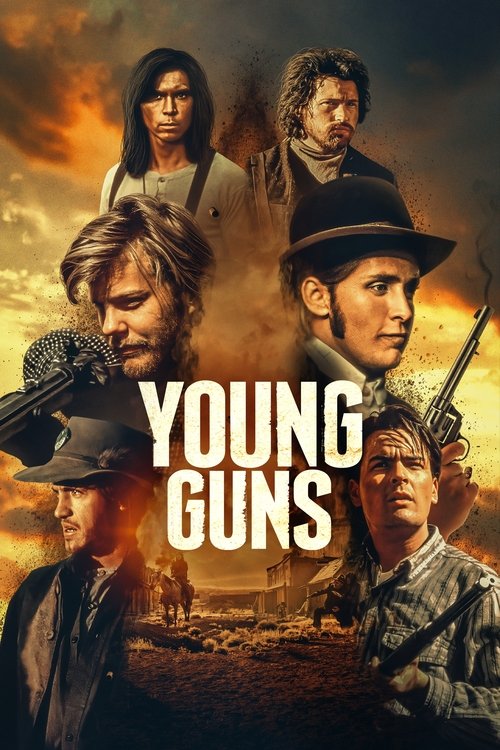
Young Guns
A group of young gunmen, led by Billy the Kid, become deputies to avenge the murder of the rancher who became their benefactor. But when Billy takes their authority too far, they become the hunted.
Despite its modest budget of $13.0M, Young Guns became a commercial success, earning $44.7M worldwide—a 244% return. The film's unconventional structure attracted moviegoers, proving that strong storytelling can transcend budget limitations.
1 win & 2 nominations


Plot Structure
Story beats plotted across runtime


Narrative Arc
Emotional journey through the story's key moments
Story Circle
Blueprint 15-beat structure
Arcplot Score Breakdown
Weighted: Precision (70%) + Arc (15%) + Theme (15%)
Young Guns (1988) showcases meticulously timed plot construction, characteristic of Christopher Cain's storytelling approach. This structural analysis examines how the film's 15-point plot structure maps to proven narrative frameworks across 1 hour and 47 minutes. With an Arcplot score of 7.7, the film showcases strong structural fundamentals.
Structural Analysis
The Status Quo at 1 minutes (1% through the runtime) establishes Young outlaws work as ranch hands for John Tunstall, an English rancher who teaches them to read and treats them with dignity. Billy the Kid and the Regulators live a life of youthful freedom under Tunstall's protection.. Of particular interest, this early placement immediately immerses viewers in the story world.
The inciting incident occurs at 14 minutes when John Tunstall is ambushed and murdered by Murphy's men led by Sheriff Brady. The boys witness their mentor and father figure gunned down in cold blood, destroying their peaceful life.. At 13% through the film, this Disruption is delayed, allowing extended setup of the story world. This beat shifts the emotional landscape, launching the protagonist into the central conflict.
The First Threshold at 26 minutes marks the transition into Act II, occurring at 24% of the runtime. This illustrates the protagonist's commitment to The Regulators make the active choice to hunt down and kill the men who murdered Tunstall. They execute their first target at the outhouse, crossing from lawmen into vigilantes. No turning back from violence., moving from reaction to action.
At 54 minutes, the Midpoint arrives at 51% of the runtime—precisely centered, creating perfect narrative symmetry. The analysis reveals that this crucial beat Dick Brewer, the moral leader and deputized authority of the group, is killed in a shootout at Buckshot Roberts' cabin. False defeat: they lose their legitimate legal cover and their moral compass. The group splinters in leadership and purpose., fundamentally raising what's at risk. The emotional intensity shifts, dividing the narrative into clear before-and-after phases.
The Collapse moment at 80 minutes (75% through) represents the emotional nadir. Here, The McSween house is set on fire with the Regulators trapped inside. Alex McSween walks out with a Bible and is gunned down (literal death). The gang is scattered, their cause is lost, and Chavez is captured. Everything has fallen apart., indicates the protagonist at their lowest point. This beat's placement in the final quarter sets up the climactic reversal.
The Second Threshold at 87 minutes initiates the final act resolution at 81% of the runtime. Billy chooses to rescue Chavez rather than flee to Mexico. He synthesizes Tunstall's lesson about choosing who you are: he chooses loyalty to his friends over self-preservation. He accepts his identity as Billy the Kid but on his own terms., demonstrating the transformation achieved throughout the journey.
Emotional Journey
Young Guns's emotional architecture traces a deliberate progression across 15 carefully calibrated beats.
Narrative Framework
This structural analysis employs structural analysis methodology used to understand storytelling architecture. By mapping Young Guns against these established plot points, we can identify how Christopher Cain utilizes or subverts traditional narrative conventions. The plot point approach reveals not only adherence to structural principles but also creative choices that distinguish Young Guns within the western genre.
Christopher Cain's Structural Approach
Among the 5 Christopher Cain films analyzed on Arcplot, the average structural score is 7.3, reflecting strong command of classical structure. Young Guns represents one of the director's most structurally precise works. For comparative analysis, explore the complete Christopher Cain filmography.
Comparative Analysis
Additional western films include All the Pretty Horses, Shenandoah and Lone Star. For more Christopher Cain analyses, see Gone Fishin', The Amazing Panda Adventure and The Next Karate Kid.
Plot Points by Act
Act I
SetupStatus Quo
Young outlaws work as ranch hands for John Tunstall, an English rancher who teaches them to read and treats them with dignity. Billy the Kid and the Regulators live a life of youthful freedom under Tunstall's protection.
Theme
Tunstall tells Billy: "You can be anything you want. All you have to do is choose." Theme of identity and choosing who you become versus being defined by violence and reputation.
Worldbuilding
Introduction to the Lincoln County War setting. Tunstall is a progressive rancher opposed by corrupt businessman Murphy. The young Regulators are introduced: Billy, Doc Scurlock, Chavez, Dick Brewer. Establishes the power struggle and Tunstall as father figure.
Disruption
John Tunstall is ambushed and murdered by Murphy's men led by Sheriff Brady. The boys witness their mentor and father figure gunned down in cold blood, destroying their peaceful life.
Resistance
The Regulators debate revenge versus law. Dick Brewer is deputized to form a legal posse. Internal conflict about becoming killers versus seeking justice. Billy pushes for vengeance while others hesitate. They prepare to hunt Tunstall's killers.
Act II
ConfrontationFirst Threshold
The Regulators make the active choice to hunt down and kill the men who murdered Tunstall. They execute their first target at the outhouse, crossing from lawmen into vigilantes. No turning back from violence.
Mirror World
Doc Scurlock's relationship with his Chinese wife Yen Sun represents the peaceful life that could be chosen. She embodies the alternative to violence - domesticity, love, restraint - the thematic counterpoint to Billy's path.
Premise
The fun and games of being young outlaws: ambushing Brady in Lincoln, shootouts, narrow escapes, growing fame. Billy becomes "Billy the Kid." The Regulators enjoy their power and reputation, operating as legal deputies while exacting revenge.
Midpoint
Dick Brewer, the moral leader and deputized authority of the group, is killed in a shootout at Buckshot Roberts' cabin. False defeat: they lose their legitimate legal cover and their moral compass. The group splinters in leadership and purpose.
Opposition
Billy assumes leadership but his recklessness endangers the group. Murphy hires professional gunmen. The army gets involved. The noose tightens as the Regulators are trapped in the McSween house. Pressure intensifies, former allies turn against them, the fun is over.
Collapse
The McSween house is set on fire with the Regulators trapped inside. Alex McSween walks out with a Bible and is gunned down (literal death). The gang is scattered, their cause is lost, and Chavez is captured. Everything has fallen apart.
Crisis
The surviving Regulators flee into the darkness, hunted and broken. Billy confronts the consequences of choosing violence. Doc decides to leave for his peaceful life with Yen Sun. Dark reflection on the cost of their choices and lost innocence.
Act III
ResolutionSecond Threshold
Billy chooses to rescue Chavez rather than flee to Mexico. He synthesizes Tunstall's lesson about choosing who you are: he chooses loyalty to his friends over self-preservation. He accepts his identity as Billy the Kid but on his own terms.
Synthesis
Final confrontation with Murphy and his forces. Billy and the remaining Regulators raid the Murphy compound, free Chavez, and kill Murphy. They execute their plan with the skills learned through their journey. Resolution of the vendetta.
Transformation
Billy and the survivors ride off toward Mexico. Unlike the opening where they were carefree ranch hands, they are now hardened outlaws who chose their path. Billy has become the legend, having chosen violence and loyalty over peace. Doc chose differently - the domesticity we see him in later.