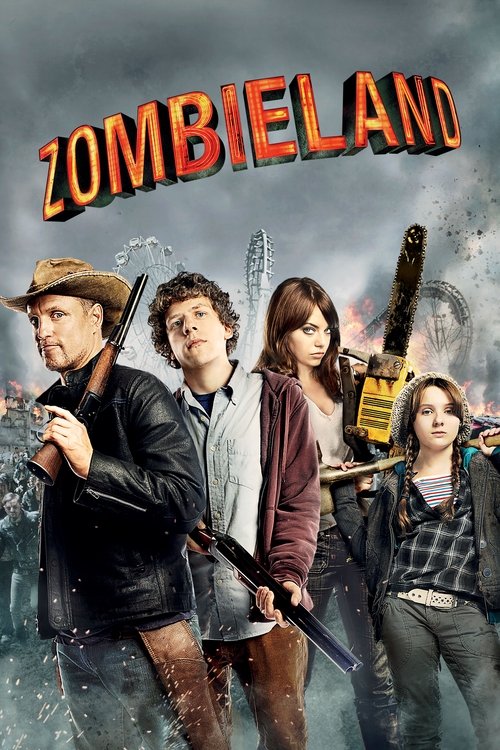
Zombieland
Columbus has made a habit of running from what scares him. Tallahassee doesn't have fears. If he did, he'd kick their ever-living ass. In a world overrun by zombies, these two are perfectly evolved survivors. But now, they're about to stare down the most terrifying prospect of all: each other.
Despite a moderate budget of $23.6M, Zombieland became a solid performer, earning $102.4M worldwide—a 334% return.
10 wins & 29 nominations


Plot Structure
Story beats plotted across runtime


Narrative Arc
Emotional journey through the story's key moments
Story Circle
Blueprint 15-beat structure
Arcplot Score Breakdown
Weighted: Precision (70%) + Arc (15%) + Theme (15%)
Zombieland (2009) exhibits meticulously timed narrative design, characteristic of Ruben Fleischer's storytelling approach. This structural analysis examines how the film's 15-point plot structure maps to proven narrative frameworks across 1 hour and 27 minutes. With an Arcplot score of 6.8, the film balances conventional beats with creative variation.
Structural Analysis
The Status Quo at 1 minutes (1% through the runtime) establishes Columbus narrates over slow-motion zombie carnage, introducing the post-apocalyptic America where the zombie virus has devastated humanity. He's a lonely, anxious shut-in whose pre-apocalypse isolation has become his survival strategy.. Structural examination shows that this early placement immediately immerses viewers in the story world.
The inciting incident occurs at 11 minutes when Columbus encounters Tallahassee on the road—a zombie-killing badass in a Cadillac Escalade. Despite Columbus's instinct to stay alone, Tallahassee offers him a ride. This disrupts Columbus's solitary survival strategy and begins his journey toward connection.. At 13% through the film, this Disruption is delayed, allowing extended setup of the story world. This beat shifts the emotional landscape, launching the protagonist into the central conflict.
The First Threshold at 22 minutes marks the transition into Act II, occurring at 25% of the runtime. This reveals the protagonist's commitment to Columbus and Tallahassee encounter Wichita and Little Rock at a grocery store. The sisters con them at gunpoint, stealing their weapons and vehicle. Despite being betrayed, Columbus chooses to continue with Tallahassee rather than go it alone—committing to partnership., moving from reaction to action.
At 44 minutes, the Midpoint arrives at 50% of the runtime—precisely centered, creating perfect narrative symmetry. Of particular interest, this crucial beat The group arrives at Bill Murray's mansion in Hollywood. This is a false victory—they've found safety, luxury, and even a celebrity survivor. Columbus and Wichita share a romantic moment watching Ghostbusters, and he almost kisses her. Everything seems perfect., fundamentally raising what's at risk. The emotional intensity shifts, dividing the narrative into clear before-and-after phases.
The Collapse moment at 65 minutes (75% through) represents the emotional nadir. Here, Columbus wakes to find Wichita and Little Rock gone. They've abandoned him and Tallahassee, taking the vehicle. Columbus's worst fear is confirmed—getting attached leads to abandonment. Tallahassee reveals his son Buck died, showing the cost of connection., reveals the protagonist at their lowest point. This beat's placement in the final quarter sets up the climactic reversal.
The Second Threshold at 71 minutes initiates the final act resolution at 81% of the runtime. Columbus makes his choice: he's going after Wichita and Little Rock. He convinces Tallahassee to drive to Pacific Playland. For the first time, Columbus actively chooses connection over survival, breaking his own rules to pursue the family he's found., demonstrating the transformation achieved throughout the journey.
Emotional Journey
Zombieland's emotional architecture traces a deliberate progression across 15 carefully calibrated beats.
Narrative Framework
This structural analysis employs systematic plot point analysis that identifies crucial turning points. By mapping Zombieland against these established plot points, we can identify how Ruben Fleischer utilizes or subverts traditional narrative conventions. The plot point approach reveals not only adherence to structural principles but also creative choices that distinguish Zombieland within the comedy genre.
Ruben Fleischer's Structural Approach
Among the 6 Ruben Fleischer films analyzed on Arcplot, the average structural score is 7.1, reflecting strong command of classical structure. Zombieland takes a more unconventional approach compared to the director's typical style. For comparative analysis, explore the complete Ruben Fleischer filmography.
Comparative Analysis
Additional comedy films include The Bad Guys, Ella Enchanted and The Evening Star. For more Ruben Fleischer analyses, see Uncharted, 30 Minutes or Less and Gangster Squad.
Plot Points by Act
Act I
SetupStatus Quo
Columbus narrates over slow-motion zombie carnage, introducing the post-apocalyptic America where the zombie virus has devastated humanity. He's a lonely, anxious shut-in whose pre-apocalypse isolation has become his survival strategy.
Theme
Columbus explains his rules for survival, particularly Rule #1: Cardio. His narration reveals the theme when he states that the best way to survive is to be alone and avoid attachments—a philosophy the film will systematically dismantle.
Worldbuilding
Columbus establishes the rules of Zombieland through voiceover and demonstrates his survival techniques. We see flashbacks to his neighbor 406 (the girl who used his apartment to hide from a homeless zombie), establishing his desire for human connection and his pattern of losing it.
Disruption
Columbus encounters Tallahassee on the road—a zombie-killing badass in a Cadillac Escalade. Despite Columbus's instinct to stay alone, Tallahassee offers him a ride. This disrupts Columbus's solitary survival strategy and begins his journey toward connection.
Resistance
Columbus and Tallahassee travel together, with Tallahassee serving as an unlikely mentor figure. They bond over zombie kills and the search for Twinkies. Tallahassee demonstrates fearless engagement with the world while Columbus clings to his cautious rules.
Act II
ConfrontationFirst Threshold
Columbus and Tallahassee encounter Wichita and Little Rock at a grocery store. The sisters con them at gunpoint, stealing their weapons and vehicle. Despite being betrayed, Columbus chooses to continue with Tallahassee rather than go it alone—committing to partnership.
Mirror World
The four survivors reluctantly team up after a second encounter. Wichita and Little Rock represent the Mirror World—a makeshift family unit that challenges Columbus's isolation philosophy. His growing attraction to Wichita embodies his thematic need for connection.
Premise
The unlikely group travels together toward Pacific Playland, the amusement park Little Rock dreams of visiting. They raid stores, bicker, bond, and navigate zombie encounters. Columbus begins falling for Wichita while Tallahassee reluctantly softens toward the group.
Midpoint
The group arrives at Bill Murray's mansion in Hollywood. This is a false victory—they've found safety, luxury, and even a celebrity survivor. Columbus and Wichita share a romantic moment watching Ghostbusters, and he almost kisses her. Everything seems perfect.
Opposition
The mansion idyll is shattered when Tallahassee accidentally shoots Bill Murray (who was pranking them dressed as a zombie). The group's fragile bonds fray—Columbus's attempted kiss with Wichita fails, and the sisters' distrust resurfaces. Wichita and Little Rock steal the Hummer and leave.
Collapse
Columbus wakes to find Wichita and Little Rock gone. They've abandoned him and Tallahassee, taking the vehicle. Columbus's worst fear is confirmed—getting attached leads to abandonment. Tallahassee reveals his son Buck died, showing the cost of connection.
Crisis
Columbus and Tallahassee process their losses in Bill Murray's mansion. Tallahassee's confession about his son creates a moment of genuine emotional vulnerability. Columbus must decide whether to return to safe isolation or risk everything by chasing after Wichita.
Act III
ResolutionSecond Threshold
Columbus makes his choice: he's going after Wichita and Little Rock. He convinces Tallahassee to drive to Pacific Playland. For the first time, Columbus actively chooses connection over survival, breaking his own rules to pursue the family he's found.
Synthesis
At Pacific Playland, the sisters have turned on the lights and rides, attracting a massive zombie horde. Columbus and Tallahassee arrive to rescue them. Columbus uses his rules AND his new courage—fighting through zombies, facing his fears, and working as part of a team to save the people he loves.
Transformation
After the battle, Columbus finally kisses Wichita. His closing narration reveals his transformation: he no longer lives by rules of isolation. He's found his family—Tallahassee, Wichita, and Little Rock. The anxious loner has become part of something greater than survival.