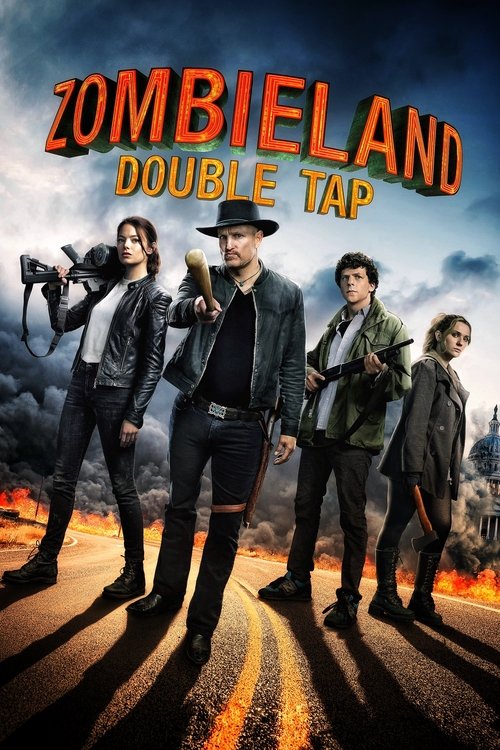
Zombieland: Double Tap
Columbus, Tallahassee, Wichita, and Little Rock move to the American heartland as they face off against evolved zombies, fellow survivors, and the growing pains of the snarky makeshift family.
Despite a respectable budget of $42.0M, Zombieland: Double Tap became a solid performer, earning $122.8M worldwide—a 192% return.


Plot Structure
Story beats plotted across runtime


Narrative Arc
Emotional journey through the story's key moments
Story Circle
Blueprint 15-beat structure
Arcplot Score Breakdown
Weighted: Precision (70%) + Arc (15%) + Theme (15%)
Zombieland: Double Tap (2019) demonstrates carefully calibrated plot construction, characteristic of Ruben Fleischer's storytelling approach. This structural analysis examines how the film's 15-point plot structure maps to proven narrative frameworks across 1 hour and 39 minutes. With an Arcplot score of 7.3, the film balances conventional beats with creative variation.
Structural Analysis
The Status Quo at 1 minutes (1% through the runtime) establishes Columbus narrates how the family has thrived in post-apocalyptic America, now living in the White House. They've perfected zombie-killing and built a comfortable, if isolated, life together in the ten years since Zombieland.. Of particular interest, this early placement immediately immerses viewers in the story world.
The inciting incident occurs at 12 minutes when Wichita and Little Rock steal the monster truck and leave after Columbus proposes with the Hope Diamond. Little Rock leaves a note saying she needs to find people her own age. The family is broken.. At 12% through the film, this Disruption aligns precisely with traditional story structure. This beat shifts the emotional landscape, launching the protagonist into the central conflict.
The First Threshold at 24 minutes marks the transition into Act II, occurring at 25% of the runtime. This shows the protagonist's commitment to The group actively chooses to road trip to Babylon to rescue Little Rock, despite the dangers. Columbus commits to the journey even though Wichita hurt him, choosing family over safety., moving from reaction to action.
At 50 minutes, the Midpoint arrives at 51% of the runtime—precisely centered, creating perfect narrative symmetry. Of particular interest, this crucial beat False defeat: The pacifist commune is overrun and destroyed by a horde of T-800 zombies in a brutal massacre. The group barely escapes. They realize Little Rock is heading into even greater danger, and their relaxed road trip becomes a desperate race., fundamentally raising what's at risk. The emotional intensity shifts, dividing the narrative into clear before-and-after phases.
The Collapse moment at 72 minutes (73% through) represents the emotional nadir. Here, Little Rock is trapped at Babylon, surrounded by a massive horde of evolved T-800 zombies drawn by the commune's lights and music. The tower she's on is about to be overrun. Whiff of death: she will die unless they act, and they're outgunned and outmatched., indicates the protagonist at their lowest point. This beat's placement in the final quarter sets up the climactic reversal.
The Second Threshold at 78 minutes initiates the final act resolution at 78% of the runtime. The group synthesizes their individual strengths with their family bond. New plan: use Babylon's sound system and biodiesel tankers to create a moat of fire, turning Little Rock's trap into their fortress. Nevada and Albuquerque join the fight. Family chooses each other., demonstrating the transformation achieved throughout the journey.
Emotional Journey
Zombieland: Double Tap's emotional architecture traces a deliberate progression across 15 carefully calibrated beats.
Narrative Framework
This structural analysis employs a 15-point narrative structure framework that maps key story moments. By mapping Zombieland: Double Tap against these established plot points, we can identify how Ruben Fleischer utilizes or subverts traditional narrative conventions. The plot point approach reveals not only adherence to structural principles but also creative choices that distinguish Zombieland: Double Tap within the horror genre.
Ruben Fleischer's Structural Approach
Among the 6 Ruben Fleischer films analyzed on Arcplot, the average structural score is 7.1, reflecting strong command of classical structure. Zombieland: Double Tap represents one of the director's most structurally precise works. For comparative analysis, explore the complete Ruben Fleischer filmography.
Comparative Analysis
Additional horror films include Thinner, A Nightmare on Elm Street and Mary Reilly. For more Ruben Fleischer analyses, see Uncharted, 30 Minutes or Less and Gangster Squad.
Plot Points by Act
Act I
SetupStatus Quo
Columbus narrates how the family has thrived in post-apocalyptic America, now living in the White House. They've perfected zombie-killing and built a comfortable, if isolated, life together in the ten years since Zombieland.
Theme
Wichita tells Columbus, "You can't just expect people to stay the same forever." The theme: growth requires change, and clinging to comfort zones prevents real connection and evolution.
Worldbuilding
Establishment of the family dynamic in the White House: Columbus and Wichita's relationship tension, Little Rock feeling stifled as the only young person, Tallahassee as the overbearing father figure. Introduction of evolved zombie types including the smarter, tougher T-800s.
Disruption
Wichita and Little Rock steal the monster truck and leave after Columbus proposes with the Hope Diamond. Little Rock leaves a note saying she needs to find people her own age. The family is broken.
Resistance
Columbus wallows in heartbreak. Tallahassee tries to cheer him up. They encounter Madison, a ditzy blonde survivor who has lived in a mall freezer. Columbus rebounds with Madison despite knowing it's a mistake. Wichita returns alone—Little Rock ran off with Berkeley, a pacifist hippie, to Babylon (a rumored zombie-free commune).
Act II
ConfrontationFirst Threshold
The group actively chooses to road trip to Babylon to rescue Little Rock, despite the dangers. Columbus commits to the journey even though Wichita hurt him, choosing family over safety.
Mirror World
Madison represents the thematic counterpoint: she embraces change, is spontaneous and fearless about connection, unlike Columbus who clings to control and safety. Her presence forces both Columbus and Wichita to confront their fears of vulnerability.
Premise
Road trip fun: zombie kills with creative methods, touring Elvis's Graceland (Tallahassee's pilgrimage), team bonding despite Madison/Wichita tension. They visit a zombie-free commune of pacifists who refuse weapons. Introduction of Nevada and Albuquerque, carbon copies of Tallahassee and Columbus.
Midpoint
False defeat: The pacifist commune is overrun and destroyed by a horde of T-800 zombies in a brutal massacre. The group barely escapes. They realize Little Rock is heading into even greater danger, and their relaxed road trip becomes a desperate race.
Opposition
The journey intensifies: vehicle breaks down, forcing them to travel in a hippie van. Columbus believes Madison has been infected and abandons her on the road (she was actually just allergic to nuts). Wichita and Columbus' unresolved feelings create tension. They discover Little Rock and Berkeley abandoned at Graceland.
Collapse
Little Rock is trapped at Babylon, surrounded by a massive horde of evolved T-800 zombies drawn by the commune's lights and music. The tower she's on is about to be overrun. Whiff of death: she will die unless they act, and they're outgunned and outmatched.
Crisis
The team confronts their limitations and fears. Columbus realizes his rules can't control everything. Tallahassee must trust Little Rock to fight rather than just protect her. Wichita must choose vulnerability over independence. Madison returns, having survived alone—proving she's tougher than anyone thought.
Act III
ResolutionSecond Threshold
The group synthesizes their individual strengths with their family bond. New plan: use Babylon's sound system and biodiesel tankers to create a moat of fire, turning Little Rock's trap into their fortress. Nevada and Albuquerque join the fight. Family chooses each other.
Synthesis
Epic finale battle: the group fights waves of T-800s using their perfected skills plus improvised teamwork. Madison uses her "dumb blonde" persona strategically. Tallahassee sacrifices himself in a tower knowing Little Rock can handle herself. They destroy the horde with explosives and the fire moat. Tallahassee survives. Little Rock chooses family over Berkeley.
Transformation
The family returns to the White House together, now including Madison and accepting Little Rock's need for independence. Columbus narrates that they've learned home isn't a place—it's the people. He and Wichita are together, having embraced uncertainty. Little Rock has found her voice. They've evolved from survivors to a true family.