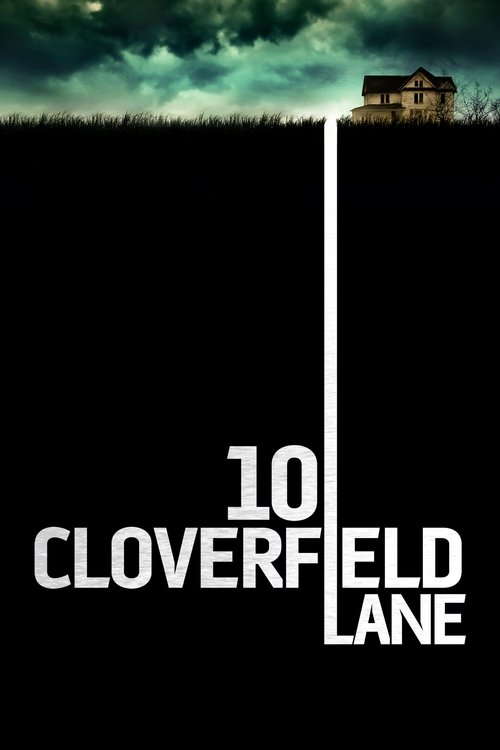
10 Cloverfield Lane
After a catastrophic car crash, a young woman wakes up in a survivalist's underground bunker, where he claims to have saved her from an apocalyptic attack that has left the outside world uninhabitable.
Despite a moderate budget of $15.0M, 10 Cloverfield Lane became a runaway success, earning $110.2M worldwide—a remarkable 635% return.
16 wins & 48 nominations


Plot Structure
Story beats plotted across runtime


Narrative Arc
Emotional journey through the story's key moments
Story Circle
Blueprint 15-beat structure
Arcplot Score Breakdown
Weighted: Precision (70%) + Arc (15%) + Theme (15%)
10 Cloverfield Lane (2016) exhibits strategically placed story structure, characteristic of Dan Trachtenberg's storytelling approach. This structural analysis examines how the film's 15-point plot structure maps to proven narrative frameworks across 1 hour and 44 minutes. With an Arcplot score of 7.2, the film balances conventional beats with creative variation.
Characters
Cast & narrative archetypes

Michelle
Howard Stambler
Emmett DeWitt
Main Cast & Characters
Michelle
Played by Mary Elizabeth Winstead
A young woman who wakes up in an underground bunker after a car accident, held captive by a paranoid survivalist who claims the outside world is uninhabitable.
Howard Stambler
Played by John Goodman
A controlling, paranoid conspiracy theorist who keeps Michelle and Emmett in his bunker, claiming to protect them from an apocalyptic event.
Emmett DeWitt
Played by John Gallagher Jr.
A local handyman who helped build Howard's bunker and now finds himself trapped inside with Michelle, serving as an ally and voice of reason.
Structural Analysis
The Status Quo at 1 minutes (1% through the runtime) establishes Michelle packs her belongings and removes her engagement ring, leaving her apartment and fiancé Ben in a state of quiet emotional turmoil.. Of particular interest, this early placement immediately immerses viewers in the story world.
The inciting incident occurs at 11 minutes when A truck violently rams Michelle's car off the road. She crashes through the guardrail, tumbling down an embankment in a devastating accident.. At 10% through the film, this Disruption aligns precisely with traditional story structure. This beat shifts the emotional landscape, launching the protagonist into the central conflict.
The First Threshold at 25 minutes marks the transition into Act II, occurring at 24% of the runtime. This indicates the protagonist's commitment to Michelle sees a contaminated woman desperately clawing at the bunker door, face covered in lesions, begging to be let in. This horrific proof forces Michelle to accept that Howard may be telling the truth., moving from reaction to action.
At 53 minutes, the Midpoint arrives at 51% of the runtime—precisely centered, creating perfect narrative symmetry. The analysis reveals that this crucial beat Michelle discovers evidence that Howard may have kidnapped a girl named Megan. The bunker transforms from potential shelter into probable prison - Howard is not a paranoid savior but a dangerous captor., fundamentally raising what's at risk. The emotional intensity shifts, dividing the narrative into clear before-and-after phases.
The Collapse moment at 76 minutes (73% through) represents the emotional nadir. Here, Howard discovers Emmett helped Michelle. In a rage, Howard shoots and kills Emmett in front of Michelle. Her ally is dead, her plan exposed, and she's alone with a murderer., reveals the protagonist at their lowest point. This beat's placement in the final quarter sets up the climactic reversal.
The Second Threshold at 83 minutes initiates the final act resolution at 80% of the runtime. Michelle completes her hazmat suit and chooses to fight. Instead of quietly escaping, she arms herself with improvised weapons, accepting that survival requires confrontation, not flight., demonstrating the transformation achieved throughout the journey.
Emotional Journey
10 Cloverfield Lane's emotional architecture traces a deliberate progression across 15 carefully calibrated beats.
Narrative Framework
This structural analysis employs structural analysis methodology used to understand storytelling architecture. By mapping 10 Cloverfield Lane against these established plot points, we can identify how Dan Trachtenberg utilizes or subverts traditional narrative conventions. The plot point approach reveals not only adherence to structural principles but also creative choices that distinguish 10 Cloverfield Lane within the thriller genre.
Dan Trachtenberg's Structural Approach
Among the 2 Dan Trachtenberg films analyzed on Arcplot, the average structural score is 7.6, reflecting strong command of classical structure. 10 Cloverfield Lane takes a more unconventional approach compared to the director's typical style. For comparative analysis, explore the complete Dan Trachtenberg filmography.
Comparative Analysis
Additional thriller films include The Warriors, Thunderball and Rustom. For more Dan Trachtenberg analyses, see Prey.
Plot Points by Act
Act I
SetupStatus Quo
Michelle packs her belongings and removes her engagement ring, leaving her apartment and fiancé Ben in a state of quiet emotional turmoil.
Theme
Radio voices discuss preparedness and whether people are safer taking shelter or facing threats directly - establishing the film's central question about trust versus self-reliance.
Worldbuilding
Michelle drives through rural Louisiana at night. Ben calls repeatedly, trying to reconcile. She's running from her relationship problems, heading toward an uncertain future.
Disruption
A truck violently rams Michelle's car off the road. She crashes through the guardrail, tumbling down an embankment in a devastating accident.
Resistance
Michelle wakes chained in a concrete bunker. Howard claims he saved her from an attack that has made the outside air toxic. She debates whether he's a savior or captor, looking for escape.
Act II
ConfrontationFirst Threshold
Michelle sees a contaminated woman desperately clawing at the bunker door, face covered in lesions, begging to be let in. This horrific proof forces Michelle to accept that Howard may be telling the truth.
Mirror World
Emmett, the other bunker resident, shares his story with Michelle. He chose to come here and represents an alternative path - accepting help and community rather than Michelle's isolation.
Premise
The bunker becomes a tense domestic environment. Michelle, Howard, and Emmett establish routines - meals, games, work. Howard's controlling behavior escalates while Michelle secretly builds survival tools.
Midpoint
Michelle discovers evidence that Howard may have kidnapped a girl named Megan. The bunker transforms from potential shelter into probable prison - Howard is not a paranoid savior but a dangerous captor.
Opposition
Howard's control intensifies. Michelle and Emmett secretly build a hazmat suit to escape. Howard grows suspicious, paranoid. The psychological pressure mounts as Michelle tries to maintain the facade.
Collapse
Howard discovers Emmett helped Michelle. In a rage, Howard shoots and kills Emmett in front of Michelle. Her ally is dead, her plan exposed, and she's alone with a murderer.
Crisis
Michelle sits through an unbearably tense "normal" dinner with Howard after Emmett's murder. She realizes she must stop running and face both threats - Howard and whatever is outside.
Act III
ResolutionSecond Threshold
Michelle completes her hazmat suit and chooses to fight. Instead of quietly escaping, she arms herself with improvised weapons, accepting that survival requires confrontation, not flight.
Synthesis
Michelle battles Howard through the bunker, ultimately causing an explosion that kills him. She escapes to the surface, discovers an alien invasion is real, and destroys an alien scout ship with a Molotov cocktail.
Transformation
Michelle hears a radio broadcast calling for help at a resistance base. Instead of fleeing to safety, she turns her car toward Houston to join the fight - transformed from someone who runs to someone who stands.