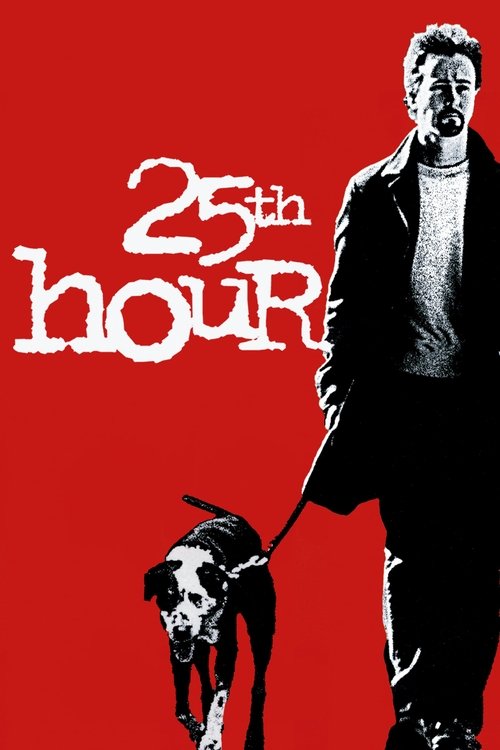
25th Hour
In New York City in the days following the events of 9/11, Monty Brogan is a convicted drug dealer about to start a seven-year prison sentence, and his final hours of freedom are devoted to hanging out with his closest buddies and trying to prepare his girlfriend for his extended absence.
Despite its tight budget of $5.0M, 25th Hour became a financial success, earning $23.9M worldwide—a 379% return. The film's unique voice connected with viewers, illustrating how strong storytelling can transcend budget limitations.
4 wins & 17 nominations


Plot Structure
Story beats plotted across runtime


Narrative Arc
Emotional journey through the story's key moments
Story Circle
Blueprint 15-beat structure
Arcplot Score Breakdown
Weighted: Precision (70%) + Arc (15%) + Theme (15%)
25th Hour (2002) reveals deliberately positioned story structure, characteristic of Spike Lee's storytelling approach. This structural analysis examines how the film's 15-point plot structure maps to proven narrative frameworks across 2 hours and 15 minutes. With an Arcplot score of 7.3, the film balances conventional beats with creative variation.
Characters
Cast & narrative archetypes

Monty Brogan
Jacob Elinsky
Frank Slaughtery
Naturelle Riviera
James Brogan
Mary D'Annunzio
Main Cast & Characters
Monty Brogan
Played by Edward Norton
A convicted drug dealer spending his last day of freedom before reporting to prison for seven years.
Jacob Elinsky
Played by Philip Seymour Hoffman
Monty's longtime friend, a high school English teacher struggling with attraction to a student.
Frank Slaughtery
Played by Barry Pepper
Monty's brash Wall Street trader friend who enjoys the high life.
Naturelle Riviera
Played by Rosario Dawson
Monty's Puerto Rican girlfriend whom he suspects of informing on him to the DEA.
James Brogan
Played by Brian Cox
Monty's father, a retired firefighter and bar owner who loves his son deeply.
Mary D'Annunzio
Played by Anna Paquin
Frank's colleague and Jacob's love interest, provides outsider perspective on Monty's situation.
Structural Analysis
The Status Quo at 2 minutes (2% through the runtime) establishes Monty Brogan rescues an injured dog from the street, establishing his capacity for compassion despite his criminal background. This opening image shows who he was before facing consequences.. Of particular interest, this early placement immediately immerses viewers in the story world.
The inciting incident occurs at 15 minutes when Monty fully confronts the reality that this is his last day of freedom. The weight of his impending seven-year prison sentence becomes undeniable.. At 11% through the film, this Disruption aligns precisely with traditional story structure. This beat shifts the emotional landscape, launching the protagonist into the central conflict.
The First Threshold at 31 minutes marks the transition into Act II, occurring at 23% of the runtime. This reveals the protagonist's commitment to Monty decides to actively confront all aspects of his life on his final day rather than hide. He chooses to see his friends, visit old haunts, and face his demons head-on., moving from reaction to action.
At 68 minutes, the Midpoint arrives at 50% of the runtime—precisely centered, creating perfect narrative symmetry. The analysis reveals that this crucial beat At the nightclub, suspicions about Naturelle's betrayal reach crisis point. Monty must decide whether to believe she informed on him. False defeat: he believes everyone has abandoned him., fundamentally raising what's at risk. The emotional intensity shifts, dividing the narrative into clear before-and-after phases.
The Collapse moment at 104 minutes (77% through) represents the emotional nadir. Here, Monty's meeting with Uncle Nikolai confirms there's no escape, no favor to call in, no way out. His criminal life is definitively over and he must face consequences alone. Complete loss of hope., indicates the protagonist at their lowest point. This beat's placement in the final quarter sets up the climactic reversal.
The Second Threshold at 114 minutes initiates the final act resolution at 85% of the runtime. Monty asks Frank to beat him severely so he'll look tough in prison. This brutal request represents his complete acceptance of his fate and his plan to survive through physical sacrifice., demonstrating the transformation achieved throughout the journey.
Emotional Journey
25th Hour's emotional architecture traces a deliberate progression across 15 carefully calibrated beats.
Narrative Framework
This structural analysis employs systematic plot point analysis that identifies crucial turning points. By mapping 25th Hour against these established plot points, we can identify how Spike Lee utilizes or subverts traditional narrative conventions. The plot point approach reveals not only adherence to structural principles but also creative choices that distinguish 25th Hour within the crime genre.
Spike Lee's Structural Approach
Among the 13 Spike Lee films analyzed on Arcplot, the average structural score is 7.0, demonstrating varied approaches to story architecture. 25th Hour represents one of the director's most structurally precise works. For comparative analysis, explore the complete Spike Lee filmography.
Comparative Analysis
Additional crime films include The Bad Guys, Rustom and The Whole Ten Yards. For more Spike Lee analyses, see Summer of Sam, Inside Man and Clockers.
Plot Points by Act
Act I
SetupStatus Quo
Monty Brogan rescues an injured dog from the street, establishing his capacity for compassion despite his criminal background. This opening image shows who he was before facing consequences.
Theme
Monty's father James reflects on choices and consequences: "You had a good thing going and you threw it all away." The theme of accountability is introduced.
Worldbuilding
Setup of Monty's final day before prison. We meet his girlfriend Naturelle, his apartment, his routine. The ticking clock of his last 24 hours of freedom is established.
Disruption
Monty fully confronts the reality that this is his last day of freedom. The weight of his impending seven-year prison sentence becomes undeniable.
Resistance
Monty visits his father, debates his choices, and resists accepting his fate. He considers options, questions trust, and struggles with how to spend his final hours.
Act II
ConfrontationFirst Threshold
Monty decides to actively confront all aspects of his life on his final day rather than hide. He chooses to see his friends, visit old haunts, and face his demons head-on.
Mirror World
The iconic bathroom mirror scene. Monty delivers his furious "F*** you" monologue to his reflection, raging against everyone in New York before turning the rage inward: "No, f*** you, Montgomery Brogan." First moment of true self-awareness.
Premise
Monty spends time with his childhood friends Jacob and Frank, revisiting memories and relationships. They go to a club, old tensions surface, and the question of who betrayed Monty begins to dominate.
Midpoint
At the nightclub, suspicions about Naturelle's betrayal reach crisis point. Monty must decide whether to believe she informed on him. False defeat: he believes everyone has abandoned him.
Opposition
Pressure intensifies as midnight approaches. Monty confronts his criminal past through Uncle Nikolai, grapples with trust and paranoia, and realizes there's no escape from either his past or future.
Collapse
Monty's meeting with Uncle Nikolai confirms there's no escape, no favor to call in, no way out. His criminal life is definitively over and he must face consequences alone. Complete loss of hope.
Crisis
Monty processes the darkness of his situation. The final hours tick away as he confronts the total collapse of his former life and the impossibility of escape.
Act III
ResolutionSecond Threshold
Monty asks Frank to beat him severely so he'll look tough in prison. This brutal request represents his complete acceptance of his fate and his plan to survive through physical sacrifice.
Synthesis
The beating scene followed by Monty's father driving him to prison. The fantasy sequence plays out: an imagined escape to the West, a new life. But reality returns—they continue driving toward the prison.
Transformation
Monty sits silently in the car, beaten and broken physically but spiritually transformed. He has rejected the fantasy of escape and accepted responsibility with dignity. Final image mirrors the opening: a man capable of grace, now facing consequences.