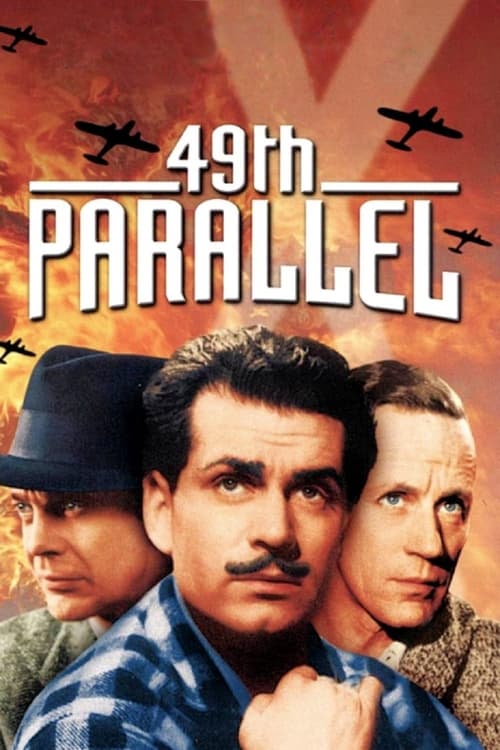
49th Parallel
In the early days of World War II, a German U-boat is sunk in Canada's Hudson Bay. Hoping to evade capture, a small band of German soldiers led by commanding officer Lieutenant Hirth attempts to cross the border into the United States, which has not yet entered the war and is officially neutral. Along the way, the German soldiers encounter brave men such as a French-Canadian fur trapper, Johnnie, a leader of a Hutterite farming community, Peter, an author, Philip and a soldier, Andy Brock.
Despite its extremely modest budget of $140K, 49th Parallel became a runaway success, earning $5.3M worldwide—a remarkable 3668% return. The film's compelling narrative attracted moviegoers, demonstrating that strong storytelling can transcend budget limitations.


Plot Structure
Story beats plotted across runtime


Narrative Arc
Emotional journey through the story's key moments
Story Circle
Blueprint 15-beat structure
Arcplot Score Breakdown
Weighted: Precision (70%) + Arc (15%) + Theme (15%)
49th Parallel (1941) exemplifies precise narrative architecture, characteristic of Michael Powell's storytelling approach. This structural analysis examines how the film's 15-point plot structure maps to proven narrative frameworks across 2 hours and 3 minutes. With an Arcplot score of 7.0, the film balances conventional beats with creative variation.
Characters
Cast & narrative archetypes

Lieutenant Ernst Hirth
Johnnie the Trapper
Peter
Philip Armstrong Scott
Andy Brock
Anna
Vogel
Main Cast & Characters
Lieutenant Ernst Hirth
Played by Eric Portman
Fanatical Nazi U-boat commander stranded in Canada, leading survivors across country to reach neutral USA
Johnnie the Trapper
Played by Laurence Olivier
French-Canadian trapper living isolated in wilderness who encounters the Nazi refugees
Peter
Played by Anton Walbrook
Leader of Hutterite farming community, gentle pacifist who shows kindness to the Germans
Philip Armstrong Scott
Played by Leslie Howard
Intellectual English author and anthropologist living among Indigenous peoples in Canada
Andy Brock
Played by Raymond Massey
Canadian soldier AWOL in Niagara Falls who confronts the Nazi lieutenant
Anna
Played by Glynis Johns
Young Hutterite woman who helps the stranded Germans in her community
Vogel
Played by Niall MacGinnis
Young Nazi sailor who questions orders and shows humanity, ultimately rejecting fanaticism
Structural Analysis
The Status Quo at 1 minutes (1% through the runtime) establishes German U-boat U-37 patrols the Gulf of St. Lawrence, establishing the Nazi crew's confident dominance in Canadian waters before any complications arise.. Significantly, this early placement immediately immerses viewers in the story world.
The inciting incident occurs at 15 minutes when The U-boat is bombed and destroyed by Canadian forces while the shore party is away. Six Germans are stranded in Canada, transforming hunters into hunted.. At 13% through the film, this Disruption is delayed, allowing extended setup of the story world. This beat shifts the emotional landscape, launching the protagonist into the central conflict.
The First Threshold at 31 minutes marks the transition into Act II, occurring at 25% of the runtime. This shows the protagonist's commitment to The Germans seize the trading post and take hostages, actively choosing violence and aggression as their method of survival. They fully commit to their ruthless path through Canada., moving from reaction to action.
At 62 minutes, the Midpoint arrives at 50% of the runtime—precisely centered, creating perfect narrative symmetry. Significantly, this crucial beat The group splinters as some Germans are killed or captured. Hirth's iron control begins to crack as the ideology fails to protect them from consequences and Canadian resistance stiffens., fundamentally raising what's at risk. The emotional intensity shifts, dividing the narrative into clear before-and-after phases.
The Collapse moment at 92 minutes (75% through) represents the emotional nadir. Here, Hirth's last companion is killed, leaving him completely alone. The death of his final man represents the total collapse of his mission and the failure of Nazi superiority in the face of Canadian resolve., shows the protagonist at their lowest point. This beat's placement in the final quarter sets up the climactic reversal.
The Second Threshold at 99 minutes initiates the final act resolution at 81% of the runtime. Hirth makes a final desperate attempt to cross into the United States, still clinging to Nazi ideology but now purely driven by survival instinct rather than military purpose., demonstrating the transformation achieved throughout the journey.
Emotional Journey
49th Parallel's emotional architecture traces a deliberate progression across 15 carefully calibrated beats.
Narrative Framework
This structural analysis employs proven narrative structure principles that track dramatic progression. By mapping 49th Parallel against these established plot points, we can identify how Michael Powell utilizes or subverts traditional narrative conventions. The plot point approach reveals not only adherence to structural principles but also creative choices that distinguish 49th Parallel within the war genre.
Michael Powell's Structural Approach
Among the 2 Michael Powell films analyzed on Arcplot, the average structural score is 7.0, reflecting strong command of classical structure. 49th Parallel exemplifies the director's characteristic narrative technique. For comparative analysis, explore the complete Michael Powell filmography.
Comparative Analysis
Additional war films include Fury, Shenandoah and More American Graffiti. For more Michael Powell analyses, see The Red Shoes.
Plot Points by Act
Act I
SetupStatus Quo
German U-boat U-37 patrols the Gulf of St. Lawrence, establishing the Nazi crew's confident dominance in Canadian waters before any complications arise.
Theme
A Canadian character mentions the values of freedom and democracy that define Canada, contrasting with the Nazi ideology the Germans represent - foreshadowing the ideological conflict.
Worldbuilding
Introduction to the German crew under Lieutenant Hirth, their mission in Canadian waters, and the vast wilderness of Canada. Establishes the Nazi ideology and arrogance of the crew members.
Disruption
The U-boat is bombed and destroyed by Canadian forces while the shore party is away. Six Germans are stranded in Canada, transforming hunters into hunted.
Resistance
Lieutenant Hirth debates their options and decides they must reach the still-neutral United States. The group encounters a French-Canadian trapper community at a Hudson Bay post.
Act II
ConfrontationFirst Threshold
The Germans seize the trading post and take hostages, actively choosing violence and aggression as their method of survival. They fully commit to their ruthless path through Canada.
Mirror World
The Germans encounter Johnnie the trapper, a man of decency and quiet courage who represents Canadian values - the first of several "mirrors" showing what humanity looks like versus Nazi ideology.
Premise
The surviving Germans journey across Canada, encountering various representatives of free society: Hutterite Christians, an intellectual author, and a soldier AWOL. Each encounter challenges their ideology.
Midpoint
The group splinters as some Germans are killed or captured. Hirth's iron control begins to crack as the ideology fails to protect them from consequences and Canadian resistance stiffens.
Opposition
Hirth's remaining men continue to diminish through confrontations. The Canadians they've encountered grow more organized in pursuit. Hirth becomes increasingly isolated and desperate.
Collapse
Hirth's last companion is killed, leaving him completely alone. The death of his final man represents the total collapse of his mission and the failure of Nazi superiority in the face of Canadian resolve.
Crisis
Hirth alone must confront the emptiness of his ideology. Stripped of his crew and power, he faces the reality that brute force and fascist beliefs cannot overcome the collective strength of free people.
Act III
ResolutionSecond Threshold
Hirth makes a final desperate attempt to cross into the United States, still clinging to Nazi ideology but now purely driven by survival instinct rather than military purpose.
Synthesis
The final confrontation occurs as Canadian soldier Andy Brock pursues and stops Hirth at the border. Democratic values and ordinary courage triumph over fascist ideology and military training.
Transformation
Hirth is captured just yards from the U.S. border. The image of the defeated Nazi contrasts sharply with the opening U-boat dominance, proving that tyranny cannot survive on free soil.