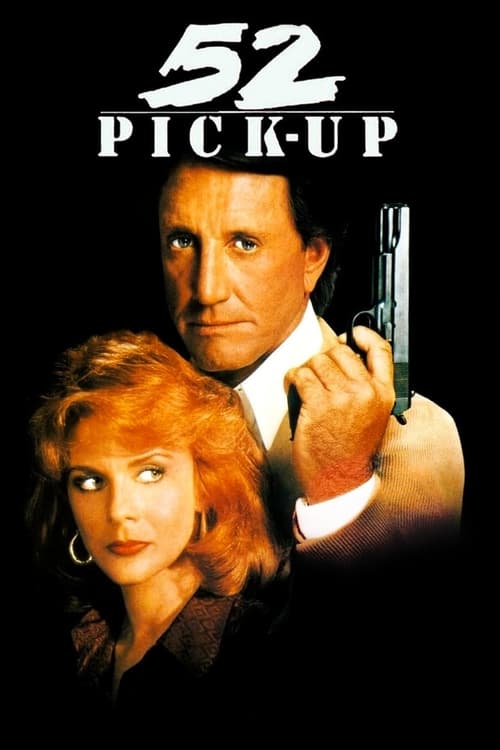
52 Pick-Up
Harry Mitchell is a successful Los Angeles manufacturer whose wife is running for city council. His life is turned upside down when three blackmailers confront him with a videotape of him with his young mistress and demand $100,000. Fearing that the story will hurt his wife's political campaign if he goes to the police, Harry pretends that he will pay the men, but does not follow through.
The film earned $5.2M at the global box office.


Plot Structure
Story beats plotted across runtime


Narrative Arc
Emotional journey through the story's key moments
Story Circle
Blueprint 15-beat structure
Arcplot Score Breakdown
Weighted: Precision (70%) + Arc (15%) + Theme (15%)
52 Pick-Up (1986) exhibits precise plot construction, characteristic of John Frankenheimer's storytelling approach. This structural analysis examines how the film's 15-point plot structure maps to proven narrative frameworks across 1 hour and 50 minutes. With an Arcplot score of 7.7, the film showcases strong structural fundamentals.
Characters
Cast & narrative archetypes

Harry Mitchell
Barbara Mitchell
Raimy
Bobby Shy
Cini
Leo Franks
Main Cast & Characters
Harry Mitchell
Played by Roy Scheider
Successful businessman blackmailed by criminals after having an affair
Barbara Mitchell
Played by Ann-Margret
Harry's wife, a city councilwoman unaware of his affair
Raimy
Played by John Glover
Sadistic criminal mastermind who blackmails Harry with videotapes
Bobby Shy
Played by Clarence Williams III
Young, violent accomplice in the blackmail scheme
Cini
Played by Kelly Preston
Model and Harry's former mistress who becomes entangled in the blackmail plot
Leo Franks
Played by Robert Trebor
Third member of the blackmail crew
Structural Analysis
The Status Quo at 2 minutes (2% through the runtime) establishes Harry Mitchell, successful LA businessman, shown in his element - running his manufacturing company with confidence and control over his orderly world.. Structural examination shows that this early placement immediately immerses viewers in the story world.
The inciting incident occurs at 13 minutes when Harry is lured to a meeting where three blackmailers - Alan Raimy, Bobby Shy, and Leo Franks - show him explicit videotape of his affair with Cini and demand $105,000 or they'll destroy his marriage and political career.. At 11% through the film, this Disruption aligns precisely with traditional story structure. This beat shifts the emotional landscape, launching the protagonist into the central conflict.
The First Threshold at 27 minutes marks the transition into Act II, occurring at 25% of the runtime. This reveals the protagonist's commitment to Harry makes the active choice to confess everything to his wife Barbara rather than pay the blackmailers. He chooses honesty and decides to fight back on his own terms, entering a dangerous game with criminals., moving from reaction to action.
At 54 minutes, the Midpoint arrives at 50% of the runtime—precisely centered, creating perfect narrative symmetry. The analysis reveals that this crucial beat Cini is murdered by the blackmailers when they realize she's become a liability. Harry discovers her body - the stakes are now life and death, not just reputation. The game has turned deadly serious., fundamentally raising what's at risk. The emotional intensity shifts, dividing the narrative into clear before-and-after phases.
The Collapse moment at 81 minutes (73% through) represents the emotional nadir. Here, The blackmailers threaten Barbara directly, invading Harry's home. He's failed to protect what matters most. His strategy of investigation and delay has put his wife in mortal danger - his darkest moment of powerlessness., shows the protagonist at their lowest point. This beat's placement in the final quarter sets up the climactic reversal.
The Second Threshold at 87 minutes initiates the final act resolution at 79% of the runtime. Harry synthesizes his business acumen with street-level cunning. He stages an elaborate scheme to turn the blackmailers against each other, using their greed and distrust. He becomes the manipulator instead of the victim., demonstrating the transformation achieved throughout the journey.
Emotional Journey
52 Pick-Up's emotional architecture traces a deliberate progression across 15 carefully calibrated beats.
Narrative Framework
This structural analysis employs structural analysis methodology used to understand storytelling architecture. By mapping 52 Pick-Up against these established plot points, we can identify how John Frankenheimer utilizes or subverts traditional narrative conventions. The plot point approach reveals not only adherence to structural principles but also creative choices that distinguish 52 Pick-Up within the crime genre.
John Frankenheimer's Structural Approach
Among the 11 John Frankenheimer films analyzed on Arcplot, the average structural score is 7.2, reflecting strong command of classical structure. 52 Pick-Up represents one of the director's most structurally precise works. For comparative analysis, explore the complete John Frankenheimer filmography.
Comparative Analysis
Additional crime films include The Bad Guys, Rustom and The Whole Ten Yards. For more John Frankenheimer analyses, see Prophecy, The Train and The Island of Dr. Moreau.
Plot Points by Act
Act I
SetupStatus Quo
Harry Mitchell, successful LA businessman, shown in his element - running his manufacturing company with confidence and control over his orderly world.
Theme
In conversation about Harry's political ambitions, someone warns him that "everyone has secrets" and that exposure can destroy everything you've built - foreshadowing the central conflict between public reputation and private truth.
Worldbuilding
Establishment of Harry's dual life: successful businessman married to Barbara, planning to run for city council, while carrying on an affair with Cini, a young exotic dancer. His world appears stable but morally compromised.
Disruption
Harry is lured to a meeting where three blackmailers - Alan Raimy, Bobby Shy, and Leo Franks - show him explicit videotape of his affair with Cini and demand $105,000 or they'll destroy his marriage and political career.
Resistance
Harry debates his options: pay the blackmail, go to police, or confess to his wife. He investigates the blackmailers, discovers Cini was complicit, and realizes paying won't end the extortion. He wrestles with whether to come clean.
Act II
ConfrontationFirst Threshold
Harry makes the active choice to confess everything to his wife Barbara rather than pay the blackmailers. He chooses honesty and decides to fight back on his own terms, entering a dangerous game with criminals.
Mirror World
Barbara's devastated reaction to the confession forces Harry to confront the real cost of his betrayal. Their relationship - the thematic mirror showing what truly matters - is shattered, giving Harry clarity about what he's really fighting for.
Premise
Harry refuses to pay and begins his own investigation, playing cat-and-mouse with the blackmailers. He methodically learns about each criminal, gathering intelligence while they escalate threats. The "premise" - ordinary man vs. dangerous criminals - plays out.
Midpoint
Cini is murdered by the blackmailers when they realize she's become a liability. Harry discovers her body - the stakes are now life and death, not just reputation. The game has turned deadly serious.
Opposition
The blackmailers intensify pressure with violence and death threats. Harry realizes they're unraveling and desperate. He continues gathering evidence while they close in, each side maneuvering for advantage. The danger escalates toward inevitable confrontation.
Collapse
The blackmailers threaten Barbara directly, invading Harry's home. He's failed to protect what matters most. His strategy of investigation and delay has put his wife in mortal danger - his darkest moment of powerlessness.
Crisis
Harry processes the failure of his cautious approach. He realizes he must stop playing defense and take direct, decisive action. He formulates a final plan using everything he's learned about the blackmailers' weaknesses and paranoia.
Act III
ResolutionSecond Threshold
Harry synthesizes his business acumen with street-level cunning. He stages an elaborate scheme to turn the blackmailers against each other, using their greed and distrust. He becomes the manipulator instead of the victim.
Synthesis
Harry executes his plan, orchestrating a confrontation where the blackmailers destroy themselves. He uses recorded evidence, planted money, and psychological manipulation to create a deadly three-way conflict that eliminates the threat.
Transformation
Harry, having survived by embracing moral compromise and violence, returns to Barbara. The final image mirrors the opening - he's still in control - but he's been fundamentally changed by what he's capable of when pushed to the edge.