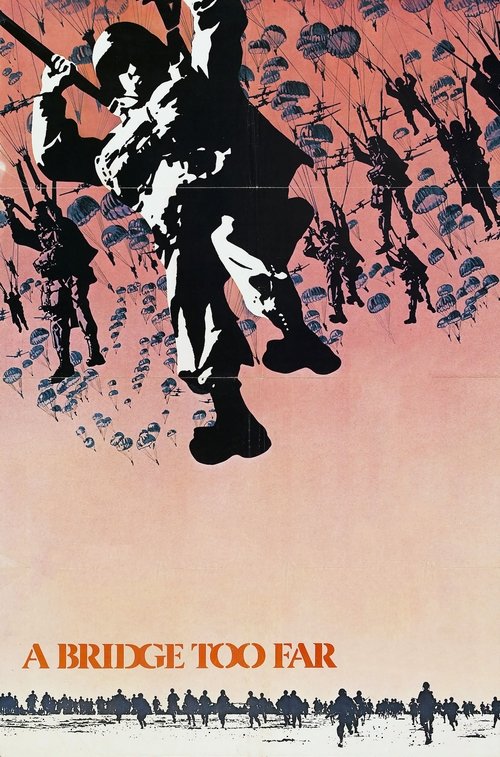
A Bridge Too Far
The story of Operation Market Garden—a failed attempt by the allies in the latter stages of WWII to end the war quickly by securing three bridges in Holland allowing access over the Rhine into Germany. A combination of poor allied intelligence and the presence of two crack German panzer divisions meant that the final part of this operation (the bridge in Arnhem over the Rhine) was doomed to failure.
Despite a moderate budget of $22.0M, A Bridge Too Far became a financial success, earning $50.8M worldwide—a 131% return.
4 BAFTA 7 wins & 5 nominations


Plot Structure
Story beats plotted across runtime


Narrative Arc
Emotional journey through the story's key moments
Story Circle
Blueprint 15-beat structure
Arcplot Score Breakdown
Weighted: Precision (70%) + Arc (15%) + Theme (15%)
A Bridge Too Far (1977) showcases precise dramatic framework, characteristic of Richard Attenborough's storytelling approach. This structural analysis examines how the film's 15-point plot structure maps to proven narrative frameworks across 2 hours and 55 minutes. With an Arcplot score of 6.9, the film balances conventional beats with creative variation.
Characters
Cast & narrative archetypes

Lt. General Frederick Browning
Major General Robert Urquhart
Lt. Colonel John Frost
Major General Stanislaw Sosabowski
Lt. Colonel J.O.E. Vandeleur
Major Julian Cook
Brigadier General James Gavin
Major General Maxwell Taylor
Field Marshal Wilhelm Model
SS General Wilhelm Bittrich
Main Cast & Characters
Lt. General Frederick Browning
Played by Dirk Bogarde
Deputy Commander of Allied Airborne Army who plans Operation Market Garden with optimistic confidence despite warnings.
Major General Robert Urquhart
Played by Sean Connery
Commander of British 1st Airborne Division who faces communication breakdowns and fierce German resistance at Arnhem.
Lt. Colonel John Frost
Played by Anthony Hopkins
Commander of 2nd Battalion who successfully captures the north end of Arnhem bridge and holds it against overwhelming odds.
Major General Stanislaw Sosabowski
Played by Gene Hackman
Polish Brigade commander who voices strong objections to the flawed operation plan but is overruled and proven tragically correct.
Lt. Colonel J.O.E. Vandeleur
Played by Michael Caine
Irish Guards commander leading the ground advance up the single highway toward Arnhem with armored forces.
Major Julian Cook
Played by Robert Redford
American officer who leads a daring daylight river crossing under heavy fire to reinforce Nijmegen bridge.
Brigadier General James Gavin
Played by Ryan O'Neal
Commander of US 82nd Airborne Division tasked with capturing bridges at Nijmegen and Grave.
Major General Maxwell Taylor
Played by Paul Maxwell
Commander of US 101st Airborne Division responsible for securing the southern route corridor.
Field Marshal Wilhelm Model
Played by Walter Kohut
German commander who quickly organizes effective counterattack after initially fleeing his headquarters.
SS General Wilhelm Bittrich
Played by Maximilian Schell
Experienced German Panzer commander who exploits Allied mistakes and coordinates the defense of Arnhem.
Structural Analysis
The Status Quo at 2 minutes (1% through the runtime) establishes September 1944: The Allies have liberated Paris and Brussels. British tanks race through cheering crowds in Belgium, establishing the momentum of Allied victory and the optimism that the war might end by Christmas.. The analysis reveals that this early placement immediately immerses viewers in the story world.
The inciting incident occurs at 21 minutes when Operation Market Garden launches. Massive airborne assault begins as thousands of paratroopers drop into Holland. The plan is set irreversibly in motion despite ignored intelligence about German strength.. At 12% through the film, this Disruption aligns precisely with traditional story structure. This beat shifts the emotional landscape, launching the protagonist into the central conflict.
The First Threshold at 44 minutes marks the transition into Act II, occurring at 25% of the runtime. This reveals the protagonist's commitment to British paratroopers at Arnhem encounter unexpected heavy resistance from SS Panzer divisions. Only Lieutenant Colonel Frost's battalion reaches the bridge. The "Market Garden" plan begins to unravel as the true German strength reveals itself., moving from reaction to action.
At 88 minutes, the Midpoint arrives at 50% of the runtime—precisely centered, creating perfect narrative symmetry. The analysis reveals that this crucial beat The Nijmegen bridge is finally captured by American forces in a costly daylight river assault, but British tanks fail to immediately push forward to Arnhem. The delay proves fatal—this is the moment when relief of Arnhem becomes impossible., fundamentally raising what's at risk. The emotional intensity shifts, dividing the narrative into clear before-and-after phases.
The Collapse moment at 131 minutes (75% through) represents the emotional nadir. Here, Frost's battalion is overrun at Arnhem bridge after holding for four days. The wounded Frost is captured. The bridge falls to German control. The core objective of Market Garden is lost, and thousands of paratroopers remain trapped north of the Rhine., demonstrates the protagonist at their lowest point. This beat's placement in the final quarter sets up the climactic reversal.
The Second Threshold at 140 minutes initiates the final act resolution at 80% of the runtime. General Urquhart receives authorization to withdraw surviving forces across the Rhine. The decision to retreat acknowledges total failure of the operation, but offers the only chance to save the remnant of the airborne division., demonstrating the transformation achieved throughout the journey.
Emotional Journey
A Bridge Too Far's emotional architecture traces a deliberate progression across 15 carefully calibrated beats.
Narrative Framework
This structural analysis employs systematic plot point analysis that identifies crucial turning points. By mapping A Bridge Too Far against these established plot points, we can identify how Richard Attenborough utilizes or subverts traditional narrative conventions. The plot point approach reveals not only adherence to structural principles but also creative choices that distinguish A Bridge Too Far within the drama genre.
Richard Attenborough's Structural Approach
Among the 8 Richard Attenborough films analyzed on Arcplot, the average structural score is 7.0, demonstrating varied approaches to story architecture. A Bridge Too Far takes a more unconventional approach compared to the director's typical style. For comparative analysis, explore the complete Richard Attenborough filmography.
Comparative Analysis
Additional drama films include After Thomas, South Pacific and Dirty Dancing: Havana Nights. For more Richard Attenborough analyses, see Gandhi, In Love and War and Magic.
Plot Points by Act
Act I
SetupStatus Quo
September 1944: The Allies have liberated Paris and Brussels. British tanks race through cheering crowds in Belgium, establishing the momentum of Allied victory and the optimism that the war might end by Christmas.
Theme
General Browning warns Montgomery: "I think we might be going a bridge too far." This statement of doubt about operational ambition encapsulates the film's central theme: hubris and overreach in military planning.
Worldbuilding
Introduction of the massive ensemble cast and Operation Market Garden's complex plan: paratroopers will secure bridges at Eindhoven, Nijmegen, and Arnhem while ground forces race up a single highway. Intelligence warnings about German tank divisions are dismissed.
Disruption
Operation Market Garden launches. Massive airborne assault begins as thousands of paratroopers drop into Holland. The plan is set irreversibly in motion despite ignored intelligence about German strength.
Resistance
Initial drops proceed. American forces land near Eindhoven and Nijmegen, British forces at Arnhem. Early successes mix with troubling signs: radios malfunction, landing zones are too far from objectives, and German response is quicker than expected.
Act II
ConfrontationFirst Threshold
British paratroopers at Arnhem encounter unexpected heavy resistance from SS Panzer divisions. Only Lieutenant Colonel Frost's battalion reaches the bridge. The "Market Garden" plan begins to unravel as the true German strength reveals itself.
Mirror World
Dutch civilians in Arnhem are caught in the crossfire, representing the human cost of the operation. Their subplot shows the price of military ambition on innocent lives and mirrors the soldiers' entrapment.
Premise
The operation unfolds across multiple fronts: American forces struggle to take bridges, British tanks advance slowly up the highway facing resistance, and Frost's men hold the Arnhem bridge against overwhelming odds. Communication failures compound problems.
Midpoint
The Nijmegen bridge is finally captured by American forces in a costly daylight river assault, but British tanks fail to immediately push forward to Arnhem. The delay proves fatal—this is the moment when relief of Arnhem becomes impossible.
Opposition
German forces tighten their grip. Frost's battalion at Arnhem bridge is surrounded and pounded by artillery. The relief column remains stalled. Radio failures prevent coordination. Weather grounds air support. Every advantage shifts to the Germans.
Collapse
Frost's battalion is overrun at Arnhem bridge after holding for four days. The wounded Frost is captured. The bridge falls to German control. The core objective of Market Garden is lost, and thousands of paratroopers remain trapped north of the Rhine.
Crisis
Remaining British airborne forces contract into a shrinking perimeter in Oosterbeek. Casualties mount. Ammunition runs low. Commanders face the devastating reality that the operation has failed and thousands will be killed or captured.
Act III
ResolutionSecond Threshold
General Urquhart receives authorization to withdraw surviving forces across the Rhine. The decision to retreat acknowledges total failure of the operation, but offers the only chance to save the remnant of the airborne division.
Synthesis
Night evacuation across the Rhine under German fire. Survivors make desperate river crossing in small boats. Of 10,000 British airborne troops, fewer than 2,400 escape. The "bridge too far" remains in German hands. Winter will delay Allied advance for months.
Transformation
Browning and Montgomery survey the failure. Browning reflects: "We always felt we tried to go a bridge too far." The closing image shows the immense cost of hubris—thousands dead or captured, the operation a complete failure, ambition transformed into bitter lesson.