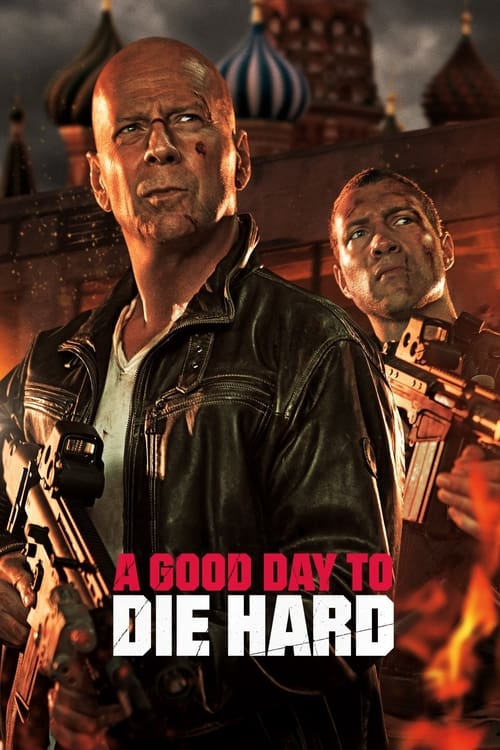
A Good Day to Die Hard
Iconoclastic, take-no-prisoners cop John McClane, finds himself for the first time on foreign soil after traveling to Moscow to help his wayward son Jack - unaware that Jack is really a highly-trained CIA operative out to stop a nuclear weapons heist. With the Russian underworld in pursuit, and battling a countdown to war, the two McClanes discover that their opposing methods make them unstoppable heroes.
Despite a significant budget of $92.0M, A Good Day to Die Hard became a commercial success, earning $304.7M worldwide—a 231% return.
5 wins & 8 nominations


Plot Structure
Story beats plotted across runtime


Narrative Arc
Emotional journey through the story's key moments
Story Circle
Blueprint 15-beat structure
Arcplot Score Breakdown
Weighted: Precision (70%) + Arc (15%) + Theme (15%)
A Good Day to Die Hard (2013) exhibits carefully calibrated narrative architecture, characteristic of John Moore's storytelling approach. This structural analysis examines how the film's 15-point plot structure maps to proven narrative frameworks across 1 hour and 38 minutes. With an Arcplot score of 7.2, the film balances conventional beats with creative variation.
Characters
Cast & narrative archetypes

John McClane
Jack McClane
Yuri Komarov
Irina Komarov
Viktor Chagarin
Alik
Main Cast & Characters
John McClane
Played by Bruce Willis
Aging NYPD detective travels to Moscow to help his estranged son, only to get caught in a terrorist plot involving nuclear weapons.
Jack McClane
Played by Jai Courtney
John's estranged son working undercover for the CIA in Russia, initially resentful of his father's interference.
Yuri Komarov
Played by Sebastian Koch
Russian political prisoner whose testimony could expose corruption, seeking to retrieve a hidden file with his daughter.
Irina Komarov
Played by Yuliya Snigir
Yuri's daughter who appears to help her father but harbors secret allegiances and motivations.
Viktor Chagarin
Played by Sergei Kolesnikov
Corrupt Russian official who seeks the weapons-grade uranium file to maintain his power and wealth.
Alik
Played by Radivoje Bukvić
Chagarin's ruthless chief henchman who leads the pursuit of the McClanes and Komarov through Moscow.
Structural Analysis
The Status Quo at 1 minutes (1% through the runtime) establishes John McClane in New York, estranged from his children, learning his son Jack is in trouble in Russia. Shows McClane as a burned-out cop with broken family relationships.. Structural examination shows that this early placement immediately immerses viewers in the story world.
The inciting incident occurs at 12 minutes when McClane arrives in Moscow and immediately gets caught in a massive terrorist attack on the courthouse where Jack is being held. The city erupts in violence.. At 12% through the film, this Disruption aligns precisely with traditional story structure. This beat shifts the emotional landscape, launching the protagonist into the central conflict.
The First Threshold at 24 minutes marks the transition into Act II, occurring at 25% of the runtime. This demonstrates the protagonist's commitment to McClane chooses to fully commit to helping Jack despite being rejected. They reach the CIA safe house together, and McClane learns Jack is an undercover operative. No turning back to New York., moving from reaction to action.
At 48 minutes, the Midpoint arrives at 49% of the runtime—precisely centered, creating perfect narrative symmetry. Significantly, this crucial beat Revelation that Komarov has been the villain all along, betraying both McClanes and his own daughter Irina. The ally becomes the enemy - false defeat as their entire mission was a manipulation., fundamentally raising what's at risk. The emotional intensity shifts, dividing the narrative into clear before-and-after phases.
The Collapse moment at 73 minutes (74% through) represents the emotional nadir. Here, The McClanes are separated and beaten in Chernobyl. Jack tells John he was never there for him as a father. Their relationship seems irreparably broken even as nuclear catastrophe looms., reveals the protagonist at their lowest point. This beat's placement in the final quarter sets up the climactic reversal.
The Second Threshold at 78 minutes initiates the final act resolution at 80% of the runtime. John and Jack reconcile, combining John's street-smart improvisation with Jack's tactical training. John admits his failures but proves he's there now. They unite as father and son against Komarov., demonstrating the transformation achieved throughout the journey.
Emotional Journey
A Good Day to Die Hard's emotional architecture traces a deliberate progression across 15 carefully calibrated beats.
Narrative Framework
This structural analysis employs a 15-point narrative structure framework that maps key story moments. By mapping A Good Day to Die Hard against these established plot points, we can identify how John Moore utilizes or subverts traditional narrative conventions. The plot point approach reveals not only adherence to structural principles but also creative choices that distinguish A Good Day to Die Hard within the action genre.
John Moore's Structural Approach
Among the 5 John Moore films analyzed on Arcplot, the average structural score is 7.1, reflecting strong command of classical structure. A Good Day to Die Hard represents one of the director's most structurally precise works. For comparative analysis, explore the complete John Moore filmography.
Comparative Analysis
Additional action films include The Bad Guys, Puss in Boots and Venom: The Last Dance. For more John Moore analyses, see Max Payne, Behind Enemy Lines and The Omen.
Plot Points by Act
Act I
SetupStatus Quo
John McClane in New York, estranged from his children, learning his son Jack is in trouble in Russia. Shows McClane as a burned-out cop with broken family relationships.
Theme
McClane's daughter Lucy tells him "You're a good father, you just suck at it sometimes." Theme of family reconciliation and being there for those you love despite past failures.
Worldbuilding
Establishment of McClane's broken relationship with Jack, introduction of Russian setting with Jack in custody, and the whistleblower Komarov who holds secrets about corrupt official Chagarin.
Disruption
McClane arrives in Moscow and immediately gets caught in a massive terrorist attack on the courthouse where Jack is being held. The city erupts in violence.
Resistance
McClane tries to find and help Jack, but Jack rejects him. McClane doesn't understand Jack is CIA. Massive vehicular chase through Moscow with Jack trying to extract Komarov while McClane interferes.
Act II
ConfrontationFirst Threshold
McClane chooses to fully commit to helping Jack despite being rejected. They reach the CIA safe house together, and McClane learns Jack is an undercover operative. No turning back to New York.
Mirror World
Jack reveals his CIA mission and relationship with Komarov. The father-son dynamic mirrors the professional partnership theme - learning to trust and work together despite past abandonment.
Premise
Father and son forced to work together on the mission. Die Hard action in Russia - fighting Chagarin's forces, protecting Komarov, and following clues to Chernobyl where a secret weapons-grade uranium cache is hidden.
Midpoint
Revelation that Komarov has been the villain all along, betraying both McClanes and his own daughter Irina. The ally becomes the enemy - false defeat as their entire mission was a manipulation.
Opposition
Komarov and Irina take control, revealing their plan to retrieve weapons-grade uranium from Chernobyl. The McClanes are captured and must escape. The villains have the upper hand and access to nuclear materials.
Collapse
The McClanes are separated and beaten in Chernobyl. Jack tells John he was never there for him as a father. Their relationship seems irreparably broken even as nuclear catastrophe looms.
Crisis
Dark moment where John reflects on his failures as a father while fighting to survive. Both McClanes separately process whether they can trust each other and work as a team.
Act III
ResolutionSecond Threshold
John and Jack reconcile, combining John's street-smart improvisation with Jack's tactical training. John admits his failures but proves he's there now. They unite as father and son against Komarov.
Synthesis
The McClanes work together to stop Komarov from escaping with the uranium. Massive action finale in and atop Chernobyl, culminating in helicopter battle. They defeat Komarov and Irina, saving each other's lives.
Transformation
Father and son return to New York together. Jack introduces John to his daughter Lucy with pride and warmth. The family is reunited and healed. McClane is no longer the absent father - he showed up when it mattered.