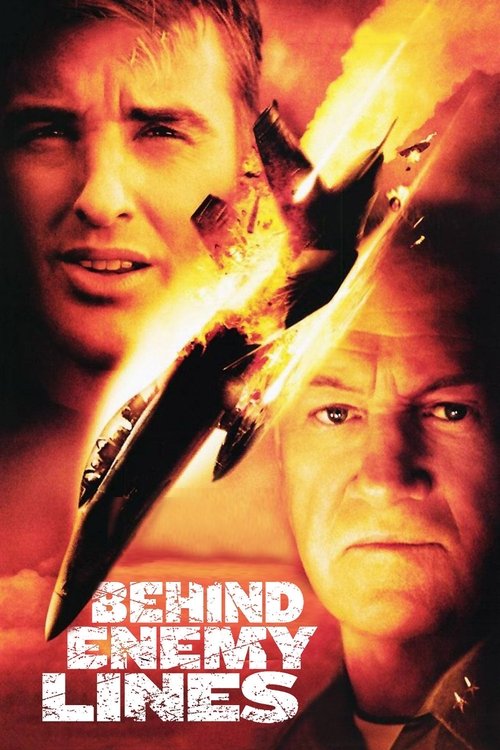
Behind Enemy Lines
While flying a routine reconnaissance mission over Bosnia, fighter pilot Lt. Chris Burnett photographs something he wasn't supposed to see and gets shot down behind enemy lines, where he must outrun an army led by a ruthless Serbian general. With time running out and a deadly tracker on his trail, Burnett's commanding officer, Admiral Reigart, decides to risk his career and launch a renegade rescue mission to save his life.
Despite a mid-range budget of $40.0M, Behind Enemy Lines became a financial success, earning $91.8M worldwide—a 129% return.
1 win & 2 nominations


Plot Structure
Story beats plotted across runtime


Narrative Arc
Emotional journey through the story's key moments
Story Circle
Blueprint 15-beat structure
Arcplot Score Breakdown
Weighted: Precision (70%) + Arc (15%) + Theme (15%)
Behind Enemy Lines (2001) showcases precise dramatic framework, characteristic of John Moore's storytelling approach. This structural analysis examines how the film's 15-point plot structure maps to proven narrative frameworks across 1 hour and 46 minutes. With an Arcplot score of 6.7, the film balances conventional beats with creative variation.
Characters
Cast & narrative archetypes

Lt. Chris Burnett
Admiral Leslie Reigart
Sasha
Admiral Piquet
Stackhouse
Main Cast & Characters
Lt. Chris Burnett
Played by Owen Wilson
A naval aviator shot down over Bosnia who must survive behind enemy lines while awaiting rescue.
Admiral Leslie Reigart
Played by Gene Hackman
Aircraft carrier battle group commander who defies orders to rescue his downed pilot.
Sasha
Played by Vladimir Mashkov
A ruthless Bosnian Serb sniper and tracker hired to hunt down the downed American pilot.
Admiral Piquet
Played by Joaquim de Almeida
NATO commander who prioritizes the peace treaty over rescuing the downed pilot.
Stackhouse
Played by Gabriel Macht
Burnett's pilot partner who is killed after their plane is shot down over Bosnia.
Structural Analysis
The Status Quo at 1 minutes (1% through the runtime) establishes Lieutenant Chris Burnett, a disillusioned F/A-18 Super Hornet pilot, performs routine reconnaissance missions over Bosnia, frustrated by the lack of action and considering leaving the Navy.. Structural examination shows that this early placement immediately immerses viewers in the story world.
The inciting incident occurs at 13 minutes when While on a Christmas Day reconnaissance flight, Burnett and his pilot Stackhouse fly off-course to photograph suspicious activity in the demilitarized zone and are shot down by Serbian forces trying to hide evidence of mass graves and genocide.. At 13% through the film, this Disruption is delayed, allowing extended setup of the story world. This beat shifts the emotional landscape, launching the protagonist into the central conflict.
The First Threshold at 27 minutes marks the transition into Act II, occurring at 25% of the runtime. This illustrates the protagonist's commitment to After witnessing his pilot's murder, Burnett actively chooses to survive and escape enemy territory on his own, committing to reach the extraction zone despite overwhelming odds. He becomes a hunted man in hostile territory., moving from reaction to action.
At 54 minutes, the Midpoint arrives at 51% of the runtime—precisely centered, creating perfect narrative symmetry. The analysis reveals that this crucial beat Burnett reaches a bombed-out town and discovers the mass grave the Serbians were trying to hide—evidence of genocide. He realizes the stakes are bigger than his survival; he has proof of war crimes, making him an even greater target. False defeat as forces intensify pursuit., fundamentally raising what's at risk. The emotional intensity shifts, dividing the narrative into clear before-and-after phases.
The Collapse moment at 80 minutes (75% through) represents the emotional nadir. Here, Burnett is trapped in a building, surrounded by enemy forces with Sasha closing in for the kill. He's out of options, exhausted, and the extraction window is closing. Admiral Reigart is relieved of command for defying orders. Both men face complete failure and death., indicates the protagonist at their lowest point. This beat's placement in the final quarter sets up the climactic reversal.
The Second Threshold at 85 minutes initiates the final act resolution at 81% of the runtime. Reigart defies his dismissal and orders the rescue mission anyway, risking court-martial. Burnett finds inner strength from his training and will to survive. Both men commit to the final push—Reigart sending Marines into harm's way, Burnett fighting to reach extraction., demonstrating the transformation achieved throughout the journey.
Emotional Journey
Behind Enemy Lines's emotional architecture traces a deliberate progression across 15 carefully calibrated beats.
Narrative Framework
This structural analysis employs a 15-point narrative structure framework that maps key story moments. By mapping Behind Enemy Lines against these established plot points, we can identify how John Moore utilizes or subverts traditional narrative conventions. The plot point approach reveals not only adherence to structural principles but also creative choices that distinguish Behind Enemy Lines within the action genre.
John Moore's Structural Approach
Among the 5 John Moore films analyzed on Arcplot, the average structural score is 7.1, reflecting strong command of classical structure. Behind Enemy Lines takes a more unconventional approach compared to the director's typical style. For comparative analysis, explore the complete John Moore filmography.
Comparative Analysis
Additional action films include The Bad Guys, Puss in Boots and Venom: The Last Dance. For more John Moore analyses, see Max Payne, A Good Day to Die Hard and The Omen.
Plot Points by Act
Act I
SetupStatus Quo
Lieutenant Chris Burnett, a disillusioned F/A-18 Super Hornet pilot, performs routine reconnaissance missions over Bosnia, frustrated by the lack of action and considering leaving the Navy.
Theme
Admiral Reigart tells Burnett that sometimes you have to fight even when you don't want to, hinting at the film's theme about commitment, duty, and the cost of standing by your principles.
Worldbuilding
Establishment of the NATO peacekeeping operation in Bosnia, the political constraints of the Dayton Agreement, Burnett's frustration with military bureaucracy, and his strained relationship with by-the-book Admiral Reigart aboard the USS Carl Vinson.
Disruption
While on a Christmas Day reconnaissance flight, Burnett and his pilot Stackhouse fly off-course to photograph suspicious activity in the demilitarized zone and are shot down by Serbian forces trying to hide evidence of mass graves and genocide.
Resistance
Burnett and Stackhouse eject and evade Serbian forces on the ground. Burnett debates whether to follow orders to reach the extraction point while witnessing Stackhouse's execution by tracker Sasha. Admiral Reigart fights NATO command to launch a rescue mission.
Act II
ConfrontationFirst Threshold
After witnessing his pilot's murder, Burnett actively chooses to survive and escape enemy territory on his own, committing to reach the extraction zone despite overwhelming odds. He becomes a hunted man in hostile territory.
Mirror World
Admiral Reigart emerges as the thematic mirror—a career officer who must choose between following political orders and doing what's right. His parallel struggle to save Burnett despite NATO opposition reflects the theme of duty versus bureaucracy.
Premise
The survival thriller premise unfolds as Burnett uses his wits and training to evade Serbian soldiers and the ruthless tracker Sasha. Cat-and-mouse chases through hostile terrain, near-captures, and desperate attempts to signal for rescue while Reigart battles political obstacles.
Midpoint
Burnett reaches a bombed-out town and discovers the mass grave the Serbians were trying to hide—evidence of genocide. He realizes the stakes are bigger than his survival; he has proof of war crimes, making him an even greater target. False defeat as forces intensify pursuit.
Opposition
Serbian forces and Sasha close in relentlessly. Burnett barely survives multiple encounters including a minefield and sniper attacks. NATO command orders Reigart to stand down. Political pressure mounts as the admiral's career hangs in balance. Everything tightens around both men.
Collapse
Burnett is trapped in a building, surrounded by enemy forces with Sasha closing in for the kill. He's out of options, exhausted, and the extraction window is closing. Admiral Reigart is relieved of command for defying orders. Both men face complete failure and death.
Crisis
Burnett faces the darkest moment alone, reflecting on his earlier cynicism about duty and sacrifice. Reigart contemplates his destroyed career but finds resolve in doing what's right. Both men process their lowest points and find renewed purpose.
Act III
ResolutionSecond Threshold
Reigart defies his dismissal and orders the rescue mission anyway, risking court-martial. Burnett finds inner strength from his training and will to survive. Both men commit to the final push—Reigart sending Marines into harm's way, Burnett fighting to reach extraction.
Synthesis
The rescue mission launches with Marine helicopters racing to the extraction point. Burnett fights through final obstacles and confronts Sasha in a deadly showdown. The Marines engage Serbian forces. Burnett is extracted moments before being killed, and evidence of the genocide is secured.
Transformation
Back on the carrier, a transformed Burnett—no longer cynical but deeply committed—salutes Admiral Reigart with genuine respect. Both men have sacrificed their careers for principle. Burnett has found meaning in service; Reigart has proven leadership means doing what's right over what's safe.