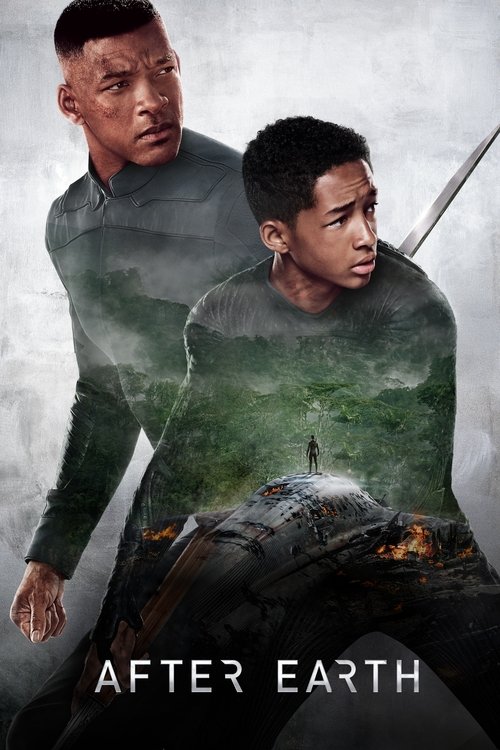
After Earth
One thousand years after cataclysmic events forced humanity's escape from Earth, Nova Prime has become mankind's new home. Legendary General Cypher Raige returns from an extended tour of duty to his estranged family, ready to be a father to his 13-year-old son, Kitai. When an asteroid storm damages Cypher and Kitai's craft, they crash-land on a now unfamiliar and dangerous Earth. As his father lies dying in the cockpit, Kitai must trek across the hostile terrain to recover their rescue beacon. His whole life, Kitai has wanted nothing more than to be a soldier like his father. Today, he gets his chance.
Working with a substantial budget of $130.0M, the film achieved a respectable showing with $243.8M in global revenue (+88% profit margin).
3 wins & 8 nominations


Plot Structure
Story beats plotted across runtime


Narrative Arc
Emotional journey through the story's key moments
Story Circle
Blueprint 15-beat structure
Arcplot Score Breakdown
Weighted: Precision (70%) + Arc (15%) + Theme (15%)
After Earth (2013) exemplifies precise narrative architecture, characteristic of M. Night Shyamalan's storytelling approach. This structural analysis examines how the film's 15-point plot structure maps to proven narrative frameworks across 1 hour and 40 minutes. With an Arcplot score of 7.4, the film balances conventional beats with creative variation.
Characters
Cast & narrative archetypes

Kitai Raige
Cypher Raige
Faia Raige
Main Cast & Characters
Kitai Raige
Played by Jaden Smith
A fearful teenage cadet who must navigate a hostile Earth alone to save his critically injured father.
Cypher Raige
Played by Will Smith
A legendary Ranger General who suppresses all fear through technique, mentoring his son from afar after their crash.
Faia Raige
Played by Sophie Okonedo
Kitai and Cypher's wife and mother, who advocates for their relationship despite Cypher's emotional distance.
Structural Analysis
The Status Quo at 1 minutes (1% through the runtime) establishes Opening narration establishes humanity's exile from Earth a thousand years ago and their new home on Nova Prime. Young Kitai Raige trains to become a Ranger like his legendary father, Cypher, but lives in the shadow of his sister's death and his father's emotional distance.. Significantly, this early placement immediately immerses viewers in the story world.
The inciting incident occurs at 12 minutes when The spacecraft carrying Cypher, Kitai, and a caged Ursa creature encounters an asteroid storm. The ship sustains critical damage and is forced to crash-land on the quarantined planet Earth, now hostile to human life with everything evolved to kill humans.. At 12% through the film, this Disruption aligns precisely with traditional story structure. This beat shifts the emotional landscape, launching the protagonist into the central conflict.
The First Threshold at 25 minutes marks the transition into Act II, occurring at 25% of the runtime. This indicates the protagonist's commitment to Kitai makes the active choice to venture out alone into the hostile wilderness of Earth to retrieve the rescue beacon. Despite his fear and inexperience, he accepts the mission knowing his father cannot accompany him. He steps out of the crashed ship into the dangerous unknown., moving from reaction to action.
At 50 minutes, the Midpoint arrives at 50% of the runtime—precisely centered, creating perfect narrative symmetry. Significantly, this crucial beat Kitai is attacked by a giant condor-like bird and nearly killed defending himself. He falls from a cliff and is swept down a river, losing crucial breathing fluid capsules. The stakes escalate dramatically - he now has less time to reach the beacon before his supply runs out, and communication with his father becomes intermittent., fundamentally raising what's at risk. The emotional intensity shifts, dividing the narrative into clear before-and-after phases.
The Collapse moment at 75 minutes (75% through) represents the emotional nadir. Here, Kitai wakes to find the condor dead, having sacrificed herself protecting him and her chicks from a pack of large cats. He reaches the tail section only to discover the backup breathing fluid capsules were destroyed in the crash. He has only enough air to reach the beacon at the top of the volcano - not enough to return. Communication with his father is restored only to deliver this devastating news., illustrates the protagonist at their lowest point. This beat's placement in the final quarter sets up the climactic reversal.
The Second Threshold at 80 minutes initiates the final act resolution at 80% of the runtime. Kitai chooses to complete the mission despite knowing it may cost his life. He remembers his father's teaching about ghosting - that fear is a choice. He embraces death and achieves inner peace, which will allow him to become invisible to the fear-sensing Ursa. He climbs toward the volcano, transformed by acceptance., demonstrating the transformation achieved throughout the journey.
Emotional Journey
After Earth's emotional architecture traces a deliberate progression across 15 carefully calibrated beats.
Narrative Framework
This structural analysis employs structural analysis methodology used to understand storytelling architecture. By mapping After Earth against these established plot points, we can identify how M. Night Shyamalan utilizes or subverts traditional narrative conventions. The plot point approach reveals not only adherence to structural principles but also creative choices that distinguish After Earth within the science fiction genre.
M. Night Shyamalan's Structural Approach
Among the 14 M. Night Shyamalan films analyzed on Arcplot, the average structural score is 7.0, reflecting strong command of classical structure. After Earth represents one of the director's most structurally precise works. For comparative analysis, explore the complete M. Night Shyamalan filmography.
Comparative Analysis
Additional science fiction films include The Postman, Mad Max 2 and AVP: Alien vs. Predator. For more M. Night Shyamalan analyses, see Signs, Unbreakable and The Sixth Sense.
Plot Points by Act
Act I
SetupStatus Quo
Opening narration establishes humanity's exile from Earth a thousand years ago and their new home on Nova Prime. Young Kitai Raige trains to become a Ranger like his legendary father, Cypher, but lives in the shadow of his sister's death and his father's emotional distance.
Theme
Cypher explains the concept of "ghosting" to Rangers: "Fear is not real. It is a product of thoughts you create. Danger is very real, but fear is a choice." This defines Kitai's entire journey - he must learn to master his fear to become a true Ranger.
Worldbuilding
Establishes the Raige family dynamics: Kitai's guilt over his sister Senshi's death during an Ursa attack, his failure to advance in Ranger training, and the emotional gulf between him and his stoic father. Cypher returns home rarely and struggles to connect with his son. Mother Faia suggests Cypher take Kitai on his final mission.
Disruption
The spacecraft carrying Cypher, Kitai, and a caged Ursa creature encounters an asteroid storm. The ship sustains critical damage and is forced to crash-land on the quarantined planet Earth, now hostile to human life with everything evolved to kill humans.
Resistance
In the crash aftermath, both of Cypher's legs are broken, leaving him immobilized. The only rescue beacon is in the tail section, which landed 100 kilometers away. Cypher must guide Kitai remotely using wrist communicators. Kitai learns the Ursa has escaped and that Earth's atmosphere requires breathing fluid capsules he must ration carefully.
Act II
ConfrontationFirst Threshold
Kitai makes the active choice to venture out alone into the hostile wilderness of Earth to retrieve the rescue beacon. Despite his fear and inexperience, he accepts the mission knowing his father cannot accompany him. He steps out of the crashed ship into the dangerous unknown.
Mirror World
Kitai begins to experience Earth's natural beauty alongside its dangers. His relationship with his father shifts as Cypher must trust and guide him remotely. Through their communicator conversations, they begin addressing their emotional distance, with Cypher forced to be more than a commander - he must become a father.
Premise
Kitai navigates Earth's treacherous terrain: escaping poisonous leeches, fleeing from a pack of evolved baboons, and learning to read environmental threats. He discovers Earth's dramatic temperature drops at night that can freeze him. Cypher monitors and instructs him remotely, their father-son dynamic evolving through crisis.
Midpoint
Kitai is attacked by a giant condor-like bird and nearly killed defending himself. He falls from a cliff and is swept down a river, losing crucial breathing fluid capsules. The stakes escalate dramatically - he now has less time to reach the beacon before his supply runs out, and communication with his father becomes intermittent.
Opposition
Kitai faces increasingly lethal challenges with dwindling resources. He disobeys his father's orders and takes a dangerous shortcut, resulting in communication blackout. Cypher's condition deteriorates as he monitors helplessly. Kitai encounters thermal vents and must race against nightfall. The same condor returns, but this time to save Kitai from freezing by sheltering him in her nest.
Collapse
Kitai wakes to find the condor dead, having sacrificed herself protecting him and her chicks from a pack of large cats. He reaches the tail section only to discover the backup breathing fluid capsules were destroyed in the crash. He has only enough air to reach the beacon at the top of the volcano - not enough to return. Communication with his father is restored only to deliver this devastating news.
Crisis
Kitai despairs, believing he will die alone on Earth. He has a vision of his dead sister Senshi, confronting his survivor's guilt. Cypher, listening helplessly, finally breaks his emotional walls and tells Kitai about his own fears and failures. For the first time, father and son truly connect emotionally.
Act III
ResolutionSecond Threshold
Kitai chooses to complete the mission despite knowing it may cost his life. He remembers his father's teaching about ghosting - that fear is a choice. He embraces death and achieves inner peace, which will allow him to become invisible to the fear-sensing Ursa. He climbs toward the volcano, transformed by acceptance.
Synthesis
Kitai reaches the beacon but is confronted by the escaped Ursa. Applying everything he's learned, Kitai achieves ghosting - complete absence of fear - becoming invisible to the creature. In a climactic battle, he defeats the Ursa using his father's cutlass. He activates the beacon and collapses. Cypher witnesses his son's triumph via the communicator feed.
Transformation
Rescue ships arrive. Kitai returns to his father, who struggles to stand on broken legs to salute his son as a true Ranger. Cypher finally expresses pride and love openly. The emotional distance between them is healed. Kitai has become a man who can master his fear, and Cypher has become a father who can show his heart.