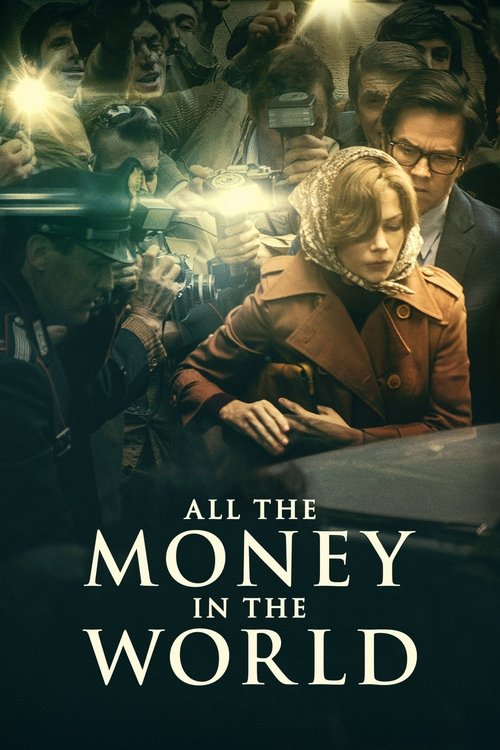
All the Money in the World
The story of the kidnapping of 16-year-old John Paul Getty III and the desperate attempt by his devoted mother to convince his billionaire grandfather Jean Paul Getty to pay the ransom.
Working with a moderate budget of $50.0M, the film achieved a respectable showing with $57.0M in global revenue (+14% profit margin).
Nominated for 1 Oscar. 15 nominations


Plot Structure
Story beats plotted across runtime


Narrative Arc
Emotional journey through the story's key moments
Story Circle
Blueprint 15-beat structure
Arcplot Score Breakdown
Weighted: Precision (70%) + Arc (15%) + Theme (15%)
All the Money in the World (2017) exhibits deliberately positioned narrative design, characteristic of Ridley Scott's storytelling approach. This structural analysis examines how the film's 15-point plot structure maps to proven narrative frameworks across 2 hours and 12 minutes. With an Arcplot score of 6.6, the film balances conventional beats with creative variation.
Characters
Cast & narrative archetypes

Gail Harris
J. Paul Getty
Fletcher Chase
John Paul Getty III
Cinquanta
Main Cast & Characters
Gail Harris
Played by Michelle Williams
The determined mother of kidnapped John Paul Getty III who fights tirelessly to rescue her son while battling her former father-in-law's refusal to pay ransom.
J. Paul Getty
Played by Christopher Plummer
The world's richest man and patriarch of the Getty family, notorious for his extreme miserliness and refusal to pay his grandson's ransom despite his vast wealth.
Fletcher Chase
Played by Mark Wahlberg
A former CIA operative turned Getty's security advisor who becomes Gail's ally in the effort to negotiate with the kidnappers and rescue Paul.
John Paul Getty III
Played by Charlie Plummer
The 16-year-old grandson of J. Paul Getty who is kidnapped in Rome and held for ransom, enduring brutal captivity while his family struggles to secure his release.
Cinquanta
Played by Romain Duris
The leader of the Calabrian crime syndicate who orchestrates the kidnapping and negotiates the ransom, showing both ruthlessness and unexpected moments of humanity.
Structural Analysis
The Status Quo at 1 minutes (1% through the runtime) establishes Young Paul Getty III wanders the streets of Rome at night, establishing his bohemian lifestyle as the heir to the Getty fortune, carefree but vulnerable in his privilege.. Notably, this early placement immediately immerses viewers in the story world.
The inciting incident occurs at 16 minutes when Paul Getty III is kidnapped by masked men on a Roman street, dragged into a van while his screams go unheard, shattering the status quo and launching the central crisis.. At 12% through the film, this Disruption aligns precisely with traditional story structure. This beat shifts the emotional landscape, launching the protagonist into the central conflict.
The First Threshold at 33 minutes marks the transition into Act II, occurring at 25% of the runtime. This reveals the protagonist's commitment to Gail accepts Fletcher Chace, Getty's security advisor, as her unlikely ally. She commits to fighting for her son's life on her own terms, without surrendering to Getty's wealth or the kidnappers' demands., moving from reaction to action.
At 66 minutes, the Midpoint arrives at 50% of the runtime—precisely centered, creating perfect narrative symmetry. Significantly, this crucial beat The kidnappers sell Paul to the ruthless Calabrian mafia, dramatically raising the stakes. What began as a negotiable situation becomes far more dangerous, and the false hope of a quick resolution evaporates., fundamentally raising what's at risk. The emotional intensity shifts, dividing the narrative into clear before-and-after phases.
The Collapse moment at 99 minutes (75% through) represents the emotional nadir. Here, The kidnappers cut off Paul's ear and mail it to a newspaper, proving their willingness to mutilate and kill. This horrific act represents the ultimate failure of Getty's cold calculation and the potential death of innocence., reveals the protagonist at their lowest point. This beat's placement in the final quarter sets up the climactic reversal.
The Second Threshold at 106 minutes initiates the final act resolution at 80% of the runtime. With the reduced ransom secured, Gail and Chace commit to the dangerous exchange. Gail realizes she must personally ensure her son's return, synthesizing her maternal determination with Chace's tactical expertise., demonstrating the transformation achieved throughout the journey.
Emotional Journey
All the Money in the World's emotional architecture traces a deliberate progression across 15 carefully calibrated beats.
Narrative Framework
This structural analysis employs structural analysis methodology used to understand storytelling architecture. By mapping All the Money in the World against these established plot points, we can identify how Ridley Scott utilizes or subverts traditional narrative conventions. The plot point approach reveals not only adherence to structural principles but also creative choices that distinguish All the Money in the World within the crime genre.
Ridley Scott's Structural Approach
Among the 24 Ridley Scott films analyzed on Arcplot, the average structural score is 6.5, demonstrating varied approaches to story architecture. All the Money in the World represents one of the director's most structurally precise works. For comparative analysis, explore the complete Ridley Scott filmography.
Comparative Analysis
Additional crime films include The Bad Guys, Rustom and The Whole Ten Yards. For more Ridley Scott analyses, see Alien, White Squall and American Gangster.
Plot Points by Act
Act I
SetupStatus Quo
Young Paul Getty III wanders the streets of Rome at night, establishing his bohemian lifestyle as the heir to the Getty fortune, carefree but vulnerable in his privilege.
Theme
J. Paul Getty declares that money is the only thing he trusts, establishing the film's central question: what is the true cost of wealth and what can it actually buy?
Worldbuilding
The world of the Getty family is established through flashbacks: Gail's marriage to Getty Jr., her divorce, Paul III's privileged upbringing, and the immense wealth controlled by the patriarch who values money above all human connection.
Disruption
Paul Getty III is kidnapped by masked men on a Roman street, dragged into a van while his screams go unheard, shattering the status quo and launching the central crisis.
Resistance
Gail learns of the kidnapping and desperately seeks help. Getty Sr. refuses to pay the $17 million ransom, citing that paying would endanger his other grandchildren. Gail debates how to save her son without the family's cooperation.
Act II
ConfrontationFirst Threshold
Gail accepts Fletcher Chace, Getty's security advisor, as her unlikely ally. She commits to fighting for her son's life on her own terms, without surrendering to Getty's wealth or the kidnappers' demands.
Mirror World
Fletcher Chace becomes Gail's partner in the rescue effort, representing a different kind of loyalty—one based on moral duty rather than money. His relationship with Gail embodies the theme that human connection transcends wealth.
Premise
The cat-and-mouse game unfolds: Gail and Chace negotiate with kidnappers while battling Getty's obstinance. Paul bonds with kidnapper Cinquanta. The tension between money and humanity plays out across parallel storylines in Rome and Getty's English estate.
Midpoint
The kidnappers sell Paul to the ruthless Calabrian mafia, dramatically raising the stakes. What began as a negotiable situation becomes far more dangerous, and the false hope of a quick resolution evaporates.
Opposition
The mafia proves far more brutal than the original kidnappers. Getty continues to refuse payment while collecting art worth millions. Gail faces mounting pressure as deadlines pass and the kidnappers grow impatient. Time runs out.
Collapse
The kidnappers cut off Paul's ear and mail it to a newspaper, proving their willingness to mutilate and kill. This horrific act represents the ultimate failure of Getty's cold calculation and the potential death of innocence.
Crisis
Gail processes the horror of her son's mutilation. Getty finally agrees to pay, but only the tax-deductible maximum—lending the rest to his son at 4% interest. Even in crisis, his money obsession persists.
Act III
ResolutionSecond Threshold
With the reduced ransom secured, Gail and Chace commit to the dangerous exchange. Gail realizes she must personally ensure her son's return, synthesizing her maternal determination with Chace's tactical expertise.
Synthesis
The ransom exchange goes wrong and Paul escapes during a chaotic shootout. Chace pursues the fleeing kidnapper. Gail is reunited with her wounded but alive son. The Getty money machine grinds on, but the human spirit prevails.
Transformation
Getty dies alone surrounded by his art and possessions, while Gail and her scarred but surviving son walk together into their future. The final image contrasts the emptiness of wealth against the richness of family love.