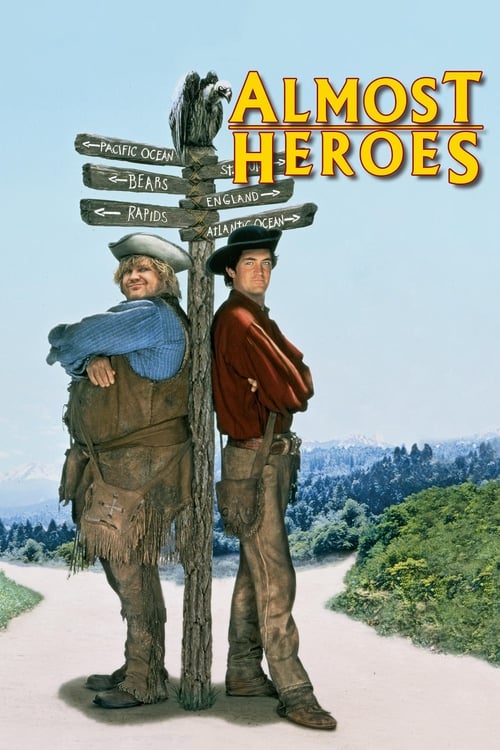
Almost Heroes
Two hapless explorers lead an ill-fated 1804 expedition through the Pacific Northwest in a hopeless, doomed effort to reach the Pacific Ocean before Lewis and Clark.
The film box office disappointment against its moderate budget of $30.0M, earning $6.1M globally (-80% loss). While initial box office returns were modest, the film has gained appreciation for its unique voice within the adventure genre.


Plot Structure
Story beats plotted across runtime


Narrative Arc
Emotional journey through the story's key moments
Story Circle
Blueprint 15-beat structure
Arcplot Score Breakdown
Weighted: Precision (70%) + Arc (15%) + Theme (15%)
Almost Heroes (1998) reveals meticulously timed narrative design, characteristic of Christopher Guest's storytelling approach. This structural analysis examines how the film's 15-point plot structure maps to proven narrative frameworks across 1 hour and 30 minutes. With an Arcplot score of 7.3, the film balances conventional beats with creative variation.
Characters
Cast & narrative archetypes

Bartholomew Hunt
Leslie Edwards
Shaquinna
Higginson
Main Cast & Characters
Bartholomew Hunt
Played by Chris Farley
An arrogant, alcoholic tracker hired to lead an expedition to the Pacific Ocean ahead of Lewis and Clark.
Leslie Edwards
Played by Matthew Perry
A refined, uptight cartographer who must partner with Hunt on the expedition despite their incompatibility.
Shaquinna
Played by Lisa Barbuscia
A strong-willed Native American guide who helps the expedition and becomes romantically involved with Edwards.
Higginson
Played by Eugene Levy
A Spanish conquistador rival explorer competing to reach the Pacific first.
Structural Analysis
The Status Quo at 1 minutes (1% through the runtime) establishes Bartholomew Hunt is introduced as a pompous, failed aristocrat desperate for glory and recognition in early 1800s America. Leslie Edwards is shown as a tracker with drinking problems and social inadequacy.. Significantly, this early placement immediately immerses viewers in the story world.
The inciting incident occurs at 11 minutes when Hunt learns about the Lewis and Clark expedition and conceives his plan to beat them to the Pacific Ocean, thereby securing his place in history. This external opportunity disrupts his failing status quo.. At 12% through the film, this Disruption aligns precisely with traditional story structure. This beat shifts the emotional landscape, launching the protagonist into the central conflict.
The First Threshold at 22 minutes marks the transition into Act II, occurring at 25% of the runtime. This shows the protagonist's commitment to Hunt and his expedition formally depart into the wilderness, crossing from civilization into unknown territory. This is Hunt's active choice to pursue glory despite obvious lack of preparation., moving from reaction to action.
At 44 minutes, the Midpoint arrives at 49% of the runtime—precisely centered, creating perfect narrative symmetry. Significantly, this crucial beat A false victory where the expedition believes they're making good progress or achieves a temporary success, only to realize they're lost or that Lewis and Clark are still ahead. Stakes raise as resources dwindle., fundamentally raising what's at risk. The emotional intensity shifts, dividing the narrative into clear before-and-after phases.
The Collapse moment at 67 minutes (74% through) represents the emotional nadir. Here, The expedition reaches its lowest point - possibly a crew member death, complete loss of direction, or Hunt and Edwards' partnership completely falling apart. The "whiff of death" as their dream of glory dies., reveals the protagonist at their lowest point. This beat's placement in the final quarter sets up the climactic reversal.
The Second Threshold at 72 minutes initiates the final act resolution at 80% of the runtime. Hunt and Edwards reconcile, combining Hunt's determination with Edwards' skills. New information or realization about their route. They commit to finishing the journey together for the right reasons, not just glory., demonstrating the transformation achieved throughout the journey.
Emotional Journey
Almost Heroes's emotional architecture traces a deliberate progression across 15 carefully calibrated beats.
Narrative Framework
This structural analysis employs proven narrative structure principles that track dramatic progression. By mapping Almost Heroes against these established plot points, we can identify how Christopher Guest utilizes or subverts traditional narrative conventions. The plot point approach reveals not only adherence to structural principles but also creative choices that distinguish Almost Heroes within the adventure genre.
Christopher Guest's Structural Approach
Among the 3 Christopher Guest films analyzed on Arcplot, the average structural score is 6.9, demonstrating varied approaches to story architecture. Almost Heroes represents one of the director's most structurally precise works. For comparative analysis, explore the complete Christopher Guest filmography.
Comparative Analysis
Additional adventure films include The Black Stallion, The Bad Guys and Puss in Boots. For more Christopher Guest analyses, see For Your Consideration, A Mighty Wind.
Plot Points by Act
Act I
SetupStatus Quo
Bartholomew Hunt is introduced as a pompous, failed aristocrat desperate for glory and recognition in early 1800s America. Leslie Edwards is shown as a tracker with drinking problems and social inadequacy.
Theme
A character mentions that true glory comes not from individual achievement but from working together and overcoming one's own limitations - the central thematic question about whether misfits can achieve greatness.
Worldbuilding
Setup of the Lewis and Clark expedition creating national excitement. Hunt's desperate need for validation and Edwards' rough frontier skills are established. The competitive spirit of westward expansion and manifest destiny provide context.
Disruption
Hunt learns about the Lewis and Clark expedition and conceives his plan to beat them to the Pacific Ocean, thereby securing his place in history. This external opportunity disrupts his failing status quo.
Resistance
Hunt assembles his misfit crew including Edwards as tracker. They debate the feasibility of the journey. Hunt's arrogance clashes with Edwards' practical knowledge. The team includes various incompetent members, establishing the comedy of their unpreparedness.
Act II
ConfrontationFirst Threshold
Hunt and his expedition formally depart into the wilderness, crossing from civilization into unknown territory. This is Hunt's active choice to pursue glory despite obvious lack of preparation.
Mirror World
Hunt and Edwards' antagonistic relationship begins to show potential for growth. Their opposite personalities create friction but also complementary skills - Edwards' wilderness knowledge versus Hunt's determination.
Premise
The comedy of incompetent exploration - the "fun and games" of mishaps, wilderness survival failures, encounters with wildlife, river navigation disasters, and cultural misunderstandings with Native Americans. Hunt's pomposity and Edwards' crude solutions create constant conflict.
Midpoint
A false victory where the expedition believes they're making good progress or achieves a temporary success, only to realize they're lost or that Lewis and Clark are still ahead. Stakes raise as resources dwindle.
Opposition
The journey becomes increasingly difficult. The crew faces starvation, dangerous terrain, and potential mutiny. Hunt's leadership is questioned. Edwards and Hunt's conflicts intensify. Nature and their own incompetence close in as antagonistic forces.
Collapse
The expedition reaches its lowest point - possibly a crew member death, complete loss of direction, or Hunt and Edwards' partnership completely falling apart. The "whiff of death" as their dream of glory dies.
Crisis
Hunt confronts his own ego and vanity. Edwards confronts his self-doubt. In their darkest moment, they process what matters - the journey and friendship rather than glory. Dark night of the soul before breakthrough.
Act III
ResolutionSecond Threshold
Hunt and Edwards reconcile, combining Hunt's determination with Edwards' skills. New information or realization about their route. They commit to finishing the journey together for the right reasons, not just glory.
Synthesis
The finale push to the Pacific. Hunt and Edwards work as true partners, overcoming final obstacles. Whether they beat Lewis and Clark becomes secondary to their personal transformation and the bonds they've formed.
Transformation
Final image showing Hunt and Edwards transformed - Hunt humbled and genuinely connected to others, Edwards confident and capable. Whether they achieved fame or not, they achieved something more valuable: friendship and self-knowledge.