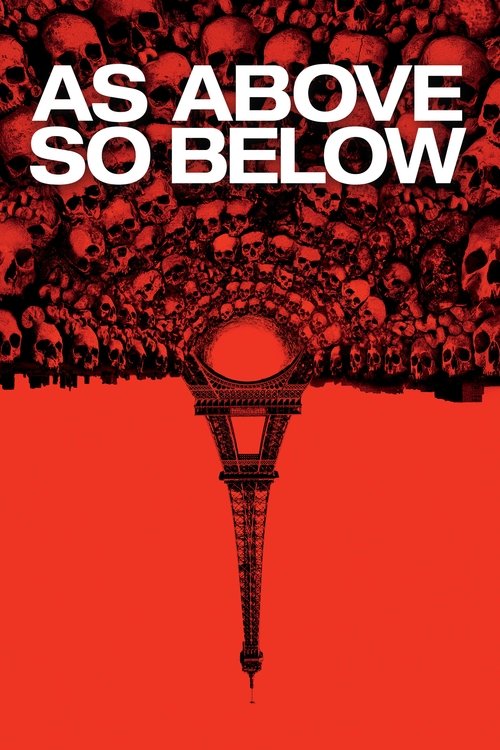
As Above, So Below
When a team of explorers ventures into the uncharted maze of bones that lies beneath the streets of Paris, they embark on a journey into madness and terror.
Despite its tight budget of $5.0M, As Above, So Below became a runaway success, earning $41.9M worldwide—a remarkable 738% return. The film's fresh perspective resonated with audiences, illustrating how strong storytelling can transcend budget limitations.
1 win & 6 nominations


Plot Structure
Story beats plotted across runtime


Narrative Arc
Emotional journey through the story's key moments
Story Circle
Blueprint 15-beat structure
Arcplot Score Breakdown
Weighted: Precision (70%) + Arc (15%) + Theme (15%)
As Above, So Below (2014) demonstrates strategically placed plot construction, characteristic of John Erick Dowdle's storytelling approach. This structural analysis examines how the film's 15-point plot structure maps to proven narrative frameworks across 1 hour and 33 minutes. With an Arcplot score of 7.1, the film balances conventional beats with creative variation.
Characters
Cast & narrative archetypes

Scarlett Marlowe
George
Papillon
Benji
Souxie
Zed
Main Cast & Characters
Scarlett Marlowe
Played by Perdita Weeks
A brilliant archaeologist and urban explorer obsessed with finding the Philosopher's Stone to complete her father's work.
George
Played by Ben Feldman
A documentary filmmaker and Scarlett's former lover who follows her into the catacombs despite his reservations.
Papillon
Played by François Civil
A street-smart guide and expert of the Paris catacombs who leads the expedition through forbidden tunnels.
Benji
Played by Edwin Hodge
George's cameraman and best friend who documents the expedition and provides technical support.
Souxie
Played by Marion Lambert
A young French woman and urban explorer who joins the expedition into the catacombs.
Zed
Played by Ali Marhyar
A claustrophobic member of Papillon's crew who reluctantly enters the catacombs.
Structural Analysis
The Status Quo at 1 minutes (1% through the runtime) establishes Scarlett explores a forbidden cave in Iran, seeking the Rose Key. She's driven, academic, obsessed with her father's work and completing his quest for the Philosopher's Stone.. Structural examination shows that this early placement immediately immerses viewers in the story world.
The inciting incident occurs at 12 minutes when The group illegally enters the Paris catacombs through a restricted manhole, crossing into forbidden territory. The police nearly catch them, forcing them deeper underground with no easy way back.. At 13% through the film, this Disruption is delayed, allowing extended setup of the story world. This beat shifts the emotional landscape, launching the protagonist into the central conflict.
The First Threshold at 24 minutes marks the transition into Act II, occurring at 25% of the runtime. This reveals the protagonist's commitment to The team breaks through a wall into unmapped territory, entering sections of the catacombs not on any map. They cross into a space that feels ancient and wrong, passing the point of no return., moving from reaction to action.
At 47 minutes, the Midpoint arrives at 50% of the runtime—precisely centered, creating perfect narrative symmetry. Notably, this crucial beat They discover Flamel's tomb and the stone, seemingly achieving their goal. But touching it triggers a collapse and the catacombs transform into a nightmarish maze. False victory: they found what they sought, but it springs the trap. The descent accelerates., fundamentally raising what's at risk. The emotional intensity shifts, dividing the narrative into clear before-and-after phases.
The Collapse moment at 70 minutes (75% through) represents the emotional nadir. Here, Multiple crew members die horribly, dragged into darkness or consumed by their guilt-made-manifest. Scarlett witnesses her companions' deaths, powerless to save them. Hope is extinguished; they are being punished for descending into hell unprepared., shows the protagonist at their lowest point. This beat's placement in the final quarter sets up the climactic reversal.
The Second Threshold at 74 minutes initiates the final act resolution at 80% of the runtime. Scarlett realizes the only way out is to confess her sins and accept her guilt. She speaks her transgression aloud, achieving clarity: "As above, so below"—the path forward mirrors the path inward. She must go deeper through her pain to ascend., demonstrating the transformation achieved throughout the journey.
Emotional Journey
As Above, So Below's emotional architecture traces a deliberate progression across 15 carefully calibrated beats.
Narrative Framework
This structural analysis employs a 15-point narrative structure framework that maps key story moments. By mapping As Above, So Below against these established plot points, we can identify how John Erick Dowdle utilizes or subverts traditional narrative conventions. The plot point approach reveals not only adherence to structural principles but also creative choices that distinguish As Above, So Below within the horror genre.
John Erick Dowdle's Structural Approach
Among the 4 John Erick Dowdle films analyzed on Arcplot, the average structural score is 7.1, reflecting strong command of classical structure. As Above, So Below exemplifies the director's characteristic narrative technique. For comparative analysis, explore the complete John Erick Dowdle filmography.
Comparative Analysis
Additional horror films include Thinner, A Nightmare on Elm Street and Mary Reilly. For more John Erick Dowdle analyses, see Devil, Quarantine and No Escape.
Plot Points by Act
Act I
SetupStatus Quo
Scarlett explores a forbidden cave in Iran, seeking the Rose Key. She's driven, academic, obsessed with her father's work and completing his quest for the Philosopher's Stone.
Theme
George warns Scarlett about going into the catacombs: "The only way out is down." This foreshadows the journey's descent into literal and psychological hell, where facing one's demons is the only path to redemption.
Worldbuilding
Scarlett recruits her documentary crew (Benji) and enlists George, who knows the Paris catacombs. They gather Papillon, a guide who knows forbidden areas, and his crew. The team assembles, stakes are established: find Nicolas Flamel's tomb beneath Paris.
Disruption
The group illegally enters the Paris catacombs through a restricted manhole, crossing into forbidden territory. The police nearly catch them, forcing them deeper underground with no easy way back.
Resistance
Papillon guides them through the catacombs, establishing rules and dangers. The team bonds, explores the ossuary, and debates whether to continue. Scarlett deciphers clues leading deeper. They discover a blocked tunnel that must be breached.
Act II
ConfrontationFirst Threshold
The team breaks through a wall into unmapped territory, entering sections of the catacombs not on any map. They cross into a space that feels ancient and wrong, passing the point of no return.
Mirror World
The group encounters a disorienting chamber filled with cultish symbols and a preserved Templar knight. The catacombs begin reflecting their fears and guilt—this is not just a physical journey but a psychological descent into personal hells.
Premise
The team solves puzzles and riddles based on alchemy and Dante's Inferno, descending deeper. Strange phenomena occur: ghostly visions, impossible loops, manifestations of guilt. The treasure hunt becomes a supernatural gauntlet testing each person's soul.
Midpoint
They discover Flamel's tomb and the stone, seemingly achieving their goal. But touching it triggers a collapse and the catacombs transform into a nightmarish maze. False victory: they found what they sought, but it springs the trap. The descent accelerates.
Opposition
The catacombs become actively hostile. Each member faces personalized torments from their past sins and guilt. They're lost, running in circles. Paranoia sets in. The environment itself is the antagonist, punishing them for their transgressions.
Collapse
Multiple crew members die horribly, dragged into darkness or consumed by their guilt-made-manifest. Scarlett witnesses her companions' deaths, powerless to save them. Hope is extinguished; they are being punished for descending into hell unprepared.
Crisis
Scarlett is alone with George and Zed in the dark, surrounded by death. She confronts her deepest guilt: her father's death, her obsessive quest. The catacombs force her to face what she's been running from.
Act III
ResolutionSecond Threshold
Scarlett realizes the only way out is to confess her sins and accept her guilt. She speaks her transgression aloud, achieving clarity: "As above, so below"—the path forward mirrors the path inward. She must go deeper through her pain to ascend.
Synthesis
Scarlett leads the survivors through impossible geometry, using the Philosopher's Stone and her knowledge to navigate by faith rather than reason. They climb upward through a central shaft, escaping the inverted cathedral of hell by embracing truth and forgiveness.
Transformation
Scarlett emerges from a manhole into Paris daylight, reborn. She has faced her demons, accepted her father's death, and survived hell itself. The obsessed scholar has been transformed through ordeal into someone who understands redemption requires descent.