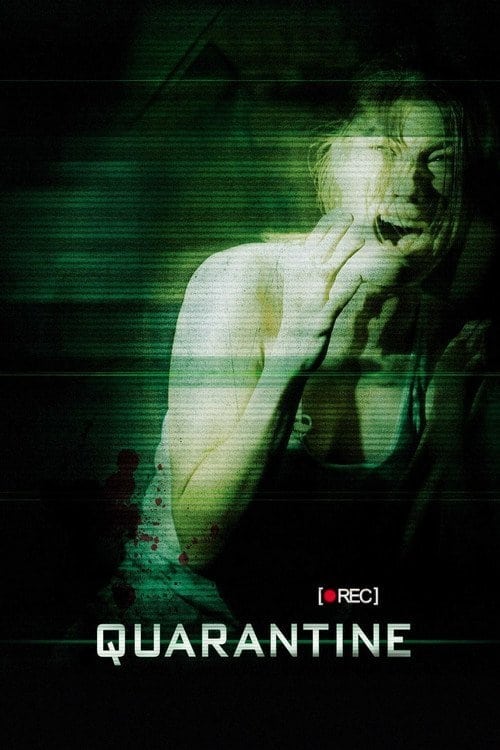
Quarantine
A television reporter and her cameraman are trapped inside a building quarantined by the CDC after the outbreak of a mysterious virus which turns humans into bloodthirsty killers.
Despite its limited budget of $12.0M, Quarantine became a solid performer, earning $40.9M worldwide—a 240% return. The film's unconventional structure attracted moviegoers, demonstrating that strong storytelling can transcend budget limitations.


Plot Structure
Story beats plotted across runtime


Narrative Arc
Emotional journey through the story's key moments
Story Circle
Blueprint 15-beat structure
Arcplot Score Breakdown
Weighted: Precision (70%) + Arc (15%) + Theme (15%)
Quarantine (2008) reveals precise dramatic framework, characteristic of John Erick Dowdle's storytelling approach. This structural analysis examines how the film's 15-point plot structure maps to proven narrative frameworks across 1 hour and 29 minutes. With an Arcplot score of 7.3, the film balances conventional beats with creative variation.
Characters
Cast & narrative archetypes

Angela Vidal
Scott Percival
Jake
George Fletcher
Yuri Ivanov
Lawrence
Main Cast & Characters
Angela Vidal
Played by Jennifer Carpenter
A television reporter documenting firefighters who becomes trapped in a quarantined apartment building during a rabies outbreak.
Scott Percival
Played by Steve Harris
Angela's cameraman who continues filming throughout the nightmare, providing the found-footage perspective of the terror.
Jake
Played by Jay Hernandez
A veteran firefighter who tries to maintain order and protect the trapped residents as the infection spreads.
George Fletcher
Played by Johnathon Schaech
A building superintendent who knows the layout and secrets of the apartment complex.
Yuri Ivanov
Played by Columbus Short
A Russian tenant who becomes aggressive and suspicious as tensions rise during the quarantine.
Lawrence
Played by Greg Germann
A CDC official in a hazmat suit who arrives to contain the outbreak but reveals disturbing truths.
Structural Analysis
The Status Quo at 1 minutes (1% through the runtime) establishes Angela Vidal and her cameraman Scott film a puff piece following firefighters on their night shift, establishing her world as a local TV reporter doing lightweight human interest stories.. Notably, this early placement immediately immerses viewers in the story world.
The inciting incident occurs at 11 minutes when The fire crew receives an emergency call about a woman screaming in an apartment building. Angela and Scott accompany them, disrupting their routine night and launching them into the nightmare.. At 13% through the film, this Disruption is delayed, allowing extended setup of the story world. This beat shifts the emotional landscape, launching the protagonist into the central conflict.
The First Threshold at 22 minutes marks the transition into Act II, occurring at 25% of the runtime. This demonstrates the protagonist's commitment to The CDC seals the building from the outside with chains and boards, trapping everyone inside. Angela, Scott, and all residents are forced into quarantine with no way out, entering the true horror., moving from reaction to action.
At 45 minutes, the Midpoint arrives at 50% of the runtime—precisely centered, creating perfect narrative symmetry. Significantly, this crucial beat The CDC spokesman through the intercom reveals this is a mutated rabies virus and no one can leave, raising the stakes. The group realizes there will be no rescue, transforming their situation from temporary quarantine to potential death sentence., fundamentally raising what's at risk. The emotional intensity shifts, dividing the narrative into clear before-and-after phases.
The Collapse moment at 67 minutes (75% through) represents the emotional nadir. Here, Jake the firefighter is killed by the infected, and Briana (the little girl) reveals she's infected, attacking and killing her mother. All hope dies as even the innocent are lost and Angela's few remaining protectors are gone., shows the protagonist at their lowest point. This beat's placement in the final quarter sets up the climactic reversal.
The Second Threshold at 71 minutes initiates the final act resolution at 80% of the runtime. Angela and Scott discover the attic apartment key and learn about the doomsday cult patient zero who was kept in the penthouse. They realize the source of the outbreak and make the choice to investigate, hoping for answers or escape., demonstrating the transformation achieved throughout the journey.
Emotional Journey
Quarantine's emotional architecture traces a deliberate progression across 15 carefully calibrated beats.
Narrative Framework
This structural analysis employs structural analysis methodology used to understand storytelling architecture. By mapping Quarantine against these established plot points, we can identify how John Erick Dowdle utilizes or subverts traditional narrative conventions. The plot point approach reveals not only adherence to structural principles but also creative choices that distinguish Quarantine within the horror genre.
John Erick Dowdle's Structural Approach
Among the 4 John Erick Dowdle films analyzed on Arcplot, the average structural score is 7.1, reflecting strong command of classical structure. Quarantine represents one of the director's most structurally precise works. For comparative analysis, explore the complete John Erick Dowdle filmography.
Comparative Analysis
Additional horror films include Thinner, A Nightmare on Elm Street and Mary Reilly. For more John Erick Dowdle analyses, see As Above, So Below, Devil and No Escape.
Plot Points by Act
Act I
SetupStatus Quo
Angela Vidal and her cameraman Scott film a puff piece following firefighters on their night shift, establishing her world as a local TV reporter doing lightweight human interest stories.
Theme
At the fire station, a firefighter mentions how they're trained to handle anything and keep people safe no matter what, establishing the theme of duty versus survival when protocols fail.
Worldbuilding
Angela films the mundane routine at the fire station, meeting the crew and establishing the documentary format. The world is normal, safe, and controlled until the emergency call comes in.
Disruption
The fire crew receives an emergency call about a woman screaming in an apartment building. Angela and Scott accompany them, disrupting their routine night and launching them into the nightmare.
Resistance
The crew arrives at the apartment building, meets residents and police, and investigates the old woman's apartment. They debate what's wrong with her before she violently attacks, revealing something is terribly wrong.
Act II
ConfrontationFirst Threshold
The CDC seals the building from the outside with chains and boards, trapping everyone inside. Angela, Scott, and all residents are forced into quarantine with no way out, entering the true horror.
Mirror World
Angela bonds with Briana, a young girl in the building, representing innocence and the human connection that contrasts with Angela's reporter objectivity. This relationship will force Angela to care beyond just getting the story.
Premise
The promise of found-footage horror delivers: residents turn violent one by one, the group tries to understand the infection, and panic escalates as they realize they're trapped with a spreading rabies-like virus.
Midpoint
The CDC spokesman through the intercom reveals this is a mutated rabies virus and no one can leave, raising the stakes. The group realizes there will be no rescue, transforming their situation from temporary quarantine to potential death sentence.
Opposition
The infected multiply rapidly, killing more residents and firefighters. The survivors fracture into panic, violence breaks out among the living, and Angela's group becomes smaller and more desperate as all escape attempts fail.
Collapse
Jake the firefighter is killed by the infected, and Briana (the little girl) reveals she's infected, attacking and killing her mother. All hope dies as even the innocent are lost and Angela's few remaining protectors are gone.
Crisis
Angela, Scott, and a dying Jake retreat upstairs in terror. Jake dies from his wounds. Angela and Scott are alone, surrounded by infected, with nowhere to go but up into the darkness.
Act III
ResolutionSecond Threshold
Angela and Scott discover the attic apartment key and learn about the doomsday cult patient zero who was kept in the penthouse. They realize the source of the outbreak and make the choice to investigate, hoping for answers or escape.
Synthesis
In the pitch-black attic, Angela and Scott navigate by camera light, discovering evidence of twisted experiments. They encounter the original infected host in the darkness, and Scott is attacked. Angela is left alone with only the night-vision camera.
Transformation
Angela is dragged screaming into the darkness by the infected, the camera dropping. The reporter who started filming a puff piece is consumed by the story itself, transformed from observer to victim, her final moments captured on tape.