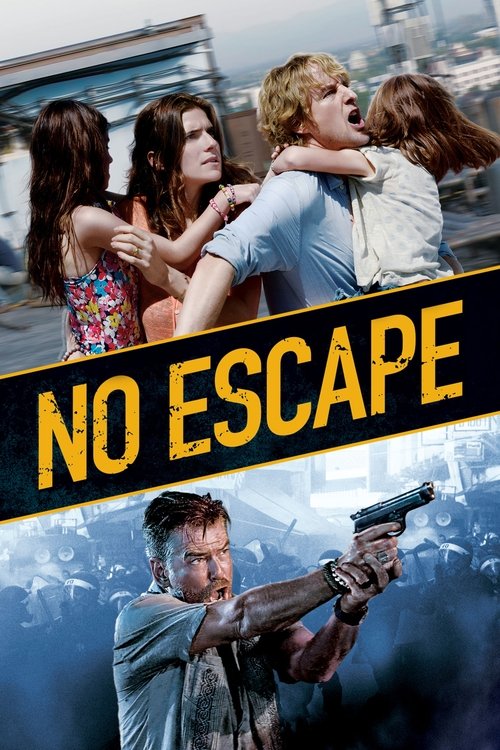
No Escape
In their new overseas home, an American family soon finds themselves caught in the middle of a coup, and they frantically look for a safe escape in an environment where foreigners are being immediately executed.
Despite its small-scale budget of $5.0M, No Escape became a runaway success, earning $54.4M worldwide—a remarkable 988% return. The film's unconventional structure attracted moviegoers, showing that strong storytelling can transcend budget limitations.
2 wins & 1 nomination


Plot Structure
Story beats plotted across runtime


Narrative Arc
Emotional journey through the story's key moments
Story Circle
Blueprint 15-beat structure
Arcplot Score Breakdown
Weighted: Precision (70%) + Arc (15%) + Theme (15%)
No Escape (2015) reveals carefully calibrated narrative design, characteristic of John Erick Dowdle's storytelling approach. This structural analysis examines how the film's 15-point plot structure maps to proven narrative frameworks across 1 hour and 43 minutes. With an Arcplot score of 7.6, the film showcases strong structural fundamentals.
Characters
Cast & narrative archetypes

Jack Dwyer
Annie Dwyer
Hammond
Lucy Dwyer
Beeze Dwyer
Main Cast & Characters
Jack Dwyer
Played by Owen Wilson
An American engineer who relocates his family to Southeast Asia, only to find himself caught in a violent coup.
Annie Dwyer
Played by Lake Bell
Jack's wife and mother of two, who must protect her daughters during the uprising.
Hammond
Played by Pierce Brosnan
A mysterious British operative who helps the Dwyer family survive the coup.
Lucy Dwyer
Played by Sterling Jerins
The older Dwyer daughter who must grow up quickly during the crisis.
Beeze Dwyer
Played by Claire Geare
The younger Dwyer daughter, innocent and vulnerable in the chaos.
Structural Analysis
The Status Quo at 1 minutes (1% through the runtime) establishes Jack Dwyer and his family arrive at the airport in an unnamed Southeast Asian country. Jack is an everyman, out of his depth, taking a corporate job to provide for his family after a business failure back home.. Notably, this early placement immediately immerses viewers in the story world.
The inciting incident occurs at 13 minutes when Jack ventures out the next morning to find a newspaper and discovers the city in chaos. A violent coup has erupted overnight. Armed rebels are executing foreigners in the streets. He witnesses brutal murders and narrowly escapes back to the hotel.. At 12% through the film, this Disruption aligns precisely with traditional story structure. This beat shifts the emotional landscape, launching the protagonist into the central conflict.
The First Threshold at 25 minutes marks the transition into Act II, occurring at 24% of the runtime. This demonstrates the protagonist's commitment to Rebels break into the hotel and begin executing guests. Jack makes the active choice to throw his daughters from the hotel rooftop to the next building, then he and Annie jump. The family is now on the run in hostile territory with no way back., moving from reaction to action.
At 52 minutes, the Midpoint arrives at 50% of the runtime—precisely centered, creating perfect narrative symmetry. Notably, this crucial beat The family takes refuge in a rebel sympathizer's home, hoping they've found sanctuary. But they're discovered and the family is separated. Jack must kill a man with his bare hands to save his daughter - crossing a line he never imagined. The stakes have become visceral and personal. False victory collapses into false defeat., fundamentally raising what's at risk. The emotional intensity shifts, dividing the narrative into clear before-and-after phases.
The Collapse moment at 77 minutes (74% through) represents the emotional nadir. Here, Hammond is shot and mortally wounded while helping the family escape. Their protector and guide is dying. Jack holds his daughters at gunpoint, preparing to kill them and himself rather than let the rebels execute them on camera. This is the darkest moment - total despair and the "whiff of death."., reveals the protagonist at their lowest point. This beat's placement in the final quarter sets up the climactic reversal.
The Second Threshold at 82 minutes initiates the final act resolution at 80% of the runtime. Jack synthesizes what Hammond taught him with his own protective instincts. He realizes they must reach the river and cross to Vietnam. He formulates a plan and commits fully - no more hesitation, no more hoping for rescue. He has become the protector his family needs., demonstrating the transformation achieved throughout the journey.
Emotional Journey
No Escape's emotional architecture traces a deliberate progression across 15 carefully calibrated beats.
Narrative Framework
This structural analysis employs systematic plot point analysis that identifies crucial turning points. By mapping No Escape against these established plot points, we can identify how John Erick Dowdle utilizes or subverts traditional narrative conventions. The plot point approach reveals not only adherence to structural principles but also creative choices that distinguish No Escape within the thriller genre.
John Erick Dowdle's Structural Approach
Among the 4 John Erick Dowdle films analyzed on Arcplot, the average structural score is 7.1, reflecting strong command of classical structure. No Escape represents one of the director's most structurally precise works. For comparative analysis, explore the complete John Erick Dowdle filmography.
Comparative Analysis
Additional thriller films include The Warriors, Thunderball and Rustom. For more John Erick Dowdle analyses, see As Above, So Below, Devil and Quarantine.
Plot Points by Act
Act I
SetupStatus Quo
Jack Dwyer and his family arrive at the airport in an unnamed Southeast Asian country. Jack is an everyman, out of his depth, taking a corporate job to provide for his family after a business failure back home.
Theme
Hammond tells Jack at the hotel bar: "Sometimes you have to do things you never thought you were capable of." This foreshadows Jack's transformation from passive businessman to violent protector.
Worldbuilding
Jack settles his family into the hotel. We see he's a fish out of water - uncomfortable with the foreign culture, struggling with basic tasks. His wife Annie is supportive but anxious. Their daughters are playful and innocent. The city seems unstable but superficially calm.
Disruption
Jack ventures out the next morning to find a newspaper and discovers the city in chaos. A violent coup has erupted overnight. Armed rebels are executing foreigners in the streets. He witnesses brutal murders and narrowly escapes back to the hotel.
Resistance
Jack returns to the hotel in a panic and tries to get his family to safety. The hotel staff has fled. Rebels are approaching. He debates whether to hide, surrender, or run. The family barricades themselves in their room as violence erupts in the hotel below.
Act II
ConfrontationFirst Threshold
Rebels break into the hotel and begin executing guests. Jack makes the active choice to throw his daughters from the hotel rooftop to the next building, then he and Annie jump. The family is now on the run in hostile territory with no way back.
Mirror World
Hammond reappears and helps the family escape immediate danger. He represents what Jack must become: decisive, capable of violence, willing to do whatever it takes to survive. He becomes their guide through this nightmare world.
Premise
The promised premise: a desperate cat-and-mouse chase through a war-torn city. The family navigates streets filled with armed rebels, witnesses atrocities, and Jack is repeatedly forced to make impossible choices to protect his family. Each encounter escalates the danger.
Midpoint
The family takes refuge in a rebel sympathizer's home, hoping they've found sanctuary. But they're discovered and the family is separated. Jack must kill a man with his bare hands to save his daughter - crossing a line he never imagined. The stakes have become visceral and personal. False victory collapses into false defeat.
Opposition
The family is captured and brought to a rebel stronghold where foreigners are being executed on camera. Jack's attempts to bargain or reason fail. The rebels close in. Every escape attempt is thwarted. Hammond tries to rescue them but the situation deteriorates.
Collapse
Hammond is shot and mortally wounded while helping the family escape. Their protector and guide is dying. Jack holds his daughters at gunpoint, preparing to kill them and himself rather than let the rebels execute them on camera. This is the darkest moment - total despair and the "whiff of death."
Crisis
Jack cannot pull the trigger. In his moment of utter helplessness and despair, he realizes he must find another way. Hammond, with his dying breath, tells them how to reach the border - Vietnam is across the river. This plants the seed for the final push.
Act III
ResolutionSecond Threshold
Jack synthesizes what Hammond taught him with his own protective instincts. He realizes they must reach the river and cross to Vietnam. He formulates a plan and commits fully - no more hesitation, no more hoping for rescue. He has become the protector his family needs.
Synthesis
The finale: Jack leads his family through final obstacles to the river. A confrontation with the rebel leader where Jack's transformation is complete - he fights with primal desperation. The family makes a harrowing swim across the river under gunfire. Vietnamese soldiers pull them to safety on the opposite shore.
Transformation
The family lies on the Vietnamese riverbank, safe at last. Jack embraces his wife and daughters. The passive, uncertain man from the opening has become a fierce protector who did the unthinkable to save his family. They survived because he transformed.