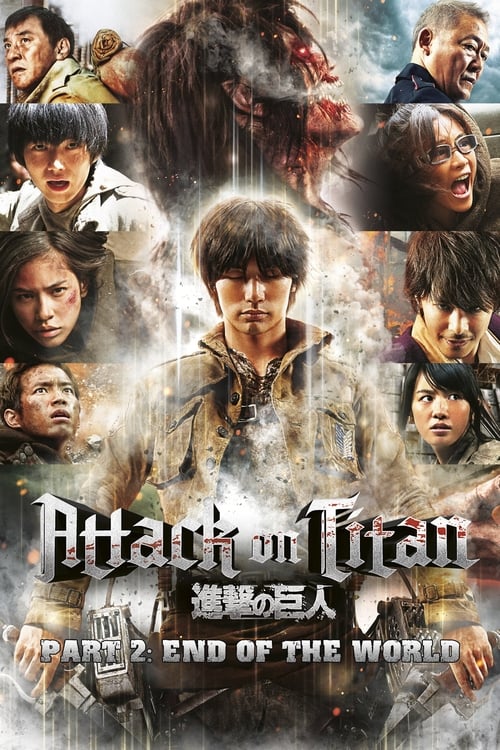
Attack on Titan II: End of the World
Eren Yeager leaves to restore a break in the wall destroyed by a Titan. He comes under attack by the Titans and is cornered. Shikishima comes to his aid. The titans never stops attacking. Eren is now injured and tries to protect Armin, but is swallowed by a titan. A Titan with black hair appears and begins to expel the other titans.
The film earned $15.2M at the global box office.

Plot Structure
Story beats plotted across runtime


Narrative Arc
Emotional journey through the story's key moments
Story Circle
Blueprint 15-beat structure
Arcplot Score Breakdown
Weighted: Precision (70%) + Arc (15%) + Theme (15%)
Attack on Titan II: End of the World (2015) reveals meticulously timed narrative architecture, characteristic of Shinji Higuchi's storytelling approach. This structural analysis examines how the film's 15-point plot structure maps to proven narrative frameworks across 1 hour and 27 minutes. With an Arcplot score of 6.7, the film balances conventional beats with creative variation.
Characters
Cast & narrative archetypes

Eren Yeager
Mikasa Ackerman
Armin Arlert
Shikishima
Hange Zoe
Jean Kirstein
Sasha Blouse
Lil
Main Cast & Characters
Eren Yeager
Played by Haruma Miura
A young soldier driven by revenge against the Titans who consumed his mother, discovering his ability to transform into a Titan.
Mikasa Ackerman
Played by Kiko Mizuhara
A highly skilled fighter and Eren's childhood friend who is fiercely protective of him.
Armin Arlert
Played by Kanata Hongo
Eren's strategic-minded friend who provides tactical support despite physical limitations.
Shikishima
Played by Hiroki Hasegawa
A mysterious and powerful soldier with his own agenda regarding the Titans and humanity's survival.
Hange Zoe
Played by Satomi Ishihara
An eccentric scientist obsessed with studying Titans and understanding their nature.
Jean Kirstein
Played by Takahiro Miura
A pragmatic soldier who initially clashes with Eren but proves himself in battle.
Sasha Blouse
Played by Nanami Sakuraba
A skilled archer and member of the Survey Corps known for her survival instincts.
Lil
Played by Rina Takeda
A fellow soldier who becomes involved in the desperate fight against the Titans.
Structural Analysis
The Status Quo at 1 minutes (1% through the runtime) establishes Eren and the survivors are trapped outside the wall, haunted by their devastating losses from the previous battle. The group is fractured, demoralized, and struggling to survive in Titan territory.. Significantly, this early placement immediately immerses viewers in the story world.
The inciting incident occurs at 11 minutes when Eren discovers the horrifying truth: the government has been using Titans as weapons and has been lying to humanity about the outside world. The walls aren't protection—they're a prison.. At 13% through the film, this Disruption is delayed, allowing extended setup of the story world. This beat shifts the emotional landscape, launching the protagonist into the central conflict.
The First Threshold at 22 minutes marks the transition into Act II, occurring at 25% of the runtime. This reveals the protagonist's commitment to Eren chooses to transform into his Titan form and actively fight alongside his comrades to breach the inner wall and confront the government, fully committing to the rebellion despite the risks., moving from reaction to action.
At 44 minutes, the Midpoint arrives at 51% of the runtime—precisely centered, creating perfect narrative symmetry. Notably, this crucial beat Eren confronts the government officials and discovers the full extent of the conspiracy: they intentionally sacrifice outer wall citizens to maintain control. But the military captures Eren, making him a false enemy of humanity—a public scapegoat., fundamentally raising what's at risk. The emotional intensity shifts, dividing the narrative into clear before-and-after phases.
The Collapse moment at 66 minutes (76% through) represents the emotional nadir. Here, Massive Titans breach the final wall and slaughter civilians and soldiers alike. Eren watches helplessly as the government's lies collapse along with the city, and his comrades die around him. Everything they fought for seems lost., shows the protagonist at their lowest point. This beat's placement in the final quarter sets up the climactic reversal.
The Second Threshold at 69 minutes initiates the final act resolution at 79% of the runtime. Eren realizes he must fight both the Titans AND the corrupt government, but not through annihilation—through exposing the truth and protecting the innocent. He breaks free and prepares for a final confrontation with Shikishima., demonstrating the transformation achieved throughout the journey.
Emotional Journey
Attack on Titan II: End of the World's emotional architecture traces a deliberate progression across 15 carefully calibrated beats.
Narrative Framework
This structural analysis employs systematic plot point analysis that identifies crucial turning points. By mapping Attack on Titan II: End of the World against these established plot points, we can identify how Shinji Higuchi utilizes or subverts traditional narrative conventions. The plot point approach reveals not only adherence to structural principles but also creative choices that distinguish Attack on Titan II: End of the World within the horror genre.
Shinji Higuchi's Structural Approach
Among the 5 Shinji Higuchi films analyzed on Arcplot, the average structural score is 7.1, reflecting strong command of classical structure. Attack on Titan II: End of the World takes a more unconventional approach compared to the director's typical style. For comparative analysis, explore the complete Shinji Higuchi filmography.
Comparative Analysis
Additional horror films include Thinner, A Nightmare on Elm Street and Mary Reilly. For more Shinji Higuchi analyses, see Shin Godzilla, Lorelei: The Witch of the Pacific Ocean and Attack on Titan.
Plot Points by Act
Act I
SetupStatus Quo
Eren and the survivors are trapped outside the wall, haunted by their devastating losses from the previous battle. The group is fractured, demoralized, and struggling to survive in Titan territory.
Theme
Shikishima tells Eren that humanity's true enemy isn't the Titans but those who control and manipulate them, suggesting the theme: true freedom requires confronting the systems of control, not just the visible monsters.
Worldbuilding
The survivors navigate the ruins outside the wall. We learn about the corrupt government, the truth about the Titans, and the conspiracy surrounding the walls. Eren struggles with his Titan powers and the revelation that humans created the Titans as weapons.
Disruption
Eren discovers the horrifying truth: the government has been using Titans as weapons and has been lying to humanity about the outside world. The walls aren't protection—they're a prison.
Resistance
Shikishima mentors Eren in controlling his Titan form and reveals the government's conspiracy. Eren debates whether to join Shikishima's rebellion or trust the military. The group plans their infiltration of the inner city to expose the truth.
Act II
ConfrontationFirst Threshold
Eren chooses to transform into his Titan form and actively fight alongside his comrades to breach the inner wall and confront the government, fully committing to the rebellion despite the risks.
Mirror World
Eren's relationship with Mikasa intensifies as she represents loyalty to humanity's survival versus Shikishima's nihilistic freedom through destruction. This mirrors Eren's internal conflict about what kind of freedom he's fighting for.
Premise
The infiltration mission unfolds. Eren uses his Titan powers in battle, fights alongside his squad against both Titans and human enemies, and the team works to plant explosives to breach the inner sanctum where the government hides its secrets.
Midpoint
Eren confronts the government officials and discovers the full extent of the conspiracy: they intentionally sacrifice outer wall citizens to maintain control. But the military captures Eren, making him a false enemy of humanity—a public scapegoat.
Opposition
Eren is imprisoned and put on trial as a traitor. The government turns public opinion against him. Shikishima's true extremist plans emerge—he wants to destroy everything, not save humanity. Eren's friends are hunted. The walls begin to fall as Titans breach the inner city.
Collapse
Massive Titans breach the final wall and slaughter civilians and soldiers alike. Eren watches helplessly as the government's lies collapse along with the city, and his comrades die around him. Everything they fought for seems lost.
Crisis
In the chaos and darkness, Eren processes the devastation. He must choose between Shikishima's path of total destruction or finding a new way to fight for humanity's true freedom, even if the system is corrupt.
Act III
ResolutionSecond Threshold
Eren realizes he must fight both the Titans AND the corrupt government, but not through annihilation—through exposing the truth and protecting the innocent. He breaks free and prepares for a final confrontation with Shikishima.
Synthesis
Eren battles Shikishima in their Titan forms in a devastating final fight. He defeats Shikishima, rejects nihilism, and helps seal the breach in the wall. The survivors begin to rebuild with the truth exposed, though the system remains imperfect and the fight continues.
Transformation
Eren stands with the surviving scouts looking at the damaged but standing walls. No longer the naive boy from the first film, he's become a leader who understands that freedom requires eternal vigilance against both monsters and tyranny.