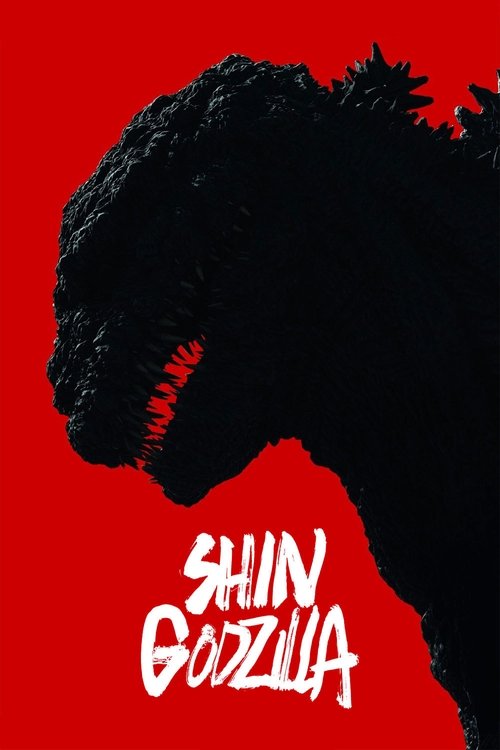
Shin Godzilla
When a massive, gilled monster emerges from the deep and tears through the city, the government scrambles to save its citizens. A rag-tag team of volunteers cuts through a web of red tape to uncover the monster's weakness and its mysterious ties to a foreign superpower. But time is not on their side - the greatest catastrophe to ever befall the world is about to evolve right before their very eyes.
Despite a respectable budget of $15.0M, Shin Godzilla became a commercial success, earning $78.1M worldwide—a 420% return.
13 wins & 10 nominations


Plot Structure
Story beats plotted across runtime


Narrative Arc
Emotional journey through the story's key moments
Story Circle
Blueprint 15-beat structure
Arcplot Score Breakdown
Weighted: Precision (70%) + Arc (15%) + Theme (15%)
Shin Godzilla (2016) demonstrates meticulously timed dramatic framework, characteristic of Shinji Higuchi's storytelling approach. This structural analysis examines how the film's 15-point plot structure maps to proven narrative frameworks across 2 hours. With an Arcplot score of 7.6, the film showcases strong structural fundamentals.
Characters
Cast & narrative archetypes

Rando Yaguchi
Kayoco Ann Patterson
Hideki Akasaka
Hiromi Ogashira
Yusuke Shimura
Prime Minister Seiji Okochi
Zaizen
Main Cast & Characters
Rando Yaguchi
Played by Hiroki Hasegawa
Deputy Chief Cabinet Secretary who becomes the crisis task force leader coordinating Japan's response to Godzilla.
Kayoco Ann Patterson
Played by Satomi Ishihara
Japanese-American special envoy who provides crucial intelligence and navigates US-Japan diplomatic tensions.
Hideki Akasaka
Played by Yutaka Takenouchi
Minister of Agriculture aide who joins Yaguchi's task force, providing analytical support.
Hiromi Ogashira
Played by Mikako Ichikawa
Environment Ministry official and biologist who contributes scientific expertise to the crisis team.
Yusuke Shimura
Played by Jun Kunimura
Young Energy Ministry bureaucrat and nuclear expert crucial to developing the freezing plan.
Prime Minister Seiji Okochi
Played by Ren Osugi
Japan's Prime Minister who initially leads the crisis response with traditional bureaucratic approaches.
Zaizen
Played by Kengo Kora
Chief Cabinet Secretary and political operator focused on maintaining government stability.
Structural Analysis
The Status Quo at 2 minutes (1% through the runtime) establishes A routine day in Japan's bureaucracy. Deputy Chief Cabinet Secretary Rando Yaguchi in a mundane government meeting when news arrives of a mysterious incident in Tokyo Bay - an abandoned boat and strange water disturbance.. Structural examination shows that this early placement immediately immerses viewers in the story world.
The inciting incident occurs at 14 minutes when Godzilla emerges from the Aqua-Line tunnel in massive, grotesque form, crawling onto land and destroying everything in its path. The creature's existence shatters all assumptions and reveals the government's complete unpreparedness.. At 12% through the film, this Disruption aligns precisely with traditional story structure. This beat shifts the emotional landscape, launching the protagonist into the central conflict.
The First Threshold at 30 minutes marks the transition into Act II, occurring at 25% of the runtime. This shows the protagonist's commitment to Yaguchi is appointed to lead an emergency task force of young, unconventional experts outside normal bureaucratic channels. This team commits to finding a way to stop Godzilla, marking Japan's choice to try a new approach rather than rely on old systems., moving from reaction to action.
At 60 minutes, the Midpoint arrives at 50% of the runtime—precisely centered, creating perfect narrative symmetry. Notably, this crucial beat Godzilla returns to Tokyo in its final, most powerful form. The Japanese military launches a full assault but their weapons are completely ineffective. Godzilla unleashes devastating atomic breath, incinerating vast sections of Tokyo. The false hope of military solution is utterly destroyed., fundamentally raising what's at risk. The emotional intensity shifts, dividing the narrative into clear before-and-after phases.
The Collapse moment at 90 minutes (75% through) represents the emotional nadir. Here, The UN authorizes a nuclear strike on Tokyo within hours. Japan faces not just the death of millions from the bomb, but complete loss of sovereignty and international humiliation. The government appears paralyzed, and Yaguchi's plan seems impossible to execute in time., demonstrates the protagonist at their lowest point. This beat's placement in the final quarter sets up the climactic reversal.
The Second Threshold at 96 minutes initiates the final act resolution at 80% of the runtime. Kayoko secures a brief delay of the nuclear strike through diplomatic channels. With this window of opportunity, Yaguchi receives approval to execute Operation Yashiori. Japan chooses to trust its own people and unconventional methods for one final attempt., demonstrating the transformation achieved throughout the journey.
Emotional Journey
Shin Godzilla's emotional architecture traces a deliberate progression across 15 carefully calibrated beats.
Narrative Framework
This structural analysis employs systematic plot point analysis that identifies crucial turning points. By mapping Shin Godzilla against these established plot points, we can identify how Shinji Higuchi utilizes or subverts traditional narrative conventions. The plot point approach reveals not only adherence to structural principles but also creative choices that distinguish Shin Godzilla within the action genre.
Shinji Higuchi's Structural Approach
Among the 5 Shinji Higuchi films analyzed on Arcplot, the average structural score is 7.1, reflecting strong command of classical structure. Shin Godzilla represents one of the director's most structurally precise works. For comparative analysis, explore the complete Shinji Higuchi filmography.
Comparative Analysis
Additional action films include The Bad Guys, Puss in Boots and Venom: The Last Dance. For more Shinji Higuchi analyses, see Lorelei: The Witch of the Pacific Ocean, Attack on Titan and Japan Sinks.
Plot Points by Act
Act I
SetupStatus Quo
A routine day in Japan's bureaucracy. Deputy Chief Cabinet Secretary Rando Yaguchi in a mundane government meeting when news arrives of a mysterious incident in Tokyo Bay - an abandoned boat and strange water disturbance.
Theme
A senior official dismisses the possibility of a living creature causing the disturbance, stating "There's no proof." The theme: institutional rigidity versus adaptive response, and whether Japan can evolve to meet unprecedented threats.
Worldbuilding
Introduction to Japan's complex bureaucratic system and hierarchy. We meet the key government players, see their protocols, and understand the chain of command. Yaguchi is established as an outsider voice willing to consider unconventional possibilities.
Disruption
Godzilla emerges from the Aqua-Line tunnel in massive, grotesque form, crawling onto land and destroying everything in its path. The creature's existence shatters all assumptions and reveals the government's complete unpreparedness.
Resistance
Debate and chaos in government as officials struggle to respond. Multiple committees form and dissolve. Yaguchi pushes for immediate action while senior officials hesitate, bound by protocol and fear of responsibility. The creature evolves and returns to the sea, buying time but raising stakes.
Act II
ConfrontationFirst Threshold
Yaguchi is appointed to lead an emergency task force of young, unconventional experts outside normal bureaucratic channels. This team commits to finding a way to stop Godzilla, marking Japan's choice to try a new approach rather than rely on old systems.
Mirror World
Kayoko Ann Patterson, a Japanese-American special envoy, arrives representing U.S. interests. She embodies the external perspective and international cooperation theme, challenging Japan's insular approach while sharing critical intelligence about the creature.
Premise
The task force investigates Godzilla's nature, analyzing its biology and evolution. They race to understand the creature before it returns. Scientific montages, data analysis, and cross-disciplinary collaboration show Japan's intellectual capabilities mobilized against an existential threat.
Midpoint
Godzilla returns to Tokyo in its final, most powerful form. The Japanese military launches a full assault but their weapons are completely ineffective. Godzilla unleashes devastating atomic breath, incinerating vast sections of Tokyo. The false hope of military solution is utterly destroyed.
Opposition
International pressure mounts as the UN Security Council prepares to use nuclear weapons on Tokyo. Time is running out. The task force works frantically to develop a coagulant plan to freeze Godzilla, but faces resource limitations, political obstacles, and the ticking clock of foreign intervention.
Collapse
The UN authorizes a nuclear strike on Tokyo within hours. Japan faces not just the death of millions from the bomb, but complete loss of sovereignty and international humiliation. The government appears paralyzed, and Yaguchi's plan seems impossible to execute in time.
Crisis
Dark night of doubt as the enormity of the task weighs on everyone. Yaguchi and his team face the possibility of failure. Brief moments of despair give way to quiet resolve as they commit to try their plan regardless of odds.
Act III
ResolutionSecond Threshold
Kayoko secures a brief delay of the nuclear strike through diplomatic channels. With this window of opportunity, Yaguchi receives approval to execute Operation Yashiori. Japan chooses to trust its own people and unconventional methods for one final attempt.
Synthesis
Operation Yashiori unfolds with precision and cooperation across all sectors of Japanese society. Unmanned trains, explosive buildings, and coordinated coagulant injection using cranes and pumps. The meticulous plan combines bureaucratic organization with scientific innovation, ultimately freezing Godzilla solid.
Transformation
Godzilla stands frozen in the heart of Tokyo, a permanent monument to the crisis. Yaguchi and his team look upon their achievement with sober awareness that this is temporary. Japan has proven it can adapt and respond, but the creature may awaken. The bureaucracy has evolved, but remains vigilant.