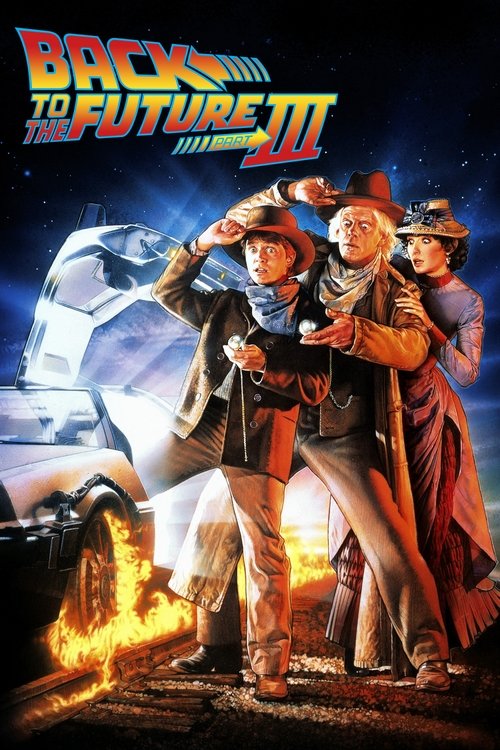
Back to the Future Part III
The final installment finds Marty digging the trusty DeLorean out of a mineshaft and looking for Doc in the Wild West of 1885. But when their time machine breaks down, the travelers are stranded in a land of spurs. More problems arise when Doc falls for pretty schoolteacher Clara Clayton, and Marty tangles with Buford Tannen.
Despite a moderate budget of $40.0M, Back to the Future Part III became a box office phenomenon, earning $244.5M worldwide—a remarkable 511% return.
5 wins & 11 nominations


Plot Structure
Story beats plotted across runtime


Narrative Arc
Emotional journey through the story's key moments
Story Circle
Blueprint 15-beat structure
Arcplot Score Breakdown
Weighted: Precision (70%) + Arc (15%) + Theme (15%)
Back to the Future Part III (1990) demonstrates carefully calibrated narrative architecture, characteristic of Robert Zemeckis's storytelling approach. This structural analysis examines how the film's 15-point plot structure maps to proven narrative frameworks across 1 hour and 59 minutes. With an Arcplot score of 7.0, the film balances conventional beats with creative variation.
Characters
Cast & narrative archetypes

Marty McFly
Dr. Emmett Brown
Clara Clayton
Buford "Mad Dog" Tannen
Seamus McFly
Maggie McFly
Main Cast & Characters
Marty McFly
Played by Michael J. Fox
Time-traveling teenager stranded in 1885 who must rescue Doc Brown and return to 1985 while navigating Old West dangers.
Dr. Emmett Brown
Played by Christopher Lloyd
Eccentric inventor trapped in 1885 who falls in love with Clara Clayton while trying to repair the time machine.
Clara Clayton
Played by Mary Steenburgen
Independent schoolteacher and science enthusiast who becomes Doc Brown's romantic interest in the Old West.
Buford "Mad Dog" Tannen
Played by Thomas F. Wilson
Ruthless gunslinger and Biff's ancestor who seeks revenge against Doc Brown for a disputed debt.
Seamus McFly
Played by Michael J. Fox
Marty's Irish immigrant great-great-grandfather, a humble farmer in Hill Valley who helps Marty.
Maggie McFly
Played by Lea Thompson
Seamus's pregnant wife and Marty's great-great-grandmother, a strong-willed Irish woman.
Structural Analysis
The Status Quo at 1 minutes (1% through the runtime) establishes Marty returns home from 1955 to find Doc's time machine struck by lightning. The DeLorean appears empty with Doc seemingly vaporized, establishing the anxious ordinary world after BTTF II's cliffhanger.. Of particular interest, this early placement immediately immerses viewers in the story world.
The inciting incident occurs at 14 minutes when Marty finds Doc's gravestone with death date September 7, 1885 - "Shot in the back by Buford Tannen over a matter of eighty dollars." Doc's death becomes the external threat disrupting any acceptance of leaving him in the past.. At 12% through the film, this Disruption aligns precisely with traditional story structure. This beat shifts the emotional landscape, launching the protagonist into the central conflict.
The First Threshold at 29 minutes marks the transition into Act II, occurring at 25% of the runtime. This reveals the protagonist's commitment to Marty chooses to travel to 1885, accelerating the DeLorean to 88 mph and smashing through the drive-in movie screen. He commits to entering the Old West to save Doc, crossing the point of no return into Act 2., moving from reaction to action.
At 59 minutes, the Midpoint arrives at 50% of the runtime—precisely centered, creating perfect narrative symmetry. Notably, this crucial beat Indians attack with flaming arrows, destroying the DeLorean's fuel line. Doc says "We're out of gas!" - stranded in 1885 with no way to reach 88 mph. The false defeat raises stakes dramatically at the exact midpoint. The return home seems impossible., fundamentally raising what's at risk. The emotional intensity shifts, dividing the narrative into clear before-and-after phases.
The Collapse moment at 87 minutes (73% through) represents the emotional nadir. Here, Clara discovers Doc's plan to leave in the time machine and overhears he never intended to stay. Heartbroken, she runs away. Doc loses the woman he loves. Additionally, Buford kidnaps Doc, and Marty must face the gunfighter alone. Multiple deaths: the romance, hope, and potentially Doc's life., reveals the protagonist at their lowest point. This beat's placement in the final quarter sets up the climactic reversal.
The Second Threshold at 95 minutes initiates the final act resolution at 80% of the runtime. Marty realizes he doesn't have to draw on Buford - he can outsmart him with the future tech (the iron stove door as shield). This synthesis of Old West values and future knowledge gives him the breakthrough. He confronts Buford on his own terms, beginning Act 3., demonstrating the transformation achieved throughout the journey.
Emotional Journey
Back to the Future Part III's emotional architecture traces a deliberate progression across 15 carefully calibrated beats.
Narrative Framework
This structural analysis employs structural analysis methodology used to understand storytelling architecture. By mapping Back to the Future Part III against these established plot points, we can identify how Robert Zemeckis utilizes or subverts traditional narrative conventions. The plot point approach reveals not only adherence to structural principles but also creative choices that distinguish Back to the Future Part III within the adventure genre.
Robert Zemeckis's Structural Approach
Among the 20 Robert Zemeckis films analyzed on Arcplot, the average structural score is 6.9, demonstrating varied approaches to story architecture. Back to the Future Part III represents one of the director's most structurally precise works. For comparative analysis, explore the complete Robert Zemeckis filmography.
Comparative Analysis
Additional adventure films include The Black Stallion, The Bad Guys and Puss in Boots. For more Robert Zemeckis analyses, see Who Framed Roger Rabbit, Beowulf and Welcome to Marwen.
Plot Points by Act
Act I
SetupStatus Quo
Marty returns home from 1955 to find Doc's time machine struck by lightning. The DeLorean appears empty with Doc seemingly vaporized, establishing the anxious ordinary world after BTTF II's cliffhanger.
Theme
Western Union messenger delivers 70-year-old letter from Doc, saying "Your future is whatever you make it." This statement about self-determination versus fate becomes the film's thematic backbone.
Worldbuilding
Marty learns Doc has been living in 1885 for eight months and is happy. They find the hidden DeLorean in a mine. Marty discovers Doc's tombstone revealing he'll be murdered by Buford Tannen in six days. The setup establishes 1885, the Tannen family curse, and Marty's motivation.
Disruption
Marty finds Doc's gravestone with death date September 7, 1885 - "Shot in the back by Buford Tannen over a matter of eighty dollars." Doc's death becomes the external threat disrupting any acceptance of leaving him in the past.
Resistance
Marty and 1955 Doc repair the DeLorean using 1955 parts. Doc warns about encountering his future self and creating paradoxes. They plan the rescue mission, with Doc mentoring Marty on temporal mechanics and the dangers ahead. Preparation and debate about changing Doc's fate.
Act II
ConfrontationFirst Threshold
Marty chooses to travel to 1885, accelerating the DeLorean to 88 mph and smashing through the drive-in movie screen. He commits to entering the Old West to save Doc, crossing the point of no return into Act 2.
Mirror World
Marty meets his great-great-grandfather Seamus McFly and great-great-grandmother Maggie, who show him frontier hospitality. This family connection mirrors the theme of making your own future while honoring the past.
Premise
Marty explores 1885 Hill Valley, reunites with Doc, meets Clara Clayton (Doc's future love), witnesses Buford Tannen's villainy, and navigates Old West customs. The fish-out-of-water Western comedy delivers the premise's promise. Doc and Clara's romance develops.
Midpoint
Indians attack with flaming arrows, destroying the DeLorean's fuel line. Doc says "We're out of gas!" - stranded in 1885 with no way to reach 88 mph. The false defeat raises stakes dramatically at the exact midpoint. The return home seems impossible.
Opposition
Doc and Marty scheme to push the DeLorean with a locomotive. Buford antagonizes Marty, challenging him to a duel. Doc falls in love with Clara but struggles between staying with her and returning to 1985. External pressure from Buford and internal conflict about Doc's choice intensify.
Collapse
Clara discovers Doc's plan to leave in the time machine and overhears he never intended to stay. Heartbroken, she runs away. Doc loses the woman he loves. Additionally, Buford kidnaps Doc, and Marty must face the gunfighter alone. Multiple deaths: the romance, hope, and potentially Doc's life.
Crisis
Marty processes his dark night, deciding he won't be goaded into the duel like his future son. Doc is distraught over losing Clara. Both face their deepest fears - Marty about being called coward, Doc about dying alone. They find resolve to face Buford and execute the escape plan.
Act III
ResolutionSecond Threshold
Marty realizes he doesn't have to draw on Buford - he can outsmart him with the future tech (the iron stove door as shield). This synthesis of Old West values and future knowledge gives him the breakthrough. He confronts Buford on his own terms, beginning Act 3.
Synthesis
Marty defeats Buford using the stove door bulletproof trick, then they execute the locomotive plan. The train pushes the DeLorean to 88 mph. Doc saves Clara from the ravine. Marty returns to 1985 while Doc remains in 1885 with Clara. The finale resolves all conflicts.
Transformation
Marty refuses to street race, saying "Nobody calls me chicken" - breaking the character flaw that plagued him. Jennifer sees the "You're Fired" fax erase, proving the future isn't written. Doc arrives in a time-traveling steam locomotive with Clara and children, embodying the theme that we make our own future.