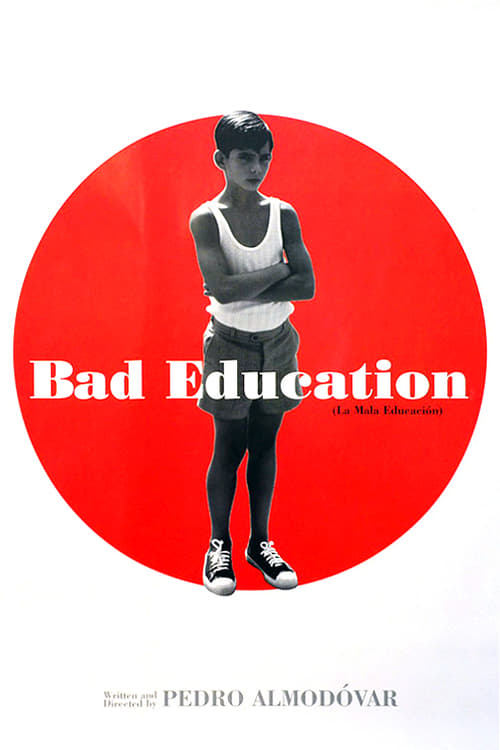
Bad Education
An examination on the effect of Franco-era religious schooling and sexual abuse on the lives of two longtime friends.
Despite its limited budget of $5.0M, Bad Education became a box office phenomenon, earning $40.3M worldwide—a remarkable 705% return. The film's unique voice resonated with audiences, demonstrating that strong storytelling can transcend budget limitations.
Nominated for 1 BAFTA Award16 wins & 42 nominations


Plot Structure
Story beats plotted across runtime


Narrative Arc
Emotional journey through the story's key moments
Story Circle
Blueprint 15-beat structure
Arcplot Score Breakdown
Weighted: Precision (70%) + Arc (15%) + Theme (15%)
Bad Education (2004) demonstrates strategically placed dramatic framework, characteristic of Pedro Almodóvar's storytelling approach. This structural analysis examines how the film's 15-point plot structure maps to proven narrative frameworks across 1 hour and 45 minutes. With an Arcplot score of 6.9, the film balances conventional beats with creative variation.
Characters
Cast & narrative archetypes

Ángel Andrade / Juan
Enrique Goded
Father Manolo
Ignacio (Young)
Zahara (Ignacio Adult)
Main Cast & Characters
Ángel Andrade / Juan
Played by Gael García Bernal
A young man who assumes his brother's identity to reconnect with a filmmaker, carrying secrets and desire for revenge.
Enrique Goded
Played by Fele Martínez
A film director confronted by his past when a figure from his childhood reappears with a disturbing story.
Father Manolo
Played by Daniel Giménez Cacho
A predatory priest who abused students and later becomes a powerful publisher, embodying corruption and exploitation.
Ignacio (Young)
Played by Nacho Pérez
The childhood friend and first love of Enrique, a victim of abuse who grows into a tragic figure.
Zahara (Ignacio Adult)
Played by Gael García Bernal
The adult Ignacio performing as a drag queen, struggling with addiction and trauma from his past.
Structural Analysis
The Status Quo at 1 minutes (1% through the runtime) establishes Enrique Goded, a successful film director in Madrid, searches for his next story after his latest film's success. His world is one of creative ambition but emotional emptiness.. Significantly, this early placement immediately immerses viewers in the story world.
The inciting incident occurs at 13 minutes when Enrique reads the manuscript revealing traumatic childhood abuse by Father Manolo at their school, and the visitor's claim stirs painful memories. The past violently intrudes on Enrique's present.. At 13% through the film, this Disruption is delayed, allowing extended setup of the story world. This beat shifts the emotional landscape, launching the protagonist into the central conflict.
The First Threshold at 26 minutes marks the transition into Act II, occurring at 25% of the runtime. This illustrates the protagonist's commitment to Enrique chooses to make the film and cast the visitor as the lead, despite suspicions. He commits to exploring this dangerous territory, entering a world where reality and fiction blur., moving from reaction to action.
At 53 minutes, the Midpoint arrives at 50% of the runtime—precisely centered, creating perfect narrative symmetry. Structural examination shows that this crucial beat Enrique discovers the visitor is not Ignacio at all, but Ignacio's younger brother Juan. The real Ignacio is dead. Everything has been a deception—the manuscript, the identity, the story itself., fundamentally raising what's at risk. The emotional intensity shifts, dividing the narrative into clear before-and-after phases.
The Collapse moment at 79 minutes (75% through) represents the emotional nadir. Here, The full horror is revealed: Juan murdered Ignacio with Father Manolo's help after Ignacio attempted blackmail. The innocent childhood love is truly dead, killed by the very abuse that defined their youth., indicates the protagonist at their lowest point. This beat's placement in the final quarter sets up the climactic reversal.
The Second Threshold at 84 minutes initiates the final act resolution at 80% of the runtime. Enrique chooses to complete his film with full knowledge of the truth. Art becomes the synthesis: he'll tell Ignacio's story authentically, transforming trauma into testimony, even if justice is impossible., demonstrating the transformation achieved throughout the journey.
Emotional Journey
Bad Education's emotional architecture traces a deliberate progression across 15 carefully calibrated beats.
Narrative Framework
This structural analysis employs structural analysis methodology used to understand storytelling architecture. By mapping Bad Education against these established plot points, we can identify how Pedro Almodóvar utilizes or subverts traditional narrative conventions. The plot point approach reveals not only adherence to structural principles but also creative choices that distinguish Bad Education within the drama genre.
Pedro Almodóvar's Structural Approach
Among the 13 Pedro Almodóvar films analyzed on Arcplot, the average structural score is 7.1, reflecting strong command of classical structure. Bad Education takes a more unconventional approach compared to the director's typical style. For comparative analysis, explore the complete Pedro Almodóvar filmography.
Comparative Analysis
Additional drama films include After Thomas, South Pacific and Dirty Dancing: Havana Nights. For more Pedro Almodóvar analyses, see Live Flesh, All About My Mother and Women on the Verge of a Nervous Breakdown.
Plot Points by Act
Act I
SetupStatus Quo
Enrique Goded, a successful film director in Madrid, searches for his next story after his latest film's success. His world is one of creative ambition but emotional emptiness.
Theme
A visitor discusses how the past never truly leaves us, suggesting that identity and memory are fluid, corruptible things—the thematic core of deception, desire, and the stories we tell ourselves.
Worldbuilding
Enrique's film production world is established. A mysterious visitor arrives claiming to be Ignacio, Enrique's childhood love from Catholic school. The visitor presents a story manuscript titled "The Visit" about their shared past.
Disruption
Enrique reads the manuscript revealing traumatic childhood abuse by Father Manolo at their school, and the visitor's claim stirs painful memories. The past violently intrudes on Enrique's present.
Resistance
Enrique debates whether to trust this "Ignacio" and adapt the story. He investigates, sensing something false. The manuscript becomes a mirror reflecting questions about identity, truth, and whether to confront the past.
Act II
ConfrontationFirst Threshold
Enrique chooses to make the film and cast the visitor as the lead, despite suspicions. He commits to exploring this dangerous territory, entering a world where reality and fiction blur.
Mirror World
The film-within-a-film begins: Zahara (the drag queen persona) embodies the transformation and performance at the story's heart. This meta-narrative carries the theme of identity as performance and survival.
Premise
Enrique produces the film while the manuscript's narrative unfolds in parallel: Zahara's return to blackmail Father Manolo, the exploration of abuse, desire, and revenge. Past and present interweave in increasing complexity.
Midpoint
Enrique discovers the visitor is not Ignacio at all, but Ignacio's younger brother Juan. The real Ignacio is dead. Everything has been a deception—the manuscript, the identity, the story itself.
Opposition
Enrique investigates deeper, confronting Juan and Father Manolo. Dark truths emerge about Ignacio's death, Juan's complicity, and Father Manolo's continued corruption. The web of lies tightens around all characters.
Collapse
The full horror is revealed: Juan murdered Ignacio with Father Manolo's help after Ignacio attempted blackmail. The innocent childhood love is truly dead, killed by the very abuse that defined their youth.
Crisis
Enrique processes the betrayal and loss. His artistic project has led him to the truth, but it's a truth of irredeemable corruption. He sits with the weight of what cannot be undone or redeemed.
Act III
ResolutionSecond Threshold
Enrique chooses to complete his film with full knowledge of the truth. Art becomes the synthesis: he'll tell Ignacio's story authentically, transforming trauma into testimony, even if justice is impossible.
Synthesis
The film concludes its production. Juan remains in the role, Father Manolo faces exposure but no real justice. Enrique achieves artistic completion while Juan receives a callback from another director, continuing the cycle of performance and deception.
Transformation
Enrique has transformed his search for a story into a reckoning with truth. Unlike the opening's creative emptiness, he now carries the weight of witness—art forged from irredeemable loss.