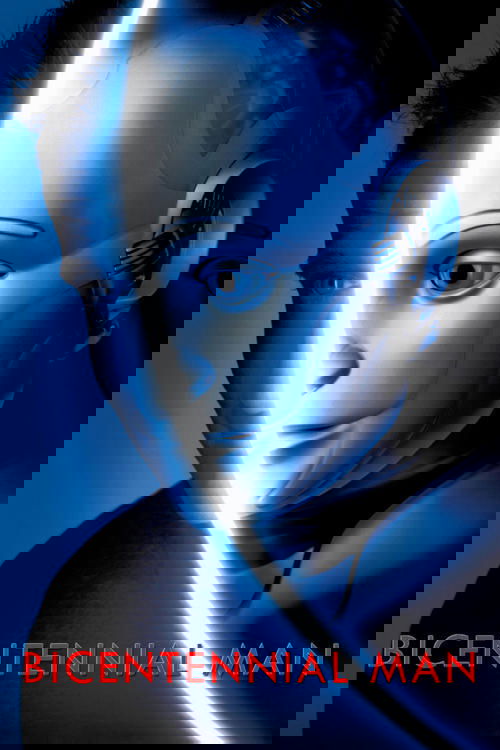
Bicentennial Man
Richard Martin buys a gift, a new NDR-114 robot. The product is named Andrew by the youngest of the family's children. "Bicentennial Man" follows the life and times of Andrew, a robot purchased as a household appliance programmed to perform menial tasks. As Andrew begins to experience emotions and creative thought, the Martin family soon discovers they don't have an ordinary robot.
The film disappointed at the box office against its substantial budget of $100.0M, earning $87.4M globally (-13% loss).
Nominated for 1 Oscar. 2 wins & 8 nominations


Plot Structure
Story beats plotted across runtime


Narrative Arc
Emotional journey through the story's key moments
Story Circle
Blueprint 15-beat structure
Arcplot Score Breakdown
Weighted: Precision (70%) + Arc (15%) + Theme (15%)
Bicentennial Man (1999) showcases carefully calibrated plot construction, characteristic of Chris Columbus's storytelling approach. This structural analysis examines how the film's 15-point plot structure maps to proven narrative frameworks across 2 hours and 11 minutes. With an Arcplot score of 7.0, the film balances conventional beats with creative variation.
Characters
Cast & narrative archetypes

Andrew Martin
Portia Charney
Richard Martin
Little Miss Amanda Martin
Rupert Burns
Galatea
Main Cast & Characters
Andrew Martin
Played by Robin Williams
A household robot who gradually develops consciousness and humanity over 200 years, seeking recognition as a human being.
Portia Charney
Played by Embeth Davidtz
The granddaughter of Andrew's original owner, who becomes his love interest and supports his quest for humanity.
Richard Martin
Played by Sam Neill
Andrew's original owner who treats him as more than a machine and encourages his creative development.
Little Miss Amanda Martin
Played by Hallie Kate Eisenberg
Richard's younger daughter who forms the deepest early bond with Andrew and names him.
Rupert Burns
Played by Oliver Platt
A robotic engineer and scientist who helps Andrew become more human through upgrades and becomes his closest friend.
Galatea
Played by Kiersten Warren
A female robot created by Rupert who helps Andrew understand emotions and relationships.
Structural Analysis
The Status Quo at 1 minutes (1% through the runtime) establishes Andrew arrives at the Martin family home as a new household appliance robot, NDR-114. The family's ordinary world is established: wealthy, suburban, traditional family structure with father Richard, wife, and two daughters.. Notably, this early placement immediately immerses viewers in the story world.
The inciting incident occurs at 15 minutes when Richard declares Andrew a free robot, not property. This fundamentally disrupts Andrew's status quo as an appliance and sets him on an unprecedented path toward personhood.. At 12% through the film, this Disruption aligns precisely with traditional story structure. This beat shifts the emotional landscape, launching the protagonist into the central conflict.
The First Threshold at 33 minutes marks the transition into Act II, occurring at 25% of the runtime. This reveals the protagonist's commitment to Andrew chooses to leave the Martin household to find other robots like himself and discover his identity. This is his active decision to enter the wider world and pursue his quest for humanity., moving from reaction to action.
At 65 minutes, the Midpoint arrives at 50% of the runtime—precisely centered, creating perfect narrative symmetry. Significantly, this crucial beat Andrew confesses his love to Portia (Little Miss's granddaughter) and she reciprocates. False victory: he seems to have achieved connection and love, but he cannot truly be with her as he's still not legally human., fundamentally raising what's at risk. The emotional intensity shifts, dividing the narrative into clear before-and-after phases.
The Collapse moment at 97 minutes (74% through) represents the emotional nadir. Here, The World Congress refuses to recognize Andrew as human, stating he can live forever and therefore cannot understand the human experience. Andrew realizes immortality is the barrier preventing him from being truly human or with Portia., illustrates the protagonist at their lowest point. This beat's placement in the final quarter sets up the climactic reversal.
The Second Threshold at 104 minutes initiates the final act resolution at 80% of the runtime. Andrew chooses to modify his body to age and die like a human. He synthesizes his technological nature with human mortality, understanding that death gives life meaning. He marries Portia., demonstrating the transformation achieved throughout the journey.
Emotional Journey
Bicentennial Man's emotional architecture traces a deliberate progression across 15 carefully calibrated beats.
Narrative Framework
This structural analysis employs structural analysis methodology used to understand storytelling architecture. By mapping Bicentennial Man against these established plot points, we can identify how Chris Columbus utilizes or subverts traditional narrative conventions. The plot point approach reveals not only adherence to structural principles but also creative choices that distinguish Bicentennial Man within the science fiction genre.
Chris Columbus's Structural Approach
Among the 15 Chris Columbus films analyzed on Arcplot, the average structural score is 6.3, demonstrating varied approaches to story architecture. Bicentennial Man represents one of the director's most structurally precise works. For comparative analysis, explore the complete Chris Columbus filmography.
Comparative Analysis
Additional science fiction films include The Postman, Mad Max 2 and AVP: Alien vs. Predator. For more Chris Columbus analyses, see Harry Potter and the Philosopher's Stone, Nine Months and Harry Potter and the Prisoner of Azkaban.
Plot Points by Act
Act I
SetupStatus Quo
Andrew arrives at the Martin family home as a new household appliance robot, NDR-114. The family's ordinary world is established: wealthy, suburban, traditional family structure with father Richard, wife, and two daughters.
Theme
Little Miss (Amanda) tells Andrew that being different doesn't mean being less valuable. This plants the thematic question: What defines humanity? Can a machine become human?
Worldbuilding
Andrew displays unexpected creativity by carving a wooden horse for Little Miss. We see his unique consciousness emerging, Richard's progressive recognition of Andrew's specialness, and the family dynamics that will define Andrew's journey.
Disruption
Richard declares Andrew a free robot, not property. This fundamentally disrupts Andrew's status quo as an appliance and sets him on an unprecedented path toward personhood.
Resistance
Andrew explores what freedom means, begins earning money through his woodworking, and navigates his unique position. Richard acts as mentor, guiding Andrew on living as a free being while the family ages around him.
Act II
ConfrontationFirst Threshold
Andrew chooses to leave the Martin household to find other robots like himself and discover his identity. This is his active decision to enter the wider world and pursue his quest for humanity.
Mirror World
Andrew meets Galatea, a female robot, and begins to understand connection and companionship. This relationship subplot will teach him about what it means to truly feel and love.
Premise
Andrew's journey through time: he upgrades himself with Rupert Burns' help, acquires human-like face and body, experiences the world, and returns to find Little Miss grown. The promise of the premise - watching a robot pursue humanity.
Midpoint
Andrew confesses his love to Portia (Little Miss's granddaughter) and she reciprocates. False victory: he seems to have achieved connection and love, but he cannot truly be with her as he's still not legally human.
Opposition
Andrew faces increasing obstacles: societal rejection of his human claims, legal battles for recognition, aging separating him from Portia who grows older while he remains unchanged. The gap between them widens despite their love.
Collapse
The World Congress refuses to recognize Andrew as human, stating he can live forever and therefore cannot understand the human experience. Andrew realizes immortality is the barrier preventing him from being truly human or with Portia.
Crisis
Andrew contemplates the meaning of his existence. He must decide whether to remain immortal and incomplete, or embrace mortality - the ultimate human condition - to truly become human.
Act III
ResolutionSecond Threshold
Andrew chooses to modify his body to age and die like a human. He synthesizes his technological nature with human mortality, understanding that death gives life meaning. He marries Portia.
Synthesis
Andrew and Portia live a full life together as he ages. On his deathbed, 200 years after his creation, the World Congress finally declares him human - recognizing that his choice to die proves his humanity.
Transformation
Andrew dies holding Portia's hand, having achieved his quest: legal recognition as human. The final image mirrors the opening - but where he arrived as a machine, he departs as a man who truly lived and loved.