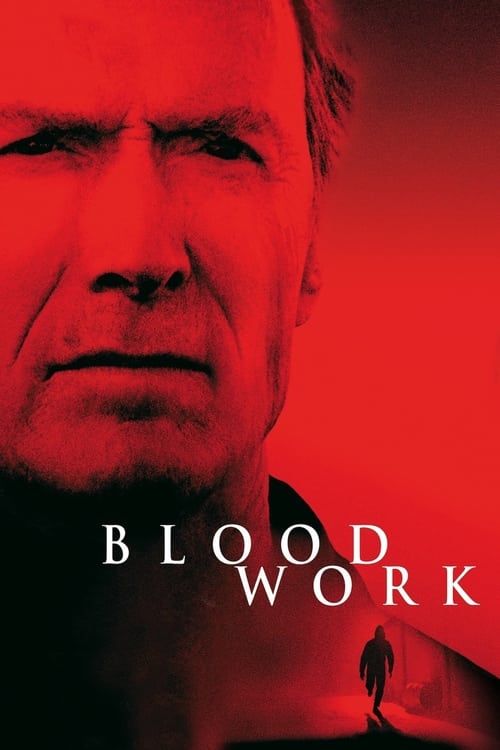
Blood Work
Still recovering from a heart transplant, a retired FBI profiler returns to service when his own blood analysis offers clues to the identity of a serial killer.
The film underperformed commercially against its moderate budget of $50.0M, earning $31.8M globally (-36% loss). While initial box office returns were modest, the film has gained appreciation for its innovative storytelling within the thriller genre.


Plot Structure
Story beats plotted across runtime


Narrative Arc
Emotional journey through the story's key moments
Story Circle
Blueprint 15-beat structure
Arcplot Score Breakdown
Weighted: Precision (70%) + Arc (15%) + Theme (15%)
Blood Work (2002) showcases precise narrative design, characteristic of Clint Eastwood's storytelling approach. This structural analysis examines how the film's 15-point plot structure maps to proven narrative frameworks across 1 hour and 50 minutes. With an Arcplot score of 6.6, the film balances conventional beats with creative variation.
Characters
Cast & narrative archetypes

Terry McCaleb
Graciela Rivers
Buddy Noone
Jaye Winston
Dr. Bonnie Fox
Main Cast & Characters
Terry McCaleb
Played by Clint Eastwood
Retired FBI profiler who receives a heart transplant and investigates the murder of his donor at the request of her sister.
Graciela Rivers
Played by Wanda De Jesus
Sister of the heart donor who persuades Terry to investigate her sister's murder while developing romantic feelings for him.
Buddy Noone
Played by Jeff Daniels
Terry's longtime friend and boat neighbor who assists with the investigation despite his laid-back, opportunistic nature.
Jaye Winston
Played by Tina Lifford
Detective investigating the convenience store murders who reluctantly collaborates with Terry despite jurisdictional tensions.
Dr. Bonnie Fox
Played by Anjelica Huston
Terry's cardiologist who monitors his recovery and warns him about the dangers of pursuing the investigation.
Structural Analysis
The Status Quo at 1 minutes (1% through the runtime) establishes FBI agent Terry McCaleb pursues the Code Killer through the streets of Los Angeles, collapsing from a heart attack during the chase. This establishes his driven nature and the physical vulnerability that will define his journey.. Of particular interest, this early placement immediately immerses viewers in the story world.
The inciting incident occurs at 13 minutes when Graciella reveals the full details of her sister Gloria's murder and presents evidence that McCaleb's new heart came from the victim. The revelation that he literally carries a murder victim's heart forces him to act.. At 12% through the film, this Disruption aligns precisely with traditional story structure. This beat shifts the emotional landscape, launching the protagonist into the central conflict.
The First Threshold at 28 minutes marks the transition into Act II, occurring at 25% of the runtime. This illustrates the protagonist's commitment to McCaleb commits fully to the investigation, asking Buddy to pilot his boat so he can work the case. He actively chooses to risk his life to honor his debt to Gloria, crossing from reluctant retiree to active investigator., moving from reaction to action.
At 55 minutes, the Midpoint arrives at 50% of the runtime—precisely centered, creating perfect narrative symmetry. Of particular interest, this crucial beat McCaleb discovers that Gloria's murder is connected to another victim and realizes both killings were deliberate, not random. This is a false victory as he believes he's closing in on the killer, unaware the truth is much closer to home., fundamentally raising what's at risk. The emotional intensity shifts, dividing the narrative into clear before-and-after phases.
The Collapse moment at 83 minutes (75% through) represents the emotional nadir. Here, McCaleb realizes the horrifying truth: Buddy Noone is the Code Killer who murdered Gloria specifically so McCaleb would receive her heart. The man who has been helping him is the murderer, and McCaleb's survival came at the cost of innocent lives., indicates the protagonist at their lowest point. This beat's placement in the final quarter sets up the climactic reversal.
The Second Threshold at 88 minutes initiates the final act resolution at 80% of the runtime. McCaleb realizes Buddy has taken Graciella and Raymond hostage. Despite his fragile heart, he commits to confronting the killer who gave him life, synthesizing his old FBI skills with his new understanding of what he's fighting for., demonstrating the transformation achieved throughout the journey.
Emotional Journey
Blood Work's emotional architecture traces a deliberate progression across 15 carefully calibrated beats.
Narrative Framework
This structural analysis employs systematic plot point analysis that identifies crucial turning points. By mapping Blood Work against these established plot points, we can identify how Clint Eastwood utilizes or subverts traditional narrative conventions. The plot point approach reveals not only adherence to structural principles but also creative choices that distinguish Blood Work within the thriller genre.
Clint Eastwood's Structural Approach
Among the 32 Clint Eastwood films analyzed on Arcplot, the average structural score is 6.5, demonstrating varied approaches to story architecture. Blood Work represents one of the director's most structurally precise works. For comparative analysis, explore the complete Clint Eastwood filmography.
Comparative Analysis
Additional thriller films include The Warriors, Thunderball and Rustom. For more Clint Eastwood analyses, see True Crime, Million Dollar Baby and The Gauntlet.
Plot Points by Act
Act I
SetupStatus Quo
FBI agent Terry McCaleb pursues the Code Killer through the streets of Los Angeles, collapsing from a heart attack during the chase. This establishes his driven nature and the physical vulnerability that will define his journey.
Theme
Graciella Rivers tells McCaleb that her sister Gloria was murdered and was his heart donor, stating he owes it to Gloria to find her killer. The theme of moral obligation and the debt we owe to those who give us life is established.
Worldbuilding
McCaleb's post-transplant life is established living on his boat, taking medications, and being warned by his doctor to avoid stress. His neighbor Buddy Noone is introduced as a helpful friend. Graciella approaches him with her plea for help.
Disruption
Graciella reveals the full details of her sister Gloria's murder and presents evidence that McCaleb's new heart came from the victim. The revelation that he literally carries a murder victim's heart forces him to act.
Resistance
McCaleb debates whether to investigate despite his fragile health. He reviews case files, visits the crime scene, and meets Detective Arrango who is hostile to his involvement. His doctor warns him the stress could kill him, but his guilt compels him forward.
Act II
ConfrontationFirst Threshold
McCaleb commits fully to the investigation, asking Buddy to pilot his boat so he can work the case. He actively chooses to risk his life to honor his debt to Gloria, crossing from reluctant retiree to active investigator.
Mirror World
McCaleb begins spending time with Graciella and her nephew Raymond, Gloria's son. This surrogate family represents what he's fighting for and embodies the theme of connection and obligation. A romantic bond develops with Graciella.
Premise
McCaleb investigates the murder using his FBI profiling skills despite his medical limitations. He analyzes surveillance footage, interviews witnesses, and discovers links to another murder victim. Buddy helps him navigate while his relationship with Graciella deepens.
Midpoint
McCaleb discovers that Gloria's murder is connected to another victim and realizes both killings were deliberate, not random. This is a false victory as he believes he's closing in on the killer, unaware the truth is much closer to home.
Opposition
McCaleb's investigation intensifies as he uncovers the killer's pattern. His health deteriorates under the stress. Detective Arrango continues to obstruct him. The killer seems to anticipate his moves, and evidence keeps slipping away.
Collapse
McCaleb realizes the horrifying truth: Buddy Noone is the Code Killer who murdered Gloria specifically so McCaleb would receive her heart. The man who has been helping him is the murderer, and McCaleb's survival came at the cost of innocent lives.
Crisis
McCaleb grapples with the devastating revelation that his new life was engineered by a serial killer. He must process that Buddy cultivated their friendship to watch his handiwork and that Graciella and Raymond are now in danger.
Act III
ResolutionSecond Threshold
McCaleb realizes Buddy has taken Graciella and Raymond hostage. Despite his fragile heart, he commits to confronting the killer who gave him life, synthesizing his old FBI skills with his new understanding of what he's fighting for.
Synthesis
McCaleb pursues Buddy to his boat for a final confrontation. A tense standoff unfolds as McCaleb uses his profiling knowledge and personal connection to outmaneuver the killer. He saves Graciella and Raymond, killing Buddy in the process.
Transformation
McCaleb embraces his new life with Graciella and Raymond, having earned his second chance through action rather than guilt. The heart that came from violence now beats in a man who has created something meaningful from tragedy.