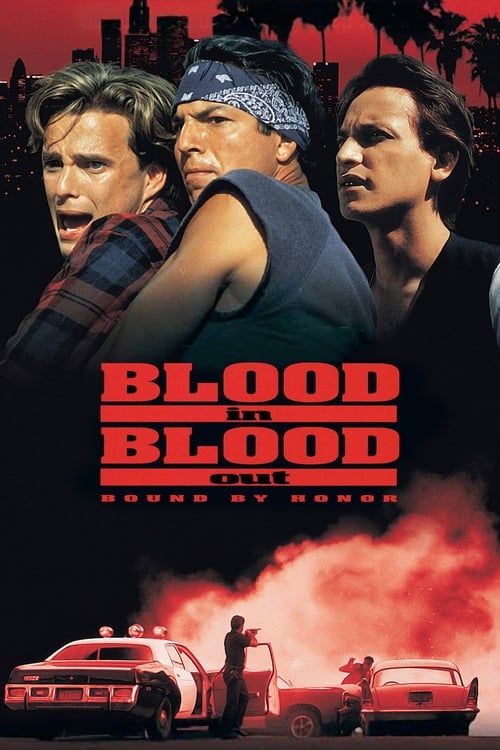
Bound by Honor
Based on the true life experiences of poet Jimmy Santiago Baca, the film focuses on half-brothers Paco and Cruz, and their bi-racial cousin Miklo. It opens in 1972, as the three are members of an East L.A. gang known as the "Vatos Locos", and the story focuses on how a violent crime and the influence of narcotics alter their lives. Miklo is incarcerated and sent to San Quentin, where he makes a "home" for himself. Cruz becomes an exceptional artist, but a heroin addiction overcomes him with tragic results. Paco becomes a cop and an enemy to his "carnal", Miklo.
The film box office disappointment against its mid-range budget of $35.0M, earning $4.5M globally (-87% loss). While initial box office returns were modest, the film has gained appreciation for its unique voice within the crime genre.
4 wins & 2 nominations


Plot Structure
Story beats plotted across runtime


Narrative Arc
Emotional journey through the story's key moments
Story Circle
Blueprint 15-beat structure
Arcplot Score Breakdown
Weighted: Precision (70%) + Arc (15%) + Theme (15%)
Bound by Honor (1993) exemplifies carefully calibrated dramatic framework, characteristic of Taylor Hackford's storytelling approach. This structural analysis examines how the film's 15-point plot structure maps to proven narrative frameworks across 3 hours. With an Arcplot score of 7.4, the film balances conventional beats with creative variation.
Characters
Cast & narrative archetypes

Paco
Miklo
Cruz
Montana
Magic Mike
Popeye
Spider
Main Cast & Characters
Paco
Played by Benjamin Bratt
A talented artist who becomes a police officer, torn between loyalty to his community and his badge.
Miklo
Played by Damian Chapa
A half-white, half-Mexican young man who seeks acceptance through gang life and rises through the prison system.
Cruz
Played by Jesse Borrego
A passionate artist and muralist who struggles with heroin addiction while trying to stay true to his art.
Montana
Played by Enrique Castillo
The ruthless leader of La Eme prison gang who mentors and later becomes Miklo's rival.
Magic Mike
Played by Victor Rivers
A powerful La Eme member who initially guides Miklo in prison before their relationship deteriorates.
Popeye
Played by Delroy Lindo
Montana's loyal enforcer and bodyguard in the prison gang hierarchy.
Spider
Played by Raymond Cruz
A dangerous gang member and enemy of Miklo in prison.
Structural Analysis
The Status Quo at 2 minutes (1% through the runtime) establishes Young Miklo, Cruz, and Paco run through East LA streets in 1972, establishing their childhood bond. The three blood brothers navigate the barrio together, showing their tight-knit relationship before life tears them apart.. Significantly, this early placement immediately immerses viewers in the story world.
The inciting incident occurs at 21 minutes when During a confrontation with rival gang Tres Puntos, Miklo shoots and kills Spider, the enemy gang leader. This act of violence irrevocably changes all three lives - Miklo is arrested for murder, disrupting the status quo and setting the divergent paths in motion.. At 12% through the film, this Disruption aligns precisely with traditional story structure. This beat shifts the emotional landscape, launching the protagonist into the central conflict.
The First Threshold at 45 minutes marks the transition into Act II, occurring at 25% of the runtime. This indicates the protagonist's commitment to Miklo actively chooses to fully commit to La Onda prison gang by participating in his first prison hit, killing an inmate. This irreversible choice commits him to the prison gang world and marks his complete transformation from street kid to hardened convict., moving from reaction to action.
At 92 minutes, the Midpoint arrives at 51% of the runtime—precisely centered, creating perfect narrative symmetry. Significantly, this crucial beat Miklo orchestrates Montana's assassination to take control of La Onda, betraying his mentor. This false victory raises stakes - Miklo gains power but loses his soul. Simultaneously, Paco kills a suspect in a morally questionable shooting, and Cruz hits rock bottom with his addiction. The stakes intensify for all three., fundamentally raising what's at risk. The emotional intensity shifts, dividing the narrative into clear before-and-after phases.
The Collapse moment at 134 minutes (75% through) represents the emotional nadir. Here, Cruz dies of a heroin overdose in a squalid shooting gallery. The literal death of one of the three blood brothers represents the collapse - the dream of brotherhood and loyalty is dead. This devastating loss affects both Paco and Miklo, representing the cost of their chosen paths., illustrates the protagonist at their lowest point. This beat's placement in the final quarter sets up the climactic reversal.
The Second Threshold at 145 minutes initiates the final act resolution at 81% of the runtime. At Cruz's funeral, Paco and Miklo (allowed to attend under guard) reconnect and acknowledge their bond despite their divergent paths. Paco realizes he must choose between vengeance and justice. Miklo accepts his life sentence. Both synthesize who they were with who they've become., demonstrating the transformation achieved throughout the journey.
Emotional Journey
Bound by Honor's emotional architecture traces a deliberate progression across 15 carefully calibrated beats.
Narrative Framework
This structural analysis employs systematic plot point analysis that identifies crucial turning points. By mapping Bound by Honor against these established plot points, we can identify how Taylor Hackford utilizes or subverts traditional narrative conventions. The plot point approach reveals not only adherence to structural principles but also creative choices that distinguish Bound by Honor within the crime genre.
Taylor Hackford's Structural Approach
Among the 9 Taylor Hackford films analyzed on Arcplot, the average structural score is 7.1, reflecting strong command of classical structure. Bound by Honor represents one of the director's most structurally precise works. For comparative analysis, explore the complete Taylor Hackford filmography.
Comparative Analysis
Additional crime films include The Bad Guys, Rustom and The Whole Ten Yards. For more Taylor Hackford analyses, see Dolores Claiborne, Ray and Parker.
Plot Points by Act
Act I
SetupStatus Quo
Young Miklo, Cruz, and Paco run through East LA streets in 1972, establishing their childhood bond. The three blood brothers navigate the barrio together, showing their tight-knit relationship before life tears them apart.
Theme
Paco's father tells him "Blood in, blood out - that's the way it is" when discussing gang life and loyalty. This establishes the central theme of honor, brotherhood, and the binding commitments that define identity in both street and prison life.
Worldbuilding
The film establishes 1970s East LA gang culture, the three protagonists' different backgrounds (Miklo the half-white outsider, Cruz the artist, Paco the golden boy), their family dynamics, and the Vatos Locos gang world they inhabit. Shows Miklo's desire to prove himself despite his white appearance.
Disruption
During a confrontation with rival gang Tres Puntos, Miklo shoots and kills Spider, the enemy gang leader. This act of violence irrevocably changes all three lives - Miklo is arrested for murder, disrupting the status quo and setting the divergent paths in motion.
Resistance
Miklo enters San Quentin prison and must navigate the brutal hierarchy. Cruz struggles with his art career and addiction. Paco joins the police force and debates his identity between his barrio roots and law enforcement. Each character debates their path forward after the disruption.
Act II
ConfrontationFirst Threshold
Miklo actively chooses to fully commit to La Onda prison gang by participating in his first prison hit, killing an inmate. This irreversible choice commits him to the prison gang world and marks his complete transformation from street kid to hardened convict.
Mirror World
Montana, the influential La Onda leader, becomes Miklo's mentor and thematic mirror. He represents the ultimate prison gangster - powerful but trapped. Their relationship embodies the theme of loyalty and honor within an inescapable system that destroys those who embrace it.
Premise
The three parallel storylines develop: Miklo rises through La Onda ranks in prison, becoming Montana's trusted soldado. Cruz spirals deeper into heroin addiction while trying to maintain his art. Paco becomes a decorated cop but struggles with violence and corruption. Each explores their chosen world.
Midpoint
Miklo orchestrates Montana's assassination to take control of La Onda, betraying his mentor. This false victory raises stakes - Miklo gains power but loses his soul. Simultaneously, Paco kills a suspect in a morally questionable shooting, and Cruz hits rock bottom with his addiction. The stakes intensify for all three.
Opposition
Miklo consolidates power but faces constant threats from BGF and the Aryan Brotherhood. Paco's internal affairs investigation intensifies as his violence escalates. Cruz's addiction destroys his relationships and art career. The antagonistic forces (system, gangs, addiction, corruption) close in on all three brothers.
Collapse
Cruz dies of a heroin overdose in a squalid shooting gallery. The literal death of one of the three blood brothers represents the collapse - the dream of brotherhood and loyalty is dead. This devastating loss affects both Paco and Miklo, representing the cost of their chosen paths.
Crisis
Paco and Miklo separately process Cruz's death and confront the darkness of their choices. Paco questions his police work and violence. Miklo faces the emptiness of prison power. Both experience their dark night, mourning not just Cruz but their lost innocence and brotherhood.
Act III
ResolutionSecond Threshold
At Cruz's funeral, Paco and Miklo (allowed to attend under guard) reconnect and acknowledge their bond despite their divergent paths. Paco realizes he must choose between vengeance and justice. Miklo accepts his life sentence. Both synthesize who they were with who they've become.
Synthesis
Miklo orchestrates a massive prison riot to maintain La Onda control. Paco leads the tactical response from outside. The finale brings the two blood brothers into direct opposition - cop versus convict - but their underlying bond remains. The system forces them to oppose each other while honoring their connection.
Transformation
Miklo stands alone in the prison yard, scarred and hardened, staring out as the new undisputed leader of La Onda. Unlike the opening image of three boys running free through streets, he is imprisoned, isolated, and bound by honor to a life sentence. The transformation is complete but tragic - he got the respect he wanted but lost everything else.