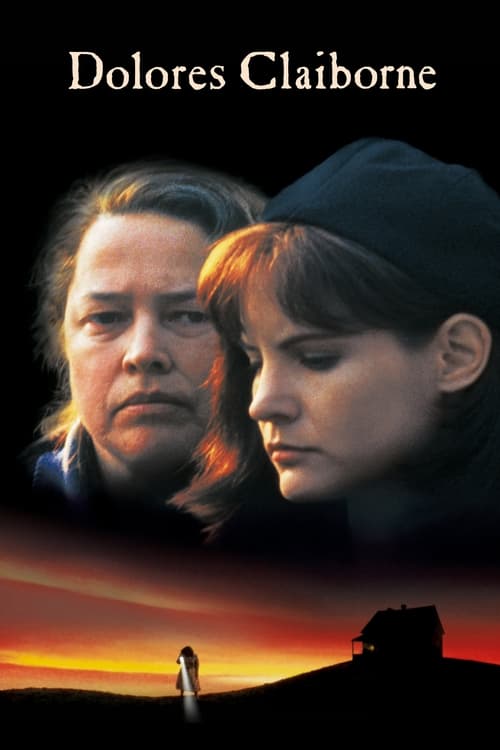
Dolores Claiborne
Dolores Claiborne was accused of killing her abusive husband twenty years ago, but the court's findings were inconclusive and she was allowed to walk free. Now she has been accused of killing her employer, Vera Donovan, and this time there is a witness who can place her at the scene of the crime. Things look bad for Dolores when her daughter Selena, a successful Manhattan magazine writer, returns to cover the story.
Despite its tight budget of $13.0M, Dolores Claiborne became a solid performer, earning $46.4M worldwide—a 257% return. The film's bold vision found its audience, confirming that strong storytelling can transcend budget limitations.
1 win & 8 nominations


Plot Structure
Story beats plotted across runtime


Narrative Arc
Emotional journey through the story's key moments
Story Circle
Blueprint 15-beat structure
Arcplot Score Breakdown
Weighted: Precision (70%) + Arc (15%) + Theme (15%)
Dolores Claiborne (1995) exhibits deliberately positioned narrative architecture, characteristic of Taylor Hackford's storytelling approach. This structural analysis examines how the film's 12-point plot structure maps to proven narrative frameworks across 2 hours and 12 minutes. With an Arcplot score of 7.4, the film balances conventional beats with creative variation.
Characters
Cast & narrative archetypes

Dolores Claiborne
Selena St. George
Joe St. George
Vera Donovan
Detective John Mackey
Main Cast & Characters
Dolores Claiborne
Played by Kathy Bates
A harsh Maine housekeeper accused of murder who must confront her brutal past and prove her innocence while revealing decades of hidden abuse and survival.
Selena St. George
Played by Jennifer Jason Leigh
Dolores's estranged daughter, a successful journalist battling addiction and repressed childhood memories who returns to her island home to confront the truth.
Joe St. George
Played by David Strathairn
Dolores's abusive, manipulative husband whose cruelty and predatory behavior toward their daughter drives the film's central tragedy.
Vera Donovan
Played by Judy Parfitt
The wealthy, imperious woman Dolores works for, who becomes an unexpected mentor and confidante during Dolores's darkest hour.
Detective John Mackey
Played by Christopher Plummer
A suspicious detective convinced of Dolores's guilt who aggressively investigates her for murder across two timelines.
Structural Analysis
The Status Quo at 1 minutes (1% through the runtime) establishes Dolores stands at the top of the stairs as elderly Vera Donovan tumbles down. The image establishes Dolores as a suspected killer, immediately placing her under a cloud of suspicion in her isolated Maine island life.. Notably, this early placement immediately immerses viewers in the story world.
The inciting incident occurs at 16 minutes when Selena receives news of Vera's death and her mother's suspected involvement in murder. This forces Selena to return to the island she fled years ago, disrupting both her carefully constructed life and the long-buried secrets she's suppressed.. At 12% through the film, this Disruption aligns precisely with traditional story structure. This beat shifts the emotional landscape, launching the protagonist into the central conflict.
The First Threshold at 33 minutes marks the transition into Act II, occurring at 25% of the runtime. This demonstrates the protagonist's commitment to Selena makes the choice to stay and help her mother fight the murder charge, despite their damaged relationship. She commits to uncovering what really happened, crossing from avoidance into active engagement with the past., moving from reaction to action.
At 66 minutes, the Midpoint arrives at 50% of the runtime—precisely centered, creating perfect narrative symmetry. Notably, this crucial beat The devastating revelation: flashbacks reveal that Joe was sexually abusing Selena. Vera notices Selena's distress and confronts Dolores with the truth she's been denying. This false defeat reframes everything—the stakes transform from a murder mystery to a story of protecting a child from a predator., fundamentally raising what's at risk. The emotional intensity shifts, dividing the narrative into clear before-and-after phases.
The Collapse moment at 99 minutes (75% through) represents the emotional nadir. Here, The full flashback of Joe's death during the solar eclipse: Dolores deliberately led her drunken, abusive husband to fall down an old well. She killed him to protect Selena. The "whiff of death" is literal—Dolores is revealed as a killer, even if justified. Selena begins to remember witnessing it., shows the protagonist at their lowest point. This beat's placement in the final quarter sets up the climactic reversal.
The Synthesis at 106 minutes initiates the final act resolution at 80% of the runtime. At the inquest, Selena publicly defends her mother. Vera's letter is revealed, explaining she left her fortune to Dolores and confirming Vera's death was indeed an accident—or perhaps assisted suicide by a woman ready to die. Dolores is cleared of Vera's death. The community accepts the truth, and Mackey's obsession is defeated., demonstrating the transformation achieved throughout the journey.
Emotional Journey
Dolores Claiborne's emotional architecture traces a deliberate progression across 12 carefully calibrated beats.
Narrative Framework
This structural analysis employs structural analysis methodology used to understand storytelling architecture. By mapping Dolores Claiborne against these established plot points, we can identify how Taylor Hackford utilizes or subverts traditional narrative conventions. The plot point approach reveals not only adherence to structural principles but also creative choices that distinguish Dolores Claiborne within the crime genre.
Taylor Hackford's Structural Approach
Among the 9 Taylor Hackford films analyzed on Arcplot, the average structural score is 7.1, reflecting strong command of classical structure. Dolores Claiborne represents one of the director's most structurally precise works. For comparative analysis, explore the complete Taylor Hackford filmography.
Comparative Analysis
Additional crime films include The Bad Guys, Rustom and The Whole Ten Yards. For more Taylor Hackford analyses, see Ray, Parker and Bound by Honor.
Plot Points by Act
Act I
SetupStatus Quo
Dolores stands at the top of the stairs as elderly Vera Donovan tumbles down. The image establishes Dolores as a suspected killer, immediately placing her under a cloud of suspicion in her isolated Maine island life.
Theme
Detective Mackey tells Dolores: "Sometimes an accident is just an accident." This ironic statement encapsulates the film's theme—the truth is often hidden beneath the surface of what appears obvious, and real accidents can mask real crimes while real innocence can look like guilt.
Worldbuilding
The small Maine island community is established, along with Dolores's reputation and her strained relationship with daughter Selena. We learn of Detective Mackey's long suspicion of Dolores for her husband's death 20 years prior. Selena is introduced in New York as a successful but troubled journalist.
Disruption
Selena receives news of Vera's death and her mother's suspected involvement in murder. This forces Selena to return to the island she fled years ago, disrupting both her carefully constructed life and the long-buried secrets she's suppressed.
Resistance
Selena returns to Little Tall Island reluctantly. Mother and daughter circle each other warily. Dolores refuses to explain herself while Selena struggles with fragmented memories and her dependence on pills and alcohol. The debate: will Selena stay and learn the truth, or flee back to her numbed existence?
Act II
ConfrontationFirst Threshold
Selena makes the choice to stay and help her mother fight the murder charge, despite their damaged relationship. She commits to uncovering what really happened, crossing from avoidance into active engagement with the past.
Premise
The narrative weaves between past and present as Dolores's story unfolds through flashbacks. We see the young family—Dolores, abusive husband Joe, and teenage Selena. The "promise of the premise" is the gradual revelation of dark family secrets through the film's distinctive time-shifting structure.
Midpoint
The devastating revelation: flashbacks reveal that Joe was sexually abusing Selena. Vera notices Selena's distress and confronts Dolores with the truth she's been denying. This false defeat reframes everything—the stakes transform from a murder mystery to a story of protecting a child from a predator.
Opposition
Detective Mackey intensifies his investigation, convinced of Dolores's guilt in both deaths. In the past, Dolores realizes she must act to save Selena. In the present, Selena's repressed memories begin surfacing, causing her psychological torment. The pressure mounts from all directions as the truth threatens to destroy them both.
Collapse
The full flashback of Joe's death during the solar eclipse: Dolores deliberately led her drunken, abusive husband to fall down an old well. She killed him to protect Selena. The "whiff of death" is literal—Dolores is revealed as a killer, even if justified. Selena begins to remember witnessing it.
Crisis
Selena confronts the returning memories of her father's abuse and her mother's act of violence to protect her. She must reconcile her anger at her mother with the horrific truth of what Dolores saved her from. Detective Mackey closes in, believing he finally has his proof.
Act III
ResolutionSynthesis
At the inquest, Selena publicly defends her mother. Vera's letter is revealed, explaining she left her fortune to Dolores and confirming Vera's death was indeed an accident—or perhaps assisted suicide by a woman ready to die. Dolores is cleared of Vera's death. The community accepts the truth, and Mackey's obsession is defeated.