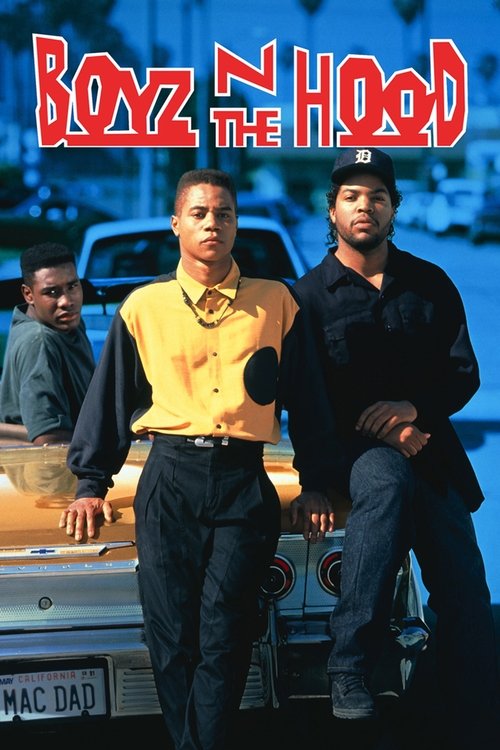
Boyz n the Hood
In the middle of the Los Angeles ghetto, drugs, robberies and shootings dominate everyday life. During these times, Furious tries to raise his son Tre to be a decent person. Tre's friends, on the other hand, have little regard for the law and drag the entire neighborhood into a street war...
Despite its tight budget of $6.5M, Boyz n the Hood became a runaway success, earning $57.5M worldwide—a remarkable 785% return. The film's compelling narrative attracted moviegoers, demonstrating that strong storytelling can transcend budget limitations.
Nominated for 2 Oscars. 12 wins & 28 nominations


Plot Structure
Story beats plotted across runtime


Narrative Arc
Emotional journey through the story's key moments
Story Circle
Blueprint 15-beat structure
Arcplot Score Breakdown
Weighted: Precision (70%) + Arc (15%) + Theme (15%)
Boyz n the Hood (1991) showcases deliberately positioned narrative architecture, characteristic of John Singleton's storytelling approach. This structural analysis examines how the film's 10-point plot structure maps to proven narrative frameworks across 1 hour and 52 minutes. With an Arcplot score of 6.5, the film balances conventional beats with creative variation.
Characters
Cast & narrative archetypes

Tre Styles
Furious Styles
Doughboy
Ricky Baker
Brandi
Reva Styles
Brenda Baker
Main Cast & Characters
Tre Styles
Played by Cuba Gooding Jr.
Intelligent young man navigating life in South Central LA under his father's guidance, striving to avoid gang violence and build a future.
Furious Styles
Played by Laurence Fishburne
Tre's principled father who teaches responsibility, Black empowerment, and survival in a hostile environment.
Doughboy
Played by Ice Cube
Tre's best friend, a street-smart gang member dealing drugs and struggling with violence and incarceration.
Ricky Baker
Played by Morris Chestnut
Doughboy's half-brother, a talented football player with dreams of a college scholarship and escaping the hood.
Brandi
Played by Nia Long
Tre's girlfriend, a devout Catholic college student who represents hope and a path toward a better future.
Reva Styles
Played by Angela Bassett
Tre's mother who sends him to live with Furious to learn discipline and responsibility.
Brenda Baker
Played by Tyra Ferrell
Ricky and Doughboy's mother who shows clear favoritism toward Ricky, contributing to family dysfunction.
Structural Analysis
The Status Quo at 1 minutes (1% through the runtime) establishes Opening with stark statistics about Black male death in America, followed by young Tre witnessing a crime scene with bullet holes and blood in Crenshaw - establishing the dangerous world where survival is not guaranteed.. The analysis reveals that this early placement immediately immerses viewers in the story world.
The inciting incident occurs at 13 minutes when After Tre gets into a fight at school defending himself, his mother Reva makes the difficult decision to send him to live with his father Furious Styles - disrupting his childhood trajectory and setting him on a new path.. At 12% through the film, this Disruption aligns precisely with traditional story structure. This beat shifts the emotional landscape, launching the protagonist into the central conflict.
The Collapse moment at 84 minutes (75% through) represents the emotional nadir. Here, Ricky is murdered in a drive-by shooting, gunned down while running through an alley. Tre witnesses his best friend's death - the "whiff of death" becomes devastating reality. All of Ricky's dreams of college football die with him on the pavement., demonstrates the protagonist at their lowest point. This beat's placement in the final quarter sets up the climactic reversal.
The Synthesis at 96 minutes initiates the final act resolution at 86% of the runtime. Doughboy carries out the revenge killing without Tre. Afterward, the two friends share a final conversation where Doughboy reflects on his fate and the media's indifference to Black death. Their paths have permanently diverged., demonstrating the transformation achieved throughout the journey.
Emotional Journey
Boyz n the Hood's emotional architecture traces a deliberate progression across 10 carefully calibrated beats.
Narrative Framework
This structural analysis employs structural analysis methodology used to understand storytelling architecture. By mapping Boyz n the Hood against these established plot points, we can identify how John Singleton utilizes or subverts traditional narrative conventions. The plot point approach reveals not only adherence to structural principles but also creative choices that distinguish Boyz n the Hood within the crime genre.
John Singleton's Structural Approach
Among the 9 John Singleton films analyzed on Arcplot, the average structural score is 7.0, reflecting strong command of classical structure. Boyz n the Hood takes a more unconventional approach compared to the director's typical style. For comparative analysis, explore the complete John Singleton filmography.
Comparative Analysis
Additional crime films include The Bad Guys, Rustom and The Whole Ten Yards. For more John Singleton analyses, see Higher Learning, Abduction and Poetic Justice.
Plot Points by Act
Act I
SetupStatus Quo
Opening with stark statistics about Black male death in America, followed by young Tre witnessing a crime scene with bullet holes and blood in Crenshaw - establishing the dangerous world where survival is not guaranteed.
Theme
Reva tells young Tre "I don't want you to end up dead, or in jail, or drunk standing in front of one of these liquor stores" - articulating the film's central theme about choosing a different path than the destructive cycle around them.
Worldbuilding
Young Tre's childhood in South Central LA is established: his friendship with Doughboy and Ricky, the absent fathers, first encounters with violence, and the pervasive threat that hangs over the neighborhood. We see the environment that shapes these boys.
Disruption
After Tre gets into a fight at school defending himself, his mother Reva makes the difficult decision to send him to live with his father Furious Styles - disrupting his childhood trajectory and setting him on a new path.
Resistance
Furious becomes Tre's guide, teaching him about responsibility, respect, and what it means to be a Black man in America. He disciplines him, educates him about protecting their home, and provides the structure and wisdom Tre needs to navigate his world.
Act II
ConfrontationPremise
The promise of the premise unfolds: teenage life in South Central LA. Tre balances his father's wisdom with street pressures, while Ricky pursues his football dreams and Doughboy sinks deeper into gang life. The contrast between paths sharpens.
Opposition
Tensions escalate dramatically. Tre is harassed by a Black LAPD officer. Ricky's SAT scores offer hope but gang tensions intensify. The confrontation at Crenshaw sets a deadly chain in motion. The streets close in despite all efforts to escape.
Collapse
Ricky is murdered in a drive-by shooting, gunned down while running through an alley. Tre witnesses his best friend's death - the "whiff of death" becomes devastating reality. All of Ricky's dreams of college football die with him on the pavement.
Crisis
Tre's dark night of the soul. He retrieves his gun, consumed by grief and rage. Furious confronts him with wisdom about the cycle of violence. Tre is torn between everything his father taught him and the primal need for revenge.
Act III
ResolutionSynthesis
Doughboy carries out the revenge killing without Tre. Afterward, the two friends share a final conversation where Doughboy reflects on his fate and the media's indifference to Black death. Their paths have permanently diverged.