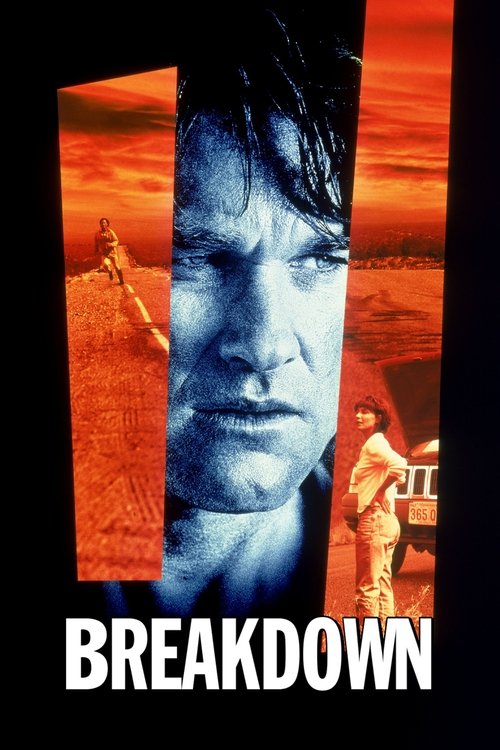
Breakdown
On their cross-country drive, a married couple, Jeff and Amy Taylor, experience car trouble after their SUV breaks down. Stranded in the New Mexico desert, the two catch a break when a passing truck driver offers Amy a ride to a nearby café to call for help. Meanwhile, Jeff is able to fix the car and make his way to the café, but Amy isn't there. He tracks down the trucker ― who tells the police he's never seen Jeff or his wife before. Jeff then begins a desperate, frenzied search for Amy.
Working with a moderate budget of $36.0M, the film achieved a modest success with $50.2M in global revenue (+39% profit margin).
1 win & 2 nominations


Plot Structure
Story beats plotted across runtime


Narrative Arc
Emotional journey through the story's key moments
Story Circle
Blueprint 15-beat structure
Arcplot Score Breakdown
Weighted: Precision (70%) + Arc (15%) + Theme (15%)
Breakdown (1997) exhibits precise story structure, characteristic of Jonathan Mostow's storytelling approach. This structural analysis examines how the film's 15-point plot structure maps to proven narrative frameworks across 1 hour and 33 minutes. With an Arcplot score of 7.2, the film balances conventional beats with creative variation.
Characters
Cast & narrative archetypes

Jeff Taylor
Amy Taylor
Red Barr
Billy
Earl
Al
Main Cast & Characters
Jeff Taylor
Played by Kurt Russell
A Boston yuppie whose wife disappears after their car breaks down in the desert. He must navigate a dangerous conspiracy to save her.
Amy Taylor
Played by Kathleen Quinlan
Jeff's wife who is kidnapped after accepting a ride from a trucker when their car breaks down in rural Arizona.
Red Barr
Played by J.T. Walsh
A seemingly helpful truck driver who offers Amy a ride, but is actually the leader of a kidnapping ring targeting wealthy travelers.
Billy
Played by M.C. Gainey
Red's volatile and violent accomplice who helps orchestrate the kidnapping and ransom scheme.
Earl
Played by Jack Noseworthy
Another member of Red's criminal gang who assists in the kidnapping operation.
Al
Played by Rex Linn
A member of Red's gang who helps guard Amy and manage the ransom exchange.
Structural Analysis
The Status Quo at 1 minutes (1% through the runtime) establishes Jeff and Amy Taylor drive through the desert in their new SUV, a yuppie couple relocating to California. They're affluent, slightly out of place, and vulnerable in unfamiliar territory.. Structural examination shows that this early placement immediately immerses viewers in the story world.
The inciting incident occurs at 11 minutes when Amy accepts a ride from trucker Red Barr to get help at a nearby diner while Jeff stays with the car. She disappears. When Jeff reaches the diner, no one has seen her and Red denies ever meeting them.. At 12% through the film, this Disruption aligns precisely with traditional story structure. This beat shifts the emotional landscape, launching the protagonist into the central conflict.
The First Threshold at 24 minutes marks the transition into Act II, occurring at 26% of the runtime. This shows the protagonist's commitment to Jeff spots Red's truck at a gas station and confronts him. Red credibly denies everything in front of witnesses. Jeff makes the active choice to follow Red, abandoning official channels and entering a dangerous investigation alone., moving from reaction to action.
At 47 minutes, the Midpoint arrives at 50% of the runtime—precisely centered, creating perfect narrative symmetry. Notably, this crucial beat Jeff finds where Amy is being held and briefly makes contact, but the kidnappers discover him. False victory turns to defeat: he knows where she is but is captured himself. The stakes raise dramatically as both are now in mortal danger., fundamentally raising what's at risk. The emotional intensity shifts, dividing the narrative into clear before-and-after phases.
The Collapse moment at 70 minutes (75% through) represents the emotional nadir. Here, Jeff is left for dead, buried alive under a car in a junkyard. This is his "whiff of death" - literal near-death. He appears defeated, Amy is lost, the villains have won, and he's trapped with no apparent escape., illustrates the protagonist at their lowest point. This beat's placement in the final quarter sets up the climactic reversal.
The Second Threshold at 74 minutes initiates the final act resolution at 80% of the runtime. Jeff escapes and realizes the kidnappers think he's dead - giving him the advantage. He synthesizes everything he's learned about their operation and transforms from victim to hunter. Armed with knowledge and fury, he launches his counterattack., demonstrating the transformation achieved throughout the journey.
Emotional Journey
Breakdown's emotional architecture traces a deliberate progression across 15 carefully calibrated beats.
Narrative Framework
This structural analysis employs proven narrative structure principles that track dramatic progression. By mapping Breakdown against these established plot points, we can identify how Jonathan Mostow utilizes or subverts traditional narrative conventions. The plot point approach reveals not only adherence to structural principles but also creative choices that distinguish Breakdown within the crime genre.
Jonathan Mostow's Structural Approach
Among the 4 Jonathan Mostow films analyzed on Arcplot, the average structural score is 7.0, demonstrating varied approaches to story architecture. Breakdown represents one of the director's most structurally precise works. For comparative analysis, explore the complete Jonathan Mostow filmography.
Comparative Analysis
Additional crime films include The Bad Guys, Rustom and The Whole Ten Yards. For more Jonathan Mostow analyses, see Surrogates, Terminator 3: Rise of the Machines and U-571.
Plot Points by Act
Act I
SetupStatus Quo
Jeff and Amy Taylor drive through the desert in their new SUV, a yuppie couple relocating to California. They're affluent, slightly out of place, and vulnerable in unfamiliar territory.
Theme
After a near-collision with aggressive locals, Amy says "Let's just forget about it" when Jeff wants to confront them. The theme emerges: pride vs. pragmatism, and the danger of trusting strangers in hostile territory.
Worldbuilding
Establishing the Taylors as fish-out-of-water city people in rural desert country. Their SUV breaks down on an isolated highway. The world is established as hostile, remote, and dangerous for outsiders.
Disruption
Amy accepts a ride from trucker Red Barr to get help at a nearby diner while Jeff stays with the car. She disappears. When Jeff reaches the diner, no one has seen her and Red denies ever meeting them.
Resistance
Jeff desperately searches for Amy, going to the sheriff, driving around looking for Red's truck, doubting his sanity. He debates whether to trust authorities or take matters into his own hands. He's paralyzed by uncertainty.
Act II
ConfrontationFirst Threshold
Jeff spots Red's truck at a gas station and confronts him. Red credibly denies everything in front of witnesses. Jeff makes the active choice to follow Red, abandoning official channels and entering a dangerous investigation alone.
Mirror World
Jeff encounters a local boy who might have information. This moment introduces the theme's counterpoint: not all strangers are enemies, and Jeff must learn to navigate trust carefully rather than broadly distrusting everyone.
Premise
The "premise promise" of a man-versus-conspiracy thriller. Jeff follows clues, discovers the kidnapping ring, infiltrates their operation, and pieces together that Amy is being held for ransom. The ordinary man becomes investigator.
Midpoint
Jeff finds where Amy is being held and briefly makes contact, but the kidnappers discover him. False victory turns to defeat: he knows where she is but is captured himself. The stakes raise dramatically as both are now in mortal danger.
Opposition
Jeff is held captive and tortured for the ransom money. The kidnappers tighten their control, moving Amy, threatening to kill them both. Jeff's attempts to escape fail. The antagonists close in from all sides.
Collapse
Jeff is left for dead, buried alive under a car in a junkyard. This is his "whiff of death" - literal near-death. He appears defeated, Amy is lost, the villains have won, and he's trapped with no apparent escape.
Crisis
Jeff's dark night - using every ounce of will and ingenuity to escape the junkyard trap. He processes his apparent failure and finds primal determination. This is the emotional low point before the breakthrough.
Act III
ResolutionSecond Threshold
Jeff escapes and realizes the kidnappers think he's dead - giving him the advantage. He synthesizes everything he's learned about their operation and transforms from victim to hunter. Armed with knowledge and fury, he launches his counterattack.
Synthesis
The finale: Jeff systematically takes down the kidnapping ring, rescues Amy, and pursues Red in an escalating vehicular battle. He uses both his intelligence and newfound ruthlessness to defeat the antagonists.
Transformation
Jeff and Amy embrace by the roadside, traumatized but alive. The soft city man has been forged into a survivor. Where the opening showed them naive and vulnerable, the closing shows them bonded through violence and survival.