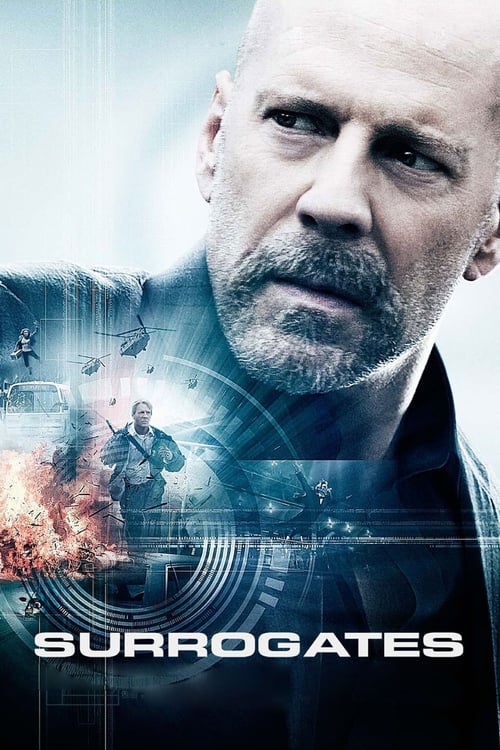
Surrogates
Set in a futuristic world where humans live in isolation and interact through surrogate robots, a cop is forced to leave his home for the first time in years in order to investigate the murders of others' surrogates.
Working with a significant budget of $80.0M, the film achieved a modest success with $122.4M in global revenue (+53% profit margin).


Plot Structure
Story beats plotted across runtime


Narrative Arc
Emotional journey through the story's key moments
Story Circle
Blueprint 15-beat structure
Arcplot Score Breakdown
Weighted: Precision (70%) + Arc (15%) + Theme (15%)
Surrogates (2009) showcases deliberately positioned dramatic framework, characteristic of Jonathan Mostow's storytelling approach. This structural analysis examines how the film's 15-point plot structure maps to proven narrative frameworks across 1 hour and 29 minutes. With an Arcplot score of 7.1, the film balances conventional beats with creative variation.
Characters
Cast & narrative archetypes

Tom Greer
Maggie Greer
The Prophet
Agent Peters
Dr. Lionel Canter
Andrew Stone
Main Cast & Characters
Tom Greer
Played by Bruce Willis
FBI agent investigating surrogate murders who questions the remote-living society and ultimately rejects his own surrogate.
Maggie Greer
Played by Rosamund Pike
Tom's wife who remains isolated in their home, living entirely through her surrogate after their son's death.
The Prophet
Played by Ving Rhames
Leader of anti-surrogate reservation community who opposes VSI technology and advocates for authentic human experience.
Agent Peters
Played by Radha Mitchell
Tom Greer's FBI partner who works the case through her surrogate while following protocol.
Dr. Lionel Canter
Played by James Cromwell
Inventor of surrogate technology and founder of VSI who becomes a target in the conspiracy.
Andrew Stone
Played by Jack Noseworthy
VSI corporate executive who manages the company and protects its interests in the investigation.
Structural Analysis
The Status Quo at 1 minutes (1% through the runtime) establishes Documentary-style montage establishes a world where humanity lives through perfect robotic surrogates—crime is virtually eliminated, no one gets hurt, and everyone appears young and beautiful. Agent Tom Greer operates his surrogate in this seemingly utopian society.. Significantly, this early placement immediately immerses viewers in the story world.
The inciting incident occurs at 11 minutes when Two surrogates are destroyed by a mysterious weapon that also kills their human operators—supposedly impossible since surrogates are meant to protect users. One victim is the son of Dr. Canter, the inventor of surrogate technology. This murder shatters the illusion of perfect safety.. At 12% through the film, this Disruption aligns precisely with traditional story structure. This beat shifts the emotional landscape, launching the protagonist into the central conflict.
The First Threshold at 22 minutes marks the transition into Act II, occurring at 25% of the runtime. This indicates the protagonist's commitment to Greer's surrogate is destroyed during a chase into the Dread reservation. For the first time in years, he must venture into the world in his real, vulnerable body. Despite fear and disorientation, he makes the active choice to continue the investigation as himself rather than wait for a replacement surrogate., moving from reaction to action.
At 45 minutes, the Midpoint arrives at 50% of the runtime—precisely centered, creating perfect narrative symmetry. The analysis reveals that this crucial beat Greer discovers Dr. Canter didn't actually die—he's alive and appears to be orchestrating everything. Canter was forced out of VSI, his own company, and has been working from the shadows. False victory: Greer believes he finally understands who the real villain is and what he's planning., fundamentally raising what's at risk. The emotional intensity shifts, dividing the narrative into clear before-and-after phases.
The Collapse moment at 67 minutes (75% through) represents the emotional nadir. Here, Greer confronts Canter, who reveals his apocalyptic plan: destroying every surrogate will kill billions of users, but will "free" humanity from its technological prison. Peters' hijacked surrogate attacks Greer. Maggie is connected to her surrogate, meaning she'll die too. Greer seems powerless to stop the extinction-level event., shows the protagonist at their lowest point. This beat's placement in the final quarter sets up the climactic reversal.
The Second Threshold at 71 minutes initiates the final act resolution at 80% of the runtime. Greer realizes he can modify the weapon's signal: disable the kill command that targets human operators while still allowing it to destroy the surrogates themselves. He can end the surrogate era and free humanity without committing genocide. Armed with this synthesis, he breaks into VSI's central system., demonstrating the transformation achieved throughout the journey.
Emotional Journey
Surrogates's emotional architecture traces a deliberate progression across 15 carefully calibrated beats.
Narrative Framework
This structural analysis employs structural analysis methodology used to understand storytelling architecture. By mapping Surrogates against these established plot points, we can identify how Jonathan Mostow utilizes or subverts traditional narrative conventions. The plot point approach reveals not only adherence to structural principles but also creative choices that distinguish Surrogates within the science fiction genre.
Jonathan Mostow's Structural Approach
Among the 4 Jonathan Mostow films analyzed on Arcplot, the average structural score is 7.0, demonstrating varied approaches to story architecture. Surrogates represents one of the director's most structurally precise works. For comparative analysis, explore the complete Jonathan Mostow filmography.
Comparative Analysis
Additional science fiction films include The Postman, Mad Max 2 and AVP: Alien vs. Predator. For more Jonathan Mostow analyses, see Breakdown, Terminator 3: Rise of the Machines and U-571.
Plot Points by Act
Act I
SetupStatus Quo
Documentary-style montage establishes a world where humanity lives through perfect robotic surrogates—crime is virtually eliminated, no one gets hurt, and everyone appears young and beautiful. Agent Tom Greer operates his surrogate in this seemingly utopian society.
Theme
The Prophet, leader of the anti-surrogate "Dreads," broadcasts his message: "We are not meant to experience life through a machine." This statement captures the film's central question about whether technological safety is worth sacrificing authentic human experience.
Worldbuilding
The surrogate society is established: Greer works for the FBI, his marriage to Maggie is strained because she refuses to show him her real face, and their son died in an accident years ago. The contrast between the perfect surrogate world and the human reservations (Dread zones) is shown.
Disruption
Two surrogates are destroyed by a mysterious weapon that also kills their human operators—supposedly impossible since surrogates are meant to protect users. One victim is the son of Dr. Canter, the inventor of surrogate technology. This murder shatters the illusion of perfect safety.
Resistance
Greer and partner Peters investigate the impossible murders. They discover the weapon overloads the user's brain through the surrogate link. Greer interviews suspects, traces leads to the Dread reservation, and begins questioning the surrogate lifestyle he's taken for granted.
Act II
ConfrontationFirst Threshold
Greer's surrogate is destroyed during a chase into the Dread reservation. For the first time in years, he must venture into the world in his real, vulnerable body. Despite fear and disorientation, he makes the active choice to continue the investigation as himself rather than wait for a replacement surrogate.
Mirror World
Greer, now in his real body, attempts to reconnect with Maggie. She refuses to leave her room or let him see her real face, remaining hidden behind her surrogate. Their broken marriage embodies the film's theme—he craves authentic connection while she remains terrified of vulnerability.
Premise
Greer investigates in his real body while surrounded by surrogates—vulnerable, visibly aged, out of place. He traces the weapon to VSI (the surrogate corporation), discovers the Prophet may be involved, and uncovers connections to Dr. Canter that suggest the conspiracy goes far deeper than a simple murder.
Midpoint
Greer discovers Dr. Canter didn't actually die—he's alive and appears to be orchestrating everything. Canter was forced out of VSI, his own company, and has been working from the shadows. False victory: Greer believes he finally understands who the real villain is and what he's planning.
Opposition
The FBI shuts down Greer's investigation. His partner Peters is compromised—her operator killed and her surrogate hijacked. Canter's true plan emerges: he intends to use the weapon to destroy all surrogates worldwide simultaneously, which will kill billions of connected operators. Greer is isolated, hunted, and disbelieved.
Collapse
Greer confronts Canter, who reveals his apocalyptic plan: destroying every surrogate will kill billions of users, but will "free" humanity from its technological prison. Peters' hijacked surrogate attacks Greer. Maggie is connected to her surrogate, meaning she'll die too. Greer seems powerless to stop the extinction-level event.
Crisis
Greer processes the impossible choice: allow Canter's plan and billions die, including Maggie, or stop it and humanity remains enslaved to surrogates forever. He struggles with whether there's a third option—a way to end surrogate dependence without mass murder.
Act III
ResolutionSecond Threshold
Greer realizes he can modify the weapon's signal: disable the kill command that targets human operators while still allowing it to destroy the surrogates themselves. He can end the surrogate era and free humanity without committing genocide. Armed with this synthesis, he breaks into VSI's central system.
Synthesis
Greer fights through VSI headquarters and uploads the modified code just in time. The signal fires: surrogates worldwide collapse simultaneously, but the lethal feedback to operators is blocked. Billions of people are forced to disconnect, stumbling into the real world for the first time in years. The surrogate era ends.
Transformation
Greer returns home, battered but alive. Maggie emerges from her room in her real body for the first time in years—older, imperfect, vulnerable, and human. They finally see each other as they truly are. Outside, humanity stumbles into the streets, relearning connection. The final image inverts the opening: not a perfect surrogate world, but imperfect, authentic human life.