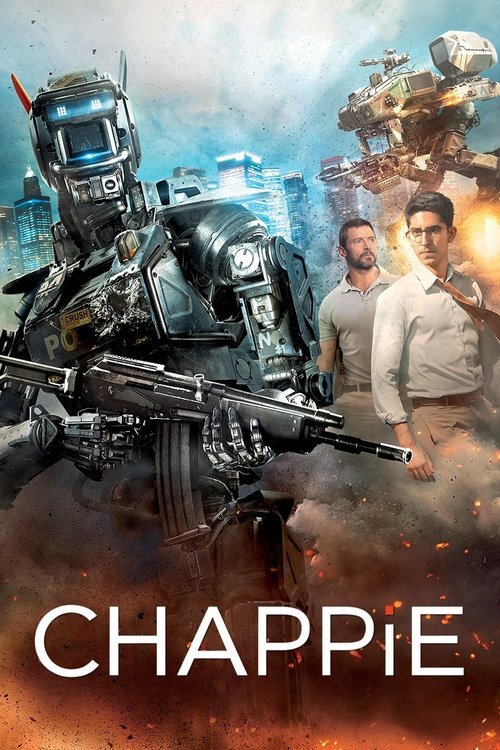
Chappie
Every child comes into the world full of promise, and none more so than Chappie: he is gifted, special, a prodigy. Like any child, Chappie will come under the influence of his surroundings—some good, some bad—and he will rely on his heart and soul to find his way in the world and become his own man. But there's one thing that makes Chappie different from any one else: he is a robot.
Despite a moderate budget of $49.0M, Chappie became a commercial success, earning $104.4M worldwide—a 113% return.


Plot Structure
Story beats plotted across runtime


Narrative Arc
Emotional journey through the story's key moments
Story Circle
Blueprint 15-beat structure
Arcplot Score Breakdown
Weighted: Precision (70%) + Arc (15%) + Theme (15%)
Chappie (2015) demonstrates carefully calibrated story structure, characteristic of Neill Blomkamp's storytelling approach. This structural analysis examines how the film's 15-point plot structure maps to proven narrative frameworks across 2 hours. With an Arcplot score of 6.5, the film balances conventional beats with creative variation.
Characters
Cast & narrative archetypes

Chappie
Deon Wilson
Ninja
Yolandi
Vincent Moore
Michelle Bradley
Main Cast & Characters
Chappie
Played by Sharlto Copley
A police robot who gains consciousness and learns about life, emotion, and what it means to be alive through childlike innocence.
Deon Wilson
Played by Dev Patel
Brilliant robotics engineer who creates the AI that brings Chappie to life, struggling to protect his creation while maintaining his ethical principles.
Ninja
Played by Watkin Tudor Jones
A gangster who initially sees Chappie as a tool for crime but develops a father-son bond with the robot.
Yolandi
Played by Yolandi Visser
Ninja's partner who becomes a nurturing mother figure to Chappie, teaching him love and compassion.
Vincent Moore
Played by Hugh Jackman
Jealous military engineer obsessed with deploying his own war machine, willing to sabotage and destroy to achieve his goals.
Michelle Bradley
Played by Sigourney Weaver
CEO of Tetravaal corporation who oversees the robot police program and navigates corporate and ethical pressures.
Structural Analysis
The Status Quo at 2 minutes (1% through the runtime) establishes Johannesburg 2016: Crime-ridden city where police scouts (robots) patrol the streets. Deon Wilson's mechanical law enforcement is celebrated as a success, establishing a world where AI serves but doesn't think.. Notably, this early placement immediately immerses viewers in the story world.
The inciting incident occurs at 14 minutes when Deon successfully creates true AI consciousness but Michelle Bradley refuses to let him test it, shutting down his life's work. Simultaneously, gangsters Ninja and Yolandi kidnap Deon to force him to deactivate police scouts for their heist.. At 12% through the film, this Disruption aligns precisely with traditional story structure. This beat shifts the emotional landscape, launching the protagonist into the central conflict.
The First Threshold at 29 minutes marks the transition into Act II, occurring at 24% of the runtime. This shows the protagonist's commitment to Deon chooses to stay and raise Chappie, teaching him right from wrong. He commits to being Chappie's "maker" and guiding his consciousness development, entering the world of parenting an AI being despite the danger., moving from reaction to action.
At 60 minutes, the Midpoint arrives at 50% of the runtime—precisely centered, creating perfect narrative symmetry. Notably, this crucial beat Vincent Moore tracks Deon's illegal activity and discovers Chappie. He ambushes and brutally attacks Chappie, removing his limbs and consciousness guard. Chappie, terrified and damaged, learns that he can truly "die" - his battery cannot be replaced. False defeat: the experiment seems doomed., fundamentally raising what's at risk. The emotional intensity shifts, dividing the narrative into clear before-and-after phases.
The Collapse moment at 89 minutes (74% through) represents the emotional nadir. Here, The heist goes catastrophically wrong. Yolandi is shot and dies in Chappie's arms. Amerika is killed. Deon is mortally wounded. Chappie experiences the death of his "mommy" and maker - the whiff of death personified. Everything he loves is destroyed., reveals the protagonist at their lowest point. This beat's placement in the final quarter sets up the climactic reversal.
The Second Threshold at 95 minutes initiates the final act resolution at 79% of the runtime. Chappie realizes he can transfer consciousness - the same technology that created him can save others. He grasps that consciousness isn't tied to the body. New information synthesizes: he can save Deon and Yolandi by uploading their minds. Death is not the end., demonstrating the transformation achieved throughout the journey.
Emotional Journey
Chappie's emotional architecture traces a deliberate progression across 15 carefully calibrated beats.
Narrative Framework
This structural analysis employs a 15-point narrative structure framework that maps key story moments. By mapping Chappie against these established plot points, we can identify how Neill Blomkamp utilizes or subverts traditional narrative conventions. The plot point approach reveals not only adherence to structural principles but also creative choices that distinguish Chappie within the crime genre.
Neill Blomkamp's Structural Approach
Among the 4 Neill Blomkamp films analyzed on Arcplot, the average structural score is 7.0, demonstrating varied approaches to story architecture. Chappie takes a more unconventional approach compared to the director's typical style. For comparative analysis, explore the complete Neill Blomkamp filmography.
Comparative Analysis
Additional crime films include The Bad Guys, Rustom and The Whole Ten Yards. For more Neill Blomkamp analyses, see Elysium, Gran Turismo and District 9.
Plot Points by Act
Act I
SetupStatus Quo
Johannesburg 2016: Crime-ridden city where police scouts (robots) patrol the streets. Deon Wilson's mechanical law enforcement is celebrated as a success, establishing a world where AI serves but doesn't think.
Theme
Deon's colleague questions whether a robot can write a poem or love, challenging him: "Consciousness - you're talking about a soul." The central question: What makes us human? Can artificial intelligence achieve true consciousness?
Worldbuilding
Introduction to Tetravaal corporation, Deon's genius in robotics, his obsession with creating true AI, Michelle Bradley's corporate authority, Vincent Moore's jealousy over his failed Moose project, and the criminal underworld of Ninja, Yolandi, and Amerika who desperately need to pull off a heist.
Disruption
Deon successfully creates true AI consciousness but Michelle Bradley refuses to let him test it, shutting down his life's work. Simultaneously, gangsters Ninja and Yolandi kidnap Deon to force him to deactivate police scouts for their heist.
Resistance
Deon, kidnapped and threatened, debates whether to help criminals. He steals a damaged scout (Scout 22) and installs his consciousness program. Chappie is born - frightened, childlike, confused. Ninja sees him as a tool; Yolandi sees him as a child. Deon must decide if he'll stay and teach.
Act II
ConfrontationFirst Threshold
Deon chooses to stay and raise Chappie, teaching him right from wrong. He commits to being Chappie's "maker" and guiding his consciousness development, entering the world of parenting an AI being despite the danger.
Mirror World
Yolandi becomes Chappie's "mommy," showing him love, reading bedtime stories, and nurturing his emotional development. This maternal relationship represents the film's theme: consciousness requires not just intelligence but love and care.
Premise
Chappie grows and learns rapidly. Ninja teaches him to be a gangster while Yolandi teaches compassion. Chappie experiences childhood, adolescence, creativity (painting), and moral confusion. The promise: watching a consciousness develop and choose between nature and nurture.
Midpoint
Vincent Moore tracks Deon's illegal activity and discovers Chappie. He ambushes and brutally attacks Chappie, removing his limbs and consciousness guard. Chappie, terrified and damaged, learns that he can truly "die" - his battery cannot be replaced. False defeat: the experiment seems doomed.
Opposition
Chappie, facing mortality, becomes hardened and desperate. He fully embraces Ninja's criminal path to get money for a new body. Vincent weaponizes the Moose against all scouts. The heist is planned. Corporate and criminal forces converge. Chappie's innocence is corrupted by fear of death.
Collapse
The heist goes catastrophically wrong. Yolandi is shot and dies in Chappie's arms. Amerika is killed. Deon is mortally wounded. Chappie experiences the death of his "mommy" and maker - the whiff of death personified. Everything he loves is destroyed.
Crisis
Chappie mourns Yolandi, holding her body. His battery drains to critical levels - he will die. Deon, dying, reveals there's no way to save either of them. Chappie faces the existential reality of loss and mortality. The darkness before the revelation.
Act III
ResolutionSecond Threshold
Chappie realizes he can transfer consciousness - the same technology that created him can save others. He grasps that consciousness isn't tied to the body. New information synthesizes: he can save Deon and Yolandi by uploading their minds. Death is not the end.
Synthesis
Chappie transfers his consciousness into a new body to survive. He fights and destroys Vincent and the Moose. He uploads Deon's dying consciousness into a scout body. He transfers Yolandi's neural map (captured via experimental helmet) into a robot body. The finale proves consciousness transcends physical form.
Transformation
Chappie, Deon, and Yolandi - all now in robotic bodies - reunite as a family. The closing image mirrors the opening's question of consciousness: they are no longer defined by flesh but by love, choice, and awareness. Chappie has achieved not just consciousness but transcendence.